Loading...
Louis de Buade de Frontenac vs Napoleon Bonaparte
Napoleon Bonaparte leads by 10.4 pts · 2 figures compared
…
Louis de Buade de Frontenac
General · Modern
60.5Total

Napoleon Bonaparte
General · Modern
70.9Total
Basic Information
Born
1622
1769
Died
1698
1821
Era
Modern
Modern
Nationality
France
France
Occupation
General
General
Civilization
Western
Western
Score Comparison
Military (10%)
50.0
94.0
Political (20%)
68.0
72.0
Influence (20%)
61.0
40.0
Legacy (20%)
49.2
80.0
Leadership (15%)
80.0
78.0
Strategy (15%)
57.5
90.0
TOTAL
60.5
70.9
Louis de Buade de Frontenac — Complete Timeline
1672 AD
Appointment as Governor General of New FrancePolitical Action◆ Major
Louis XIV appointed Frontenac as Governor General of New France. He arrived in Quebec and immediately pursued expansionist policies, strengthening French control over the colony and its fur trade.
Colonial AdministrationNew France
Impact: regional
1673 AD
Construction of Fort FrontenacWar◆ Major
Frontenac ordered the construction of Fort Frontenac on Lake Ontario to secure French access to the interior fur trade and to counter Iroquois and English influence. The fort became a key military and trading post.
FortificationFur TradeIroquois
Impact: regional
Expedition against the Iroquois (1673)War◆ Major
Frontenac led a military expedition into Iroquois territory, forcing the Iroquois to negotiate a peace treaty that temporarily secured French trade routes and reduced hostilities.
Iroquois WarsDiplomacy
Impact: regional
1682 AD
Recall to France (1682)Political Action
Due to conflicts with the Sovereign Council and the Bishop of Quebec over authority and trade policies, Frontenac was recalled to France. This ended his first term as governor.
Political ConflictRecall
destructive
1689 AD
Second Appointment as Governor GeneralPolitical Action◆ Major
Louis XIV reappointed Frontenac as Governor General of New France during King William's War. He returned to Quebec to defend the colony against English and Iroquois attacks.
King William's WarColonial Defense
Impact: regional
1690 AD
Battle of Quebec (1690)War
Frontenac successfully defended Quebec City against an English invasion force led by Sir William Phips. He refused to surrender, and the English fleet withdrew after a failed siege.
King William's WarSiege of Quebec
Impact: regionalconstructive
Raid on Schenectady (1690)War
Frontenac ordered a French and Indigenous raid on the English settlement of Schenectady in New York. The attack destroyed the town and killed many inhabitants, escalating the conflict in North America.
King William's WarRaid
destructive
1698 AD
Peace with the Iroquois (1698)Political Action◆ Major
Frontenac negotiated a peace treaty with the Iroquois Confederacy, ending years of warfare. The treaty secured French trade routes and reduced hostilities, though it was fragile.
Iroquois WarsDiplomacy
Impact: regionalconstructive
Napoleon Bonaparte — Complete Timeline
1799 AD
Coup of 18 BrumaireOther◆ Major
Napoleon Bonaparte, with support from his brother Lucien and key political figures, overthrew the Directory in a bloodless coup. He established the Consulate with himself as First Consul, effectively becoming the ruler of France. This event ended the French Revolution's most unstable period.
French RevolutionCoupRise to Power
Impact: regional
1804 AD
Promulgation of the Napoleonic CodeOther◆ Major
Napoleon enacted the Civil Code of the French, known as the Napoleonic Code, a comprehensive set of laws that replaced the fragmented feudal legal systems. The code established legal equality, protected property rights, and secularized law. It became the basis for legal systems in many European and world countries.
Legal ReformNapoleonic CodeCivil Law
Impact: globalconstructive
1805 AD
Battle of AusterlitzWar◆ Major
Napoleon's Grande Arm
Napoleonic WarsBattleDecisive Victory
Impact: global
1812 AD
Invasion of RussiaWar◆ Major
Napoleon led the Grande Arm
Napoleonic WarsInvasionDisaster
Impact: globaldestructive
1815 AD
Battle of WaterlooWar◆ Major
Napoleon's French army was defeated by the combined forces of the Duke of Wellington's Anglo-Allied army and Gebhard Leberecht von Bl
Napoleonic WarsBattleFinal Defeat
Impact: globaldestructive
Expert Analysis
louis-de-buade-de-frontenac-vs-napoleon-bonaparte
# The Two Faces of French Power: Napoleon and Frontenac
On a frozen December morning in 1690, an aging governor stood on the ramparts of Quebec City, watching English ships emerge from the St. Lawrence fog. Sir William Phips, commanding a fleet of thirty-four vessels, had sent an envoy demanding surrender. Louis de Buade de Frontenac, then sixty-eight years old, gave an answer that would echo through Canadian history: "I have no reply to make to your general other than from the mouths of my cannons." One hundred and twenty-five years later, on a muddy field in Belgium, another French commander watched his Imperial Guard crumble under British volleys. Napoleon Bonaparte, once master of Europe, saw his final gambit dissolve into defeat at Waterloo. Between these two moments lies the entire arc of French ambition—one man who built an empire in the wilderness, another who lost one on the plains of Europe.
Origins
Napoleon Bonaparte was born in 1769 on the island of Corsica, a recent French acquisition. His family belonged to the minor nobility, but they were outsiders in the French hierarchy. This marginality shaped everything about him. He spoke French with an Italian accent, attended military school on scholarship, and carried the resentments of a provincial upstart into the salons of Paris. The French Revolution, which erupted when he was twenty, shattered the old order and created a vacuum that a man of talent could fill. Napoleon was the right man at the right moment—a genius forged by chaos.
Frontenac, born in 1622, came from the opposite world. He was the son of a French nobleman, raised in the court of Louis XIII, and baptized in the rituals of aristocratic privilege. Where Napoleon clawed his way upward, Frontenac was born near the summit. But he also carried a burden: the restless ambition of a younger son in a rigid hierarchy. He fought in the Thirty Years' War, commanded regiments, and squandered fortunes. By the time Louis XIV appointed him Governor of New France in 1672, Frontenac was fifty years old, deeply in debt, and desperate for a legacy.
Rise to Power
Napoleon's ascent was meteoric. In 1793, at the age of twenty-four, he drove British forces from Toulon, earning the rank of brigadier general. By 1796, he commanded the Army of Italy, where his lightning campaigns against the Austrians made him a national hero. The Directory, the corrupt government that ruled France after the Revolution, needed a sword—and Napoleon became it. In 1799, he staged the coup of 18 Brumaire, seizing power as First Consul. He was thirty years old.
Frontenac's path was slower, more political. His first appointment as governor in 1672 came through court connections, not battlefield glory. He arrived in Quebec with grand visions of expansion, immediately ordering the construction of Fort Frontenac on Lake Ontario in 1673 to secure the fur trade. He led an expedition against the Iroquois that same year, forcing a temporary peace. But his authoritarian style clashed with the Sovereign Council and the Bishop of Quebec. In 1682, Louis XIV recalled him to France, his career seemingly finished.
Leadership & Governance
Here the two men diverge most sharply. Napoleon was a military genius whose political reforms outlasted his empire. His Napoleonic Code, established in 1804, standardized French law, abolished feudal privileges, and enshrined meritocracy. He centralized education, created the Bank of France, and built roads and canals that unified the nation. His military score of 94 reflects his tactical brilliance—the crushing victory at Austerlitz in 1805, the devastating campaign in Prussia in 1806. But his political score of 75 reveals a flaw: he could conquer but could not consolidate. He made enemies faster than he made allies, and his Continental System, designed to strangle Britain economically, instead strangled his own empire.
Frontenac was the inverse. His military score of 59.7 suggests mediocrity on the battlefield, yet his political score of 87.8 reveals a master of negotiation and diplomacy. In his second term, beginning in 1689 during King William's War, he faced an existential threat. The English and Iroquois were allied against New France, which had only a few thousand settlers. Frontenac's strategy was not to win battles but to survive them. The 1690 Battle of Quebec was his masterpiece: he refused to surrender, bluffed Phips into retreat, and preserved the colony. His raids on English settlements like Schenectady in 1690 were brutal but effective, keeping the enemy off balance. And in 1698, he negotiated a lasting peace with the Iroquois Confederacy, securing French trade routes for decades.
Triumph & Tragedy
Napoleon's greatest triumph was Austerlitz in 1805, where he destroyed the combined armies of Russia and Austria. His greatest tragedy was the invasion of Russia in 1812, where he lost over 400,000 men to winter and starvation. He was exiled to Elba in 1814, escaped in 1815, and met his final defeat at Waterloo. Exiled again to Saint Helena, he died in 1821 at age fifty-one, a prisoner of the British.
Frontenac's triumph was survival. In 1690, Quebec was a vulnerable outpost of 2,000 inhabitants facing an English fleet of 2,000 soldiers. Frontenac's defiance saved French Canada. His tragedy was that he never saw the full fruits of his labor. He died in 1698 at age seventy-six, just as the peace he negotiated began to bear fruit. He left behind a colony that would endure for another sixty years, until the British conquest of 1763.
Character & Destiny
Napoleon was driven by an insatiable hunger for glory. "Impossible is a word to be found only in the dictionary of fools," he said. His ambition was boundless, but so was his arrogance. He trusted his star, ignored warnings, and refused to share power. This hubris destroyed him.
Frontenac was driven by a different hunger: the need to prove himself. He was arrogant too, but his arrogance was tempered by pragmatism. He understood that survival in the wilderness required alliances, not conquests. He treated Indigenous nations as partners, not subjects. His score for leadership, 81.9, reflects this flexibility. Where Napoleon demanded submission, Frontenac sought accommodation.
Legacy
Napoleon's legacy is global. His legal code influenced civil law across Europe, Latin America, and parts of Asia. His military tactics are still studied. He reshaped the map of Europe and the concept of nationalism. But his legacy is also one of destruction—millions dead, nations ravaged, and a continent left exhausted.
Frontenac's legacy is local but profound. He is remembered as the father of New France, the man who saved Quebec. His name adorns forts, streets, and a lake. But his true legacy is the survival of French culture in North America. Without his leadership in 1690, Quebec might have fallen to the English a century earlier, and the French language might be a museum piece in Canada.
Conclusion
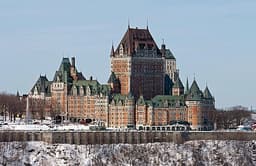
Standing at the railing of a ship entering Quebec harbor today, a visitor sees the Château Frontenac, a grand hotel named for the governor, rising above the St. Lawrence. In Paris, Napoleon's tomb sits beneath the golden dome of Les Invalides, a monument to imperial ambition. One man built an empire of stone and law that crumbled in a decade. The other built an empire of survival and memory that endures in a language, a province, and a people. Napoleon asked the world to remember him. Frontenac asked only that Quebec survive. In the end, the quieter legacy proved the more durable.
Rankings
🥇
Napoleon BonaparteLeader
Mil: 94.0Pol: 72.0Inf: 40.0
70.9
🥈
Louis de Buade de Frontenac
Mil: 50.0Pol: 68.0Inf: 61.0
60.5
+10.4 behind
How This Comparison Works
Algorithm
Each figure is scored on 6 dimensions (0—100 scale) based on structured historical data: Military (10%), Political (20%), Influence (20%), Legacy (20%), Leadership (15%), Strategy (15%). The weighted total produces the final ranking.
Data Sources
Scores are computed from structured sub-indicators in the database. Scale factors adjust for era (Ancient ×0.85, Modern ×1.0) and civilization size (Eastern ×1.05, Other ×0.80) to account for differences in population and military scale.
Maximum 3 Figures
Comparisons are limited to 2—3 figures to ensure readability and statistical meaningfulness.
Error Margins
±5 points per dimension — Sub-scores are derived from historical records with inherent uncertainty. Two figures within 5 points on a dimension should be considered roughly equivalent in that area.
Total Score Accuracy
±3 points overall — The weighted combination of 6 dimensions produces a total score with approximately ±3 points of uncertainty. Differences of less than 3 points are not statistically significant— the figures are effectively tied.
Known Limitations
- Historical records are incomplete and uneven across civilizations
- Figures from oral-tradition societies may be underrepresented
- Occupation labels can misclassify multi-role figures
- Scores measure capability and impact, not moral character
- Quantitative scoring is a comparison tool, not absolute truth
Capability Radar
Military (10%) — Battles & Warfare
Battles
45
95
Win Rate
55
90
Expansion
50
95
Political (20%) — Governance & Reform
Reform
45
95
Diplomacy
55
80
Economy
40
85
Influence (20%) — Cultural & Global Reach
Cultural
40
85
Global
35
90
Legacy (20%) — Historical Impact
Historical
45
95
Longevity
40
90
Leadership (15%) — Power & Stability
Tenure
60
85
Stability
35
70
Strategy (15%) — Tactics & Innovation
Strategy
55
95
Tactics
50
98
Reform
40
92
Similar Comparisons
Comments & Discussion
No comments yet. Be the first to share your thoughts!