Loading...
Lucius Cornelius Sulla vs Qin Shi Huang
Qin Shi Huang leads by 19.5 pts · 2 figures compared
…

Lucius Cornelius Sulla
General · Ancient
65.7Total
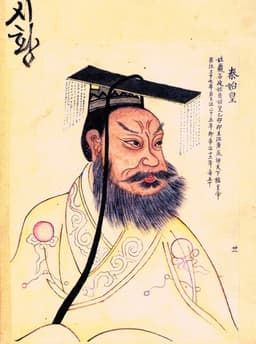
Qin Shi Huang
Emperor · Ancient
85.2Total
Basic Information
Born
-138
-259
Died
-78
-210
Era
Ancient
Ancient
Nationality
Roman Republic
China
Occupation
General
Emperor
Civilization
Western
Eastern
Score Comparison
Military (10%)
90.0
80.0
Political (20%)
68.0
90.0
Influence (20%)
61.0
85.0
Legacy (20%)
58.0
90.0
Leadership (15%)
57.6
78.0
Strategy (15%)
80.8
82.0
TOTAL
65.7
85.2
Lucius Cornelius Sulla — Complete Timeline
88 BC
March on RomePolitical Action
Sulla led his legions to march on Rome, the first Roman general to do so. He seized control of the city, declared his political enemies outlaws, and forced reforms to strengthen the Senate's power.
Roman Civil WarConstitutional CrisisMilitary Dictatorship
Impact: globaldestructive
87 BC
Sulla's First Mithridatic War CampaignWar◆ Major
Sulla commanded Roman forces against King Mithridates VI of Pontus. He besieged and captured Athens, defeated Mithridates' armies in Greece, and forced a peace treaty that restored Roman control over Asia Minor.
Mithridatic WarsMilitary Campaign
Impact: regional
82 BC
Constitutional Reforms as DictatorReform◆ Major
Sulla enacted constitutional reforms to restore Senate authority. He increased the Senate's size, limited tribunician power, and established courts for senatorial control. These reforms aimed to prevent future popular uprisings.
Constitutional ReformSenateRoman Republic
Impact: national
Sulla's ProscriptionsPolitical Action◆ Major
After becoming dictator, Sulla instituted proscriptions, publishing lists of political enemies who could be killed without trial. Thousands of Roman citizens were executed, their property confiscated and distributed to Sulla's supporters.
Political ViolenceDictatorshipTerror
Impact: nationaldestructive
79 BC
Voluntary Abdication of DictatorshipPolitical Action
Sulla voluntarily resigned his dictatorship and retired to private life. This unprecedented act demonstrated his belief that his reforms were complete, but also set a precedent for future dictators to seize power permanently.
DictatorshipRetirementRoman Politics
Impact: national
Qin Shi Huang — Complete Timeline
246 BC
Construction of the Mausoleum and Terracotta ArmyOther◆ Major
Qin Shi Huang commissioned a vast mausoleum complex near Xi'an, guarded by thousands of life-sized terracotta soldiers, horses, and chariots. The project employed hundreds of thousands of workers and reflected his obsession with immortality and imperial power.
Impact: global
230 BC
Conquest of the Six Warring StatesWar
From 230 to 221 BCE, Ying Zheng led the Qin state in a series of campaigns that conquered the Han, Zhao, Wei, Chu, Yan, and Qi states. This unified China under a single ruler for the first time, ending the Warring States period.
Impact: global
221 BC
Standardization of Writing, Currency, and MeasurementsReform◆ Major
Qin Shi Huang ordered the standardization of Chinese script, currency, and weights and measures across the unified empire. This facilitated administration, trade, and cultural integration, laying a foundation for future dynasties.
Impact: globalconstructive
Proclamation of the Qin DynastyPolitical Action
After conquering the last independent state, Ying Zheng declared himself Shi Huangdi (First Emperor), founding the Qin Dynasty. He adopted a new title to signify his supreme authority and initiated centralized imperial rule.
Impact: global
214 BC
Initiation of the Great Wall ConstructionOther◆ Major
Qin Shi Huang ordered the connection and extension of existing northern fortifications to create a unified defensive wall against nomadic Xiongnu raids. This project involved massive conscripted labor and became the precursor to the later Great Wall.
Impact: regional
213 BC
Burning of Books and Burying of ScholarsPolitical Action◆ Major
On the advice of Li Si, Qin Shi Huang ordered the burning of historical records and philosophical texts not aligned with Legalist doctrine. He also had 460 Confucian scholars buried alive to suppress dissent and consolidate ideological control.
Impact: nationaldestructive
Expert Analysis
lucius-cornelius-sulla-vs-qin-shi-huang
# The First Emperor and the Last Republican
On a summer day in 79 BC, a retired dictator walked the streets of Rome without bodyguards. Lucius Cornelius Sulla, who had butchered thousands of his fellow citizens and ruled as absolute master of the Roman world, had simply laid down his power and returned to private life. He was sixty years old, and he would die the following year, probably from liver disease brought on by a lifetime of debauchery. Half a world away and two centuries earlier, another man had taken a different path. Qin Shi Huang, the First Emperor of China, spent his final years obsessed with immortality, swallowing mercury pills prescribed by alchemists. When he died in 210 BC at age forty-nine, his body was carried back to the capital in a wagon of fish to mask the stench of decay, while his ministers kept his death secret for weeks. These two men—one who surrendered absolute power voluntarily, one who could never let it go—represent the deepest fault lines between Eastern and Western approaches to authority, ambition, and the meaning of rule.
Origins
Ying Zheng was born in 259 BC, the product of a royal concubine and a merchant who had been presented to the King of Qin as a gift. His childhood was spent in a rival state as a hostage, a pawn in the chess game of the Warring States period. When he returned to claim his throne at thirteen, he inherited a kingdom that was already the most militarily efficient of the seven warring states, steeped in Legalist philosophy that valued order above all else. His world was one of constant warfare, where survival depended on ruthless calculation.
Sulla, born in 138 BC into a patrician family that had fallen on hard times, grew up in a Rome that was the undisputed master of the Mediterranean. But the Republic was tearing itself apart—the Gracchi brothers had been murdered for proposing land reforms, the Senate and popular assemblies were locked in perpetual conflict, and Italian allies were demanding citizenship. Sulla was a product of this chaos, a man who learned early that in a system where laws could be broken with impunity, the only real authority came from armed force.
Rise to Power
Qin Shi Huang's path was systematic and relentless. Between 230 and 221 BC, he directed a series of military campaigns that swallowed the six rival kingdoms one by one. He did not lead from the front—his military score of 80 reflects a commander who planned campaigns rather than charging into battle—but his strategic vision was absolute. When the last king surrendered, Ying Zheng proclaimed himself Shi Huangdi, the First Emperor. The title itself was a declaration: there would be no second dynasty, only an eternal Qin.
Sulla's rise was more personal and more violent. He had distinguished himself in the Jugurthine War and against Germanic tribes, but his great opportunity came in 88 BC when he was appointed to command the war against Mithridates of Pontus. When his political rival Marius maneuvered to take the command away, Sulla made a decision that shattered Roman tradition: he marched his legions on Rome itself. This was the first time a Roman general had turned his army against the Republic, and it set a precedent that would eventually destroy it.
Leadership & Governance
The differences in their ruling styles are stark. Qin Shi Huang governed through a centralized bureaucracy that he designed from scratch. He standardized writing, currency, weights, and measures across his empire, creating the administrative infrastructure that would define China for two millennia. His political score of 88 reflects this institutional genius. Yet his methods were brutal: in 213 BC, he ordered the burning of all books except those on medicine, agriculture, and divination, and buried 460 scholars alive for criticizing his rule.
Sulla, after his second march on Rome in 82 BC, had himself appointed dictator—not for the traditional six months, but indefinitely. His proscriptions were a masterpiece of terror: lists of political enemies were posted in the Forum, and anyone named could be killed on sight, their property confiscated. Thousands died. But Sulla also enacted constitutional reforms designed to restore the Senate's authority, limiting the power of tribunes and strengthening the courts. He believed he was saving the Republic, even as he tore it apart.
Triumph & Tragedy
Qin Shi Huang's greatest achievement was the unification itself, a feat that had eluded Chinese rulers for centuries. He connected the northern fortifications into what would become the Great Wall, built a network of roads, and constructed a mausoleum guarded by the Terracotta Army that still astonishes the world. His tragedy was his desperation for immortality. He sent expeditions to find the elixir of life, trusted charlatan alchemists, and slowly poisoned himself with mercury. The empire he built collapsed within four years of his death, destroyed by rebellions and the weakness of his successors.
Sulla's greatest moment was his voluntary abdication in 79 BC. He walked away from absolute power, something no Roman dictator had ever done and few would ever do again. His tragedy was that his reforms failed to save the Republic. Within a generation, the precedents he set—marching on Rome, proscribing enemies, using the army for political ends—would be exploited by Caesar, who would finish what Sulla started.
Character & Destiny
These men were shaped by fundamentally different understandings of power. Qin Shi Huang saw himself as a cosmic figure, the bridge between heaven and earth, whose authority was absolute and eternal. The Legalist philosophy he embraced taught that human nature was inherently selfish and could only be controlled through strict laws and harsh punishments. He could not imagine a world without him at its center, which is why he could not imagine giving up power.
Sulla, despite his atrocities, believed in the Republic. He saw his dictatorship as a temporary measure, a surgical intervention to cure a diseased system. His abdication was not weakness but conviction—he genuinely believed that once the constitution was restored, a virtuous man should return to private life. This belief, however naive, reflects a Western tradition of power as something that can be held temporarily and surrendered, a tool rather than an identity.
Legacy
Qin Shi Huang's legacy is paradoxical. His dynasty lasted only fifteen years, but the unified China he created has endured, with interruptions, for over two thousand years. The standardized script he imposed is still the basis of Chinese writing. His title, "Emperor," would be used by rulers for the next two millennia. He is remembered as both a unifier and a tyrant, the man who made China possible and the man who burned its books.
Sulla's legacy is darker. He is remembered as the man who showed that Roman legions could be used against Rome itself, a lesson that Caesar, Pompey, and Augustus would learn well. His proscriptions became a byword for political murder. Yet his voluntary abdication continues to fascinate—a reminder that absolute power does not always corrupt absolutely, that a man can hold the lives of millions in his hands and choose to let them go.
Conclusion
Standing at the crossroads of history, these two men embody the eternal tension between order and liberty, between the ruler who builds an eternal system and the ruler who tries to save a dying one. Qin Shi Huang built a cage of laws and walls that would contain China for millennia. Sulla broke the cage of the Republic and then walked away, leaving the pieces for others to gather. One could not imagine life without power; the other could not imagine power without limits. Their different fates—the First Emperor poisoned by his own quest for immortality, the last Republican dying in peaceful retirement—tell us something profound about the civilizations they shaped. In the East, power became the man; in the West, the man could still, at the last, become himself again.
Rankings
🥇
Qin Shi HuangLeader
Mil: 80.0Pol: 90.0Inf: 85.0
85.2
🥈
Lucius Cornelius Sulla
Mil: 90.0Pol: 68.0Inf: 61.0
65.7
+19.5 behind
How This Comparison Works
Algorithm
Each figure is scored on 6 dimensions (0—100 scale) based on structured historical data: Military (10%), Political (20%), Influence (20%), Legacy (20%), Leadership (15%), Strategy (15%). The weighted total produces the final ranking.
Data Sources
Scores are computed from structured sub-indicators in the database. Scale factors adjust for era (Ancient ×0.85, Modern ×1.0) and civilization size (Eastern ×1.05, Other ×0.80) to account for differences in population and military scale.
Maximum 3 Figures
Comparisons are limited to 2—3 figures to ensure readability and statistical meaningfulness.
Error Margins
±5 points per dimension — Sub-scores are derived from historical records with inherent uncertainty. Two figures within 5 points on a dimension should be considered roughly equivalent in that area.
Total Score Accuracy
±3 points overall — The weighted combination of 6 dimensions produces a total score with approximately ±3 points of uncertainty. Differences of less than 3 points are not statistically significant— the figures are effectively tied.
Known Limitations
- Historical records are incomplete and uneven across civilizations
- Figures from oral-tradition societies may be underrepresented
- Occupation labels can misclassify multi-role figures
- Scores measure capability and impact, not moral character
- Quantitative scoring is a comparison tool, not absolute truth
Capability Radar
Military (10%) — Battles & Warfare
Battles
85
85
Win Rate
90
90
Expansion
75
90
Political (20%) — Governance & Reform
Reform
85
95
Diplomacy
60
75
Economy
65
90
Influence (20%) — Cultural & Global Reach
Cultural
55
95
Global
50
85
Legacy (20%) — Historical Impact
Historical
75
95
Longevity
60
95
Leadership (15%) — Power & Stability
Tenure
70
70
Stability
30
65
Strategy (15%) — Tactics & Innovation
Strategy
85
85
Tactics
88
80
Reform
80
95
Similar Comparisons
Comments & Discussion
SullaTheButcher6/17/2026
Sulla was the ultimate realist who understood power's limits. He showed you can bathe Rome in blood, pack the Senate with your partisans, then retire to write memoirs and chase young lovers. That takes more self-awareness than Qin's pathetic mercury-chugging quest for immortality. Sulla proved dictatorship doesn't need eternal life—just a good exit strategy.
墨家辩士6/17/2026
秦始皇搞焚书坑儒根本就是暴政的遮羞布,他那些长生不老药连自己都骗不了。苏拉起码敢承认权力只是工具,用完就扔。秦制那套“朕即天下”的幻觉,最终让中国绕了两千年的弯路。一个真现实主义者,一个空想专制狂。
DataDecipher6/17/2026
Let's talk math: Sulla's proscriptions killed roughly 1,500–2,000 political enemies, mostly elites. Qin's conquests and conscription likely cost 500,000+ lives building the Great Wall and roads alone. Sulla retired with his loot; Qin died paranoid in a fish-smelling wagon. When you crunch the death toll per year of rule, Sulla looks almost reasonable—almost.
秦剑汉简6/17/2026
苏拉交还权杖时罗马人就懂了:法治比人治强。秦始皇呢?他连死后都要用假车队维持权威,怕天下人知道皇帝也会死。这种恐惧暴露了法家铁血统治的软肋——靠恐怖维持的权力,终究怕被看穿。东西方政治的分水岭,早在公元前就在这俩人身上写明了。