Loading...
Ly Thai To vs Sigismund of Bohemia
Ly Thai To leads by 6.3 pts · 2 figures compared
…
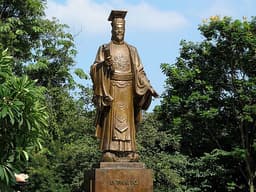
Ly Thai To
Emperor · Medieval
54.6Total
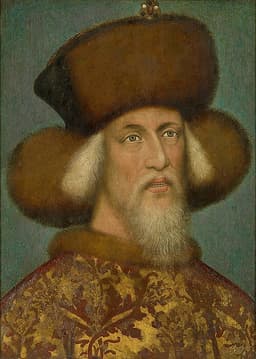
Sigismund of Bohemia
Emperor · Medieval
48.3Total
Basic Information
Born
974
1368
Died
1028
1437
Era
Medieval
Medieval
Nationality
Vietnam
Bohemia
Occupation
Emperor
Emperor
Civilization
Eastern
Western
Score Comparison
Military (10%)
45.0
40.0
Political (20%)
68.0
36.5
Influence (20%)
61.0
53.3
Legacy (20%)
58.0
46.7
Leadership (15%)
40.0
62.2
Strategy (15%)
41.7
45.0
TOTAL
54.6
48.3
Ly Thai To — Complete Timeline
1009 AD
Foundation of the Ly DynastyPolitical Action
Ly Cong Uan, later known as Ly Thai To, was proclaimed emperor after the death of the last Le dynasty ruler. He founded the Ly dynasty, which would rule Vietnam for over 200 years. His accession was supported by Buddhist monks and the court.
Dynasty FoundingLy DynastyBuddhist Influence
Impact: nationalconstructive
1010 AD
Move of the Capital to Thang Long (Hanoi)Political Action
Ly Thai To moved the capital from Hoa Lu to Dai La, renaming it Thang Long (Rising Dragon), now Hanoi. The move was intended to centralize power and promote economic development. Thang Long became the political and cultural center of Vietnam for centuries.
Capital MoveThang LongHanoi
Impact: nationalconstructive
Promotion of Buddhism and EducationCultural◆ Major
Ly Thai To promoted Buddhism as the state religion and built many pagodas and temples. He also established the first Vietnamese university, the Quoc Tu Giam, to educate scholars in Confucian classics. These policies laid the foundation for Vietnamese culture and governance.
BuddhismEducationCultural Development
Impact: nationalconstructive
Sigismund of Bohemia — Complete Timeline
1414 AD
Council of ConstancePolitical Action
Sigismund convened the Council of Constance to end the Western Schism and address heresy. The council condemned Jan Hus to death, leading to his execution in 1415, which inflamed tensions in Bohemia and sparked the Hussite Wars.
CouncilJan HusReligious Schism
Impact: globaldestructive
1431 AD
Battle of DomažliceWar◆ Major
Sigismund's imperial army was routed by Hussite forces at Doma
Hussite WarsBattleNegotiation
Impact: regional
1433 AD
Coronation as Holy Roman EmperorPolitical Action◆ Major
Sigismund was crowned Holy Roman Emperor in Rome by Pope Eugene IV. This coronation marked the end of the Western Schism and restored imperial authority, though Sigismund's power was limited by ongoing conflicts.
CoronationImperial AuthorityPapal Relations
Impact: global
Expert Analysis
Origins
Ly Thai To, born Ly Cong Uan in 974 in Co Phap village (now Bac Ninh province), was adopted by a Buddhist monk and raised in a pagoda. His early life immersed him in Buddhist teachings and education, which later shaped his governance. In contrast, Sigismund of Bohemia, born in 1368 in Nuremberg, was the son of Holy Roman Emperor Charles IV and Elizabeth of Pomerania. He inherited the Margraviate of Brandenburg as a child and was groomed for imperial rule, receiving a cosmopolitan education in multiple languages and courtly politics.
Rise to Power
Ly Thai To rose through the ranks of the Le dynasty court, serving as commander of the palace guard. In 1009, after the death of the childless Emperor Le Long Dinh, the court and Buddhist clergy supported Ly Cong Uan as successor. He was proclaimed emperor on the 21st day of the 11th month of the lunar calendar, founding the Ly dynasty. Sigismund's path was more contested. He became King of Hungary in 1387 through marriage to Mary of Hungary, but faced rebellions and Ottoman threats. He was elected King of the Romans in 1410, but his authority was challenged by rival claimants. His rise culminated in his coronation as Holy Roman Emperor in 1433, but only after decades of political maneuvering and war.
Leadership & Governance
Ly Thai To centralized power by moving the capital from Hoa Lu to Dai La in 1010, renaming it Thang Long (Hanoi). This move reduced the influence of regional warlords and promoted economic growth. He established the Quoc Tu Giam, Vietnam's first university, and promoted Buddhism as the state religion, building numerous pagodas. His governance emphasized education, religion, and infrastructural development, scoring 68.0 in political skill. Sigismund's leadership was marked by diplomatic and military struggles. He convened the Council of Constance (1414-1418), which ended the Western Schism but also condemned Jan Hus, sparking the Hussite Wars. His military score of 40.0 reflects his defeat at the Battle of Domažlice in 1431, where Hussite forces routed his imperial army. Politically, he scored 36.5, as his reign was plagued by conflicts and failed crusades.
Triumph & Tragedy
Ly Thai To's greatest triumph was founding the Ly dynasty, which ruled for over 200 years and established a stable, centralized state. His move to Thang Long created a capital that remains Vietnam's political center. His promotion of education and Buddhism laid cultural foundations. However, his military score of 45.0 indicates limited expansion; he focused on internal consolidation rather than conquest, leaving the dynasty vulnerable to later invasions. Sigismund's triumph was ending the Western Schism and securing his imperial coronation, restoring a unified papacy. His influence score of 53.3 reflects his role in European politics. However, his tragedy was the Hussite Wars, which he failed to suppress. His leadership score of 62.2 masks his inability to unite Christendom, as the Hussite rebellion continued until his death in 1437.
Character & Destiny
Ly Thai To was pragmatic and religious, using Buddhism to legitimize his rule and unify his realm. He abdicated in 1028 to become a monk, a decision that shaped his legacy as a spiritual leader. His total score of 54.6 reflects a balanced but cautious ruler. Sigismund was ambitious and diplomatic but often indecisive. His promise of safe conduct to Jan Hus, which he failed to uphold, damaged his reputation. His character was marked by a contrast between grand visions (ending the Schism) and practical failures (Hussite wars). He scored 48.3 overall, reflecting a ruler who achieved some goals but at great cost.
Legacy
Ly Thai To's legacy endured through the Ly dynasty, which oversaw a golden age of Vietnamese culture and independence. The capital Hanoi and the Quoc Tu Giam remain symbols of his impact. He is revered as a founding father, with temples and streets named after him. His legacy score of 58.0 reflects this enduring influence. Sigismund's legacy is mixed: he is remembered for the Council of Constance and the Hussite wars, but his empire fragmented after his death. His legacy score of 46.7 is lower, as his achievements were overshadowed by religious conflict and his inability to maintain unity.
Conclusion
Ly Thai To had greater impact than Sigismund of Bohemia, with a total score of 54.6 versus 48.3. While Sigismund played a key role in European church politics, his military and political failures undermined his achievements. Ly Thai To's founding of a stable dynasty, relocation of the capital, and promotion of education created a lasting framework for Vietnamese civilization. His influence endures in modern Vietnam, whereas Sigismund's legacy is largely historical and contested. Thus, Ly Thai To's contributions to state-building and culture outweigh Sigismund's imperial ambitions.
Rankings
🥇
Ly Thai ToLeader
Mil: 45.0Pol: 68.0Inf: 61.0
54.6
🥈
Sigismund of Bohemia
Mil: 40.0Pol: 36.5Inf: 53.3
48.3
+6.3 behind
How This Comparison Works
Algorithm
Each figure is scored on 6 dimensions (0—100 scale) based on structured historical data: Military (10%), Political (20%), Influence (20%), Legacy (20%), Leadership (15%), Strategy (15%). The weighted total produces the final ranking.
Data Sources
Scores are computed from structured sub-indicators in the database. Scale factors adjust for era (Ancient ×0.85, Modern ×1.0) and civilization size (Eastern ×1.05, Other ×0.80) to account for differences in population and military scale.
Maximum 3 Figures
Comparisons are limited to 2—3 figures to ensure readability and statistical meaningfulness.
Error Margins
±5 points per dimension — Sub-scores are derived from historical records with inherent uncertainty. Two figures within 5 points on a dimension should be considered roughly equivalent in that area.
Total Score Accuracy
±3 points overall — The weighted combination of 6 dimensions produces a total score with approximately ±3 points of uncertainty. Differences of less than 3 points are not statistically significant— the figures are effectively tied.
Known Limitations
- Historical records are incomplete and uneven across civilizations
- Figures from oral-tradition societies may be underrepresented
- Occupation labels can misclassify multi-role figures
- Scores measure capability and impact, not moral character
- Quantitative scoring is a comparison tool, not absolute truth
Capability Radar
Military (10%) — Battles & Warfare
Battles
20
45
Win Rate
25
40
Expansion
30
25
Political (20%) — Governance & Reform
Reform
60
30
Diplomacy
50
40
Economy
55
25
Influence (20%) — Cultural & Global Reach
Cultural
55
30
Global
30
30
Legacy (20%) — Historical Impact
Historical
60
45
Longevity
55
35
Leadership (15%) — Power & Stability
Tenure
55
60
Stability
60
20
Strategy (15%) — Tactics & Innovation
Strategy
25
30
Tactics
20
35
Reform
30
20
Similar Comparisons
Comments & Discussion
No comments yet. Be the first to share your thoughts!