Loading...
Mohammad Ali Shah vs Napoleon Bonaparte
Napoleon Bonaparte leads by 30.9 pts · 2 figures compared
…
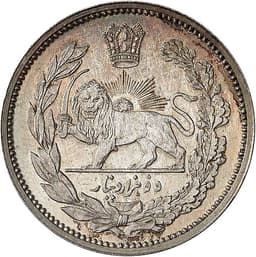
Mohammad Ali Shah
Emperor · Modern
40.0Total

Napoleon Bonaparte
General · Modern
70.9Total
Basic Information
Born
1872
1769
Died
1925
1821
Era
Modern
Modern
Nationality
Persia
France
Occupation
Emperor
General
Civilization
Middle Eastern
Western
Score Comparison
Military (10%)
43.3
94.0
Political (20%)
30.7
72.0
Influence (20%)
45.5
40.0
Legacy (20%)
34.2
80.0
Leadership (15%)
38.1
78.0
Strategy (15%)
54.3
90.0
TOTAL
40.0
70.9
Mohammad Ali Shah — Complete Timeline
1908 AD
Bombarded the Parliament (Majlis)Political Action
Mohammad Ali Shah ordered the Russian-led Cossack Brigade to bombard the Iranian parliament (Majlis) in Tehran, killing many constitutionalists and suspending the constitution. This coup d'
CoupConstitutional RevolutionRepression
Impact: nationaldestructive
1909 AD
Forced to AbdicatePolitical Action◆ Major
After the bombardment of the Majlis, constitutionalist forces from Tabriz and Isfahan marched on Tehran, forcing Mohammad Ali Shah to abdicate in favor of his son Ahmad Shah. He fled to Russia, ending his attempt to restore autocracy and allowing the constitution to be reinstated.
AbdicationConstitutional RestorationExile
Impact: nationaltragic
1911 AD
Attempted to Regain the ThroneWar
Mohammad Ali Shah, with Russian support, attempted to invade Persia and regain the throne. He landed at Astarabad but was defeated by constitutionalist forces. This failed attempt further weakened the Qajar dynasty and increased Russian influence in northern Persia.
Invasion AttemptRussian SupportConstitutionalist Victory
Impact: nationaldestructive
Napoleon Bonaparte — Complete Timeline
1799 AD
Coup of 18 BrumaireOther◆ Major
Napoleon Bonaparte, with support from his brother Lucien and key political figures, overthrew the Directory in a bloodless coup. He established the Consulate with himself as First Consul, effectively becoming the ruler of France. This event ended the French Revolution's most unstable period.
French RevolutionCoupRise to Power
Impact: regional
1804 AD
Promulgation of the Napoleonic CodeOther◆ Major
Napoleon enacted the Civil Code of the French, known as the Napoleonic Code, a comprehensive set of laws that replaced the fragmented feudal legal systems. The code established legal equality, protected property rights, and secularized law. It became the basis for legal systems in many European and world countries.
Legal ReformNapoleonic CodeCivil Law
Impact: globalconstructive
1805 AD
Battle of AusterlitzWar◆ Major
Napoleon's Grande Arm
Napoleonic WarsBattleDecisive Victory
Impact: global
1812 AD
Invasion of RussiaWar◆ Major
Napoleon led the Grande Arm
Napoleonic WarsInvasionDisaster
Impact: globaldestructive
1815 AD
Battle of WaterlooWar◆ Major
Napoleon's French army was defeated by the combined forces of the Duke of Wellington's Anglo-Allied army and Gebhard Leberecht von Bl
Napoleonic WarsBattleFinal Defeat
Impact: globaldestructive
Expert Analysis
mohammad-ali-shah-vs-napoleon-bonaparte
# The Emperor and the Shah: Two Paths to Power, Two Destinies
In the spring of 1908, as the first shells from the Russian-led Cossack Brigade crashed into the Persian parliament building in Tehran, a different kind of explosion had already reshaped Europe a century earlier. Napoleon Bonaparte had once stood before the Pyramids and told his soldiers, "Forty centuries look down upon you." Now, in a dusty Tehran street, Mohammad Ali Shah ordered the destruction of his own nation's fragile experiment with democracy. The contrast between these two rulers—one who conquered a continent, the other who could barely hold his throne—tells us something profound about the nature of leadership, opportunity, and the cruel mathematics of historical timing.
Origins
Napoleon Bonaparte was born in 1769 on the island of Corsica, a place that had only recently become French. His family was minor nobility, but his education at French military academies gave him something far more valuable: the intellectual tools of the Enlightenment combined with the hard skills of an artillery officer. The French Revolution, which erupted when he was twenty, shattered the old order and created a vacuum that a man of talent—regardless of birth—could fill. "Impossible is a word to be found only in the dictionary of fools," he would later say, and his rise proved it.
Mohammad Ali Shah, born in 1872, inherited a different world. The Qajar dynasty had ruled Persia since 1789, but by his time, it was a hollow shell. His father, Mozaffar ad-Din Shah, had reluctantly granted a constitution in 1906, pressured by merchants, clerics, and intellectuals who had seen how Japan's modernization had defeated Russia in 1905. Mohammad Ali Shah was raised in the old ways, surrounded by court intrigue and Russian influence. He saw reform not as opportunity but as betrayal. Where Napoleon had been forged in revolution's fire, Mohammad Ali Shah was smothered by tradition's velvet cushion.
Rise to Power
Napoleon's ascent was a masterpiece of timing and audacity. In 1793, at age twenty-four, he drove the British from Toulon. By 1796, he commanded the Italian campaign, where his lightning speed and innovative tactics stunned the Austrians. The 1799 coup of 18 Brumaire made him First Consul, and by 1804, he crowned himself Emperor in Notre Dame. Each step was a gamble he won. His military score of 94.0 and strategy of 93.0 reflect a man who understood that war was not just about winning battles but about destroying the enemy's will to fight.
Mohammad Ali Shah's path was simpler and narrower. He became Shah in 1907, but his power was contested from the start. The Constitutional Revolution had created a parliament, the Majles, that sought to limit his authority. Rather than adapt, he struck. In June 1908, he ordered the Cossack Brigade—a force trained and officered by Russians—to bombard the Majles. The attack killed dozens and crushed the parliament. For a moment, he seemed victorious. But his political score of 44.9 and leadership of 43.5 reveal the truth: he had won a battle but lost the war for legitimacy.
Leadership & Governance
Napoleon governed with the same energy he brought to war. The Napoleonic Code, established in 1804, standardized French law, protected property rights, and ended feudal privileges. He reformed education, created the Bank of France, and built roads and canals. His political score of 75.0, while lower than his military genius, shows a ruler who understood that conquest required administration. Yet his governance had a fatal flaw: he could not stop. "Power is my mistress," he admitted, and he pursued her across Europe until she destroyed him.
Mohammad Ali Shah governed through fear and foreign support. His 1908 bombardment of the Majles was not a strategic masterstroke but a desperate act. He relied on Russian troops because he could not trust his own army. His governance score of 44.9 reflects a ruler who saw power as something to be hoarded, not exercised. When constitutionalist forces from Tabriz and Isfahan marched on Tehran in 1909, he had no base of support. In July 1909, he was forced to abdicate and fled to Russia. His reign had lasted barely two years.
Triumph & Tragedy
Napoleon's greatest triumph was Austerlitz in 1805, where he destroyed the combined armies of Russia and Austria. His tragedy was Waterloo in 1815, where his genius met its match in the Duke of Wellington and the Prussian field marshal Blücher. The score of 82.4 for his total impact captures the paradox: a man who reshaped Europe but could not hold it. His final exile on Saint Helena, where he died in 1821, was a lonely end for someone who had once commanded millions.
Mohammad Ali Shah's "triumph" was the 1908 bombardment, a moment of cruel power that lasted only months. His tragedy was deeper: he attempted to regain the throne in 1911 with Russian support, landing at Astarabad, but was defeated again. He died in exile in 1925, a footnote in Persian history. His legacy score of 44.4 is not just low; it is a judgment on a ruler who destroyed his country's best chance at modernization.
Character & Destiny
Napoleon's character was a storm of ambition, intelligence, and ego. He believed he was destined to remake the world, and for a decade, he nearly did. His decisions—from invading Russia in 1812 to refusing peace terms in 1813—were driven by an inability to stop. "He who fears being conquered is sure of defeat," he said, but his fearlessness became his downfall.
Mohammad Ali Shah's character was cautious, suspicious, and ultimately weak. He saw enemies everywhere and trusted only foreigners. His decision to bomb the Majles was not boldness but panic. He could not see that the constitution might have been a tool to strengthen his throne, not weaken it. His personality shaped a destiny of failure.
Legacy
Napoleon's legacy is written in every modern legal code, every military academy, every debate about European unity. His political score of 75.0 and influence of 82.0 reflect a man whose ideas outlived his empire. The Napoleonic Code still shapes law from France to Louisiana to Japan. He is remembered as both tyrant and reformer, conqueror and lawgiver.
Mohammad Ali Shah's legacy is a warning. The Constitutional Revolution he crushed eventually succeeded in 1909, but the damage was done. His reliance on Russia deepened Persian dependence, setting the stage for the 1921 coup that brought Reza Shah to power. Today, he is remembered as the Shah who bombarded his own parliament—a symbol of reaction, not rule.
Conclusion
Standing at the distance of history, these two rulers seem worlds apart. Napoleon conquered Europe; Mohammad Ali Shah could not hold Tehran. Yet both faced the same fundamental question: how to lead a nation through crisis. Napoleon answered with genius and ambition, Mohammad Ali Shah with fear and force. Their scores—82.4 for Napoleon, 48.7 for Mohammad Ali Shah—are not just numbers. They are the measure of what happens when character meets opportunity, when a man's vision either matches or fails his age. The French emperor built a code that outlasted his empire; the Persian Shah destroyed a parliament that might have saved his. One shaped the future; the other clung to the past. In the end, that is the only difference that matters.
Rankings
🥇
Napoleon BonaparteLeader
Mil: 94.0Pol: 72.0Inf: 40.0
70.9
🥈
Mohammad Ali Shah
Mil: 43.3Pol: 30.7Inf: 45.5
40.0
+30.9 behind
How This Comparison Works
Algorithm
Each figure is scored on 6 dimensions (0—100 scale) based on structured historical data: Military (10%), Political (20%), Influence (20%), Legacy (20%), Leadership (15%), Strategy (15%). The weighted total produces the final ranking.
Data Sources
Scores are computed from structured sub-indicators in the database. Scale factors adjust for era (Ancient ×0.85, Modern ×1.0) and civilization size (Eastern ×1.05, Other ×0.80) to account for differences in population and military scale.
Maximum 3 Figures
Comparisons are limited to 2—3 figures to ensure readability and statistical meaningfulness.
Error Margins
±5 points per dimension — Sub-scores are derived from historical records with inherent uncertainty. Two figures within 5 points on a dimension should be considered roughly equivalent in that area.
Total Score Accuracy
±3 points overall — The weighted combination of 6 dimensions produces a total score with approximately ±3 points of uncertainty. Differences of less than 3 points are not statistically significant— the figures are effectively tied.
Known Limitations
- Historical records are incomplete and uneven across civilizations
- Figures from oral-tradition societies may be underrepresented
- Occupation labels can misclassify multi-role figures
- Scores measure capability and impact, not moral character
- Quantitative scoring is a comparison tool, not absolute truth
Capability Radar
Military (10%) — Battles & Warfare
Battles
5
95
Win Rate
5
90
Expansion
5
95
Political (20%) — Governance & Reform
Reform
5
95
Diplomacy
10
80
Economy
5
85
Influence (20%) — Cultural & Global Reach
Cultural
5
85
Global
5
90
Legacy (20%) — Historical Impact
Historical
10
95
Longevity
5
90
Leadership (15%) — Power & Stability
Tenure
20
85
Stability
5
70
Strategy (15%) — Tactics & Innovation
Strategy
5
95
Tactics
5
98
Reform
5
92
Similar Comparisons
Comments & Discussion
TehranCorsican6/17/2026
Comparing Napoleon to Mohammad Ali Shah is like comparing a tiger to a house cat. Napoleon reshaped Europe's legal and political landscape with the Napoleonic Code, establishing meritocracy over aristocracy. He conquered from Spain to Moscow, created a empire of 44 million subjects, and his influence echoes in modern civil law. Mohammad Ali Shah, by contrast, couldn't even hold Tehran without Russian Cossacks—his legacy is bombing his own parliament. One built systems, the other shattered window
革命炮兵6/17/2026
拿破仑打的是欧洲的旧制度,把封建王冠一个个踢进垃圾堆;穆罕默德·阿里沙打的却是本国议会,亲手掐断波斯宪政革命。同一场"炮击",目标完全相反:前者炸开历史大门,后者把它焊死。更讽刺的是,拿破仑的炮是法国大革命给的,穆罕默德的炮是沙俄借的——谁更有骨气,一目了然。
DataQuibble6/17/2026
The "Grande Armée" Napoleon fielded for Russia in 1812 had 600,000 men—a staggering land army for its time. Mohammad Ali Shah, in 1908, couldn't even secure Tehran without a mere 400 Cossacks lent by the Tsar. That's a 1,500-to-1 ratio in military capacity. And Napoleon bankrupted France for a decade; the Shah just hocked Persia to British and Russian banks. One was a strategic genius who overreached, the other a minor footnote who couldn't even hold his own capital solo.
ClassicsCorrector6/17/2026
拿破仑的意义在于他证明了"一个头脑可以胜过传统"——科西嘉乡巴佬靠能力爬上欧洲之巅,这才是启蒙运动的真精神。穆罕默德·阿里沙呢?他证明了"一个王朝可以烂到根"——1800年恺加王朝刚建立时还收复过格鲁吉亚,到他手上连德黑兰都得靠哥萨克佣兵保命。把拿破仑和这号人放一起比较,简直是对雾月政变的侮辱。
马背上的算盘6/17/2026
别被"君主"这个标签骗了。拿破仑是自走型战争机器加政治发动机,打仗靠战术创新和国家动员;穆罕默德·阿里沙是坐在王位上的寄生虫,靠的是向沙俄跪求和英国贷款换来的散兵游勇。拿破仑的失败是给全欧洲上课,穆罕默德的失败只是波斯历史书里的一行小字——连国际象棋的卒子都算不上,就是棋盘上多掉的一根头发。