Loading...
Moshoeshoe II vs Napoleon Bonaparte
Napoleon Bonaparte leads by 26.6 pts · 2 figures compared
…
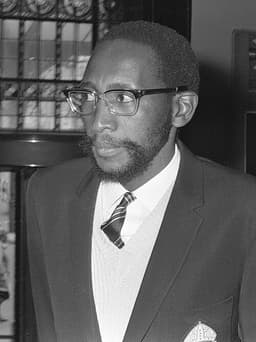
Moshoeshoe II
Emperor · Modern
44.3Total

Napoleon Bonaparte
General · Modern
70.9Total
Basic Information
Born
1938
1769
Died
—
1821
Era
Modern
Modern
Nationality
Lesotho
France
Occupation
Emperor
General
Civilization
Other
Western
Score Comparison
Military (10%)
50.0
94.0
Political (20%)
30.8
72.0
Influence (20%)
49.4
40.0
Legacy (20%)
37.5
80.0
Leadership (15%)
55.3
78.0
Strategy (15%)
46.5
90.0
TOTAL
44.3
70.9
Moshoeshoe II — Complete Timeline
1966 AD
Coronation as King of LesothoPolitical Action◆ Major
Moshoeshoe II was crowned King of Lesotho upon the country's independence from Britain. He became the constitutional monarch of the new nation, symbolizing Basotho unity and tradition.
IndependenceCoronationMonarchy
Impact: nationalconstructive
1970 AD
Exile During Political CrisisPolitical Action◆ Major
Moshoeshoe II was forced into exile after Prime Minister Leabua Jonathan suspended the constitution and declared a state of emergency following disputed elections. The king's return was negotiated, but his political role was curtailed.
ExileConstitutional CrisisPolitical Conflict
Impact: nationaltragic
1996 AD
Death in a Car AccidentOther◆ Major
Moshoeshoe II died in a car accident in the Maloti Mountains. His death was ruled accidental, though some speculation about foul play persisted. He was succeeded by his son, Letsie III.
DeathCar AccidentSuccession
Impact: nationaltragic
Napoleon Bonaparte — Complete Timeline
1799 AD
Coup of 18 BrumaireOther◆ Major
Napoleon Bonaparte, with support from his brother Lucien and key political figures, overthrew the Directory in a bloodless coup. He established the Consulate with himself as First Consul, effectively becoming the ruler of France. This event ended the French Revolution's most unstable period.
French RevolutionCoupRise to Power
Impact: regional
1804 AD
Promulgation of the Napoleonic CodeOther◆ Major
Napoleon enacted the Civil Code of the French, known as the Napoleonic Code, a comprehensive set of laws that replaced the fragmented feudal legal systems. The code established legal equality, protected property rights, and secularized law. It became the basis for legal systems in many European and world countries.
Legal ReformNapoleonic CodeCivil Law
Impact: globalconstructive
1805 AD
Battle of AusterlitzWar◆ Major
Napoleon's Grande Arm
Napoleonic WarsBattleDecisive Victory
Impact: global
1812 AD
Invasion of RussiaWar◆ Major
Napoleon led the Grande Arm
Napoleonic WarsInvasionDisaster
Impact: globaldestructive
1815 AD
Battle of WaterlooWar◆ Major
Napoleon's French army was defeated by the combined forces of the Duke of Wellington's Anglo-Allied army and Gebhard Leberecht von Bl
Napoleonic WarsBattleFinal Defeat
Impact: globaldestructive
Expert Analysis
moshoeshoe-ii-vs-napoleon-bonaparte
# The Emperor and the King: Two Paths to Power, Two Faces of Destiny
On a misty morning in June 1815, Napoleon Bonaparte watched his dreams of empire dissolve into the mud of Waterloo, his Grande Armée shattered beyond recovery. A century and a half later, on a dusty road in the Maloti Mountains of southern Africa, another monarch—Moshoeshoe II of Lesotho—met a quieter end, his car plunging into a ravine in 1996, leaving a nation to wonder what might have been. One man conquered a continent, the other struggled to hold together a tiny mountain kingdom. What separates a figure who reshapes the world from one who barely survives its currents? The answer lies not merely in talent, but in the collision of character with circumstance.
Origins
Napoleon Bonaparte was born in 1769 on the island of Corsica, a place that had only recently become French. His family was minor nobility, poor enough to crave advancement but proud enough to resist assimilation. The French Revolution, which erupted when he was twenty, tore down the old order and opened paths that birth alone could never have granted. He was a child of chaos, and chaos became his natural element.
Moshoeshoe II, born Constantine Bereng Seeiso in 1938, inherited a very different world. His great-grandfather, Moshoeshoe I, had forged the Basotho nation in the crucible of southern Africa’s wars, using diplomacy and mountain fortresses to survive the Zulu expansion and Boer encroachment. By the time the second Moshoeshoe was born, Lesotho was a British protectorate, a small enclave entirely surrounded by South Africa. His destiny was not to conquer but to preside—a constitutional monarch in a postcolonial state, his power limited by law and geography.
Where Napoleon’s era demanded audacity and violence, Moshoeshoe’s required patience and symbolism. The Corsican learned to command armies; the Basotho learned to navigate politics.
Rise to Power
Napoleon’s ascent was meteoric. By 1793, at age twenty-four, he had driven British forces from Toulon, earning promotion to brigadier general. In 1796, he took command of the French army in Italy and, within a year, demolished the Austrian Empire’s forces, dictating peace terms that made him a national hero. The coup of 18 Brumaire in 1799 placed him at the head of France as First Consul; by 1804, he crowned himself Emperor. Every step was a gamble, and every gamble paid off.
Moshoeshoe II’s rise was quieter, but no less significant. When Lesotho gained independence from Britain in 1966, he was crowned king—a ceremony of hope and unity. His score of 78.7 in leadership suggests genuine ability, but his political score of 49.2 reveals the constraints. He was not a conqueror but a symbol, and symbols can be shattered by the first political storm.
Leadership & Governance
Napoleon ruled with a blend of military genius and administrative brilliance. His military score of 94.0 and strategy of 93.0 reflect a commander who could read a battlefield like a chessboard, concentrating forces at the decisive point and crushing enemies with speed and precision. But his political score of 75.0 shows a man who understood power better than governance. The Napoleonic Code reformed French law, establishing principles of equality and meritocracy that endure today. Yet his hunger for conquest bled France dry—over a million French soldiers died in his wars.
Moshoeshoe II faced a different battlefield. In 1970, Prime Minister Leabua Jonathan, fearing electoral defeat, suspended the constitution and declared a state of emergency. The king was forced into exile. His military score of 32.0 and strategy of 65.8 suggest he lacked the means or will to fight. Instead, he waited, returning only in 1995 for a brief, tragic second reign. His governance was not about conquest but about presence—a king whose power was moral, not martial.
Triumph & Tragedy
Napoleon’s greatest triumph was the Battle of Austerlitz in 1805, where he destroyed the combined armies of Russia and Austria, cementing his mastery of Europe. His greatest tragedy was the invasion of Russia in 1812—a catastrophic miscalculation that cost him half a million men and shattered his aura of invincibility. Waterloo in 1815 was the final act, a defeat that sent him to exile on Saint Helena, where he died in 1821.
Moshoeshoe II’s triumphs were quieter: the peaceful transition to independence, the dignity of his coronation. His tragedy was the car crash in the Maloti Mountains in 1996, ruled accidental but shadowed by speculation. He left behind no empire, no code of laws—only a small nation that remembered his father’s legacy and wondered if his own could have been greater.
Character & Destiny
Napoleon was driven by an insatiable ambition, a belief that he was destiny’s instrument. “I am not a man, but a thing,” he once said, suggesting he saw himself as a force of nature. His personality—brilliant, arrogant, impatient—shaped every decision. He could not stop conquering, even when conquest destroyed him.
Moshoeshoe II was a man of his time and place—a constitutional monarch in a fragile democracy, a symbol of unity in a nation surrounded by apartheid South Africa. His personality was shaped by the limits of his role. He could not command armies or rewrite laws; he could only endure, hoping that patience would bring change. It did, but not in time.
Legacy
Napoleon’s legacy is monumental. The Napoleonic Code influenced legal systems across Europe and the world. His military campaigns are studied in war colleges. His name is synonymous with ambition and genius, but also with hubris and destruction. His scores—Influence: 82.0, Legacy: 78.0—reflect a man who changed the course of history, for better and worse.
Moshoeshoe II’s legacy is smaller but no less real. He is remembered as a king who tried to hold his nation together in difficult times, a symbol of Basotho identity. His scores—Influence: 65.0, Legacy: 48.9—suggest a figure who mattered to his people but not to the wider world. Yet perhaps that is the truer measure of leadership: not how many nations you conquer, but how well you serve the one you have.
Conclusion
Napoleon and Moshoeshoe II stand at opposite ends of the spectrum of power. One reshaped the world through force, the other held his world together through presence. Their differences are not merely of talent but of circumstance: Napoleon was born into revolution, Moshoeshoe into a postcolonial order that left little room for kings. One died in exile, the other on a mountain road. Yet both remind us that leadership is not a single path but a thousand, each shaped by the time and place in which a leader must walk.
Rankings
🥇
Napoleon BonaparteLeader
Mil: 94.0Pol: 72.0Inf: 40.0
70.9
🥈
Moshoeshoe II
Mil: 50.0Pol: 30.8Inf: 49.4
44.3
+26.6 behind
How This Comparison Works
Algorithm
Each figure is scored on 6 dimensions (0—100 scale) based on structured historical data: Military (10%), Political (20%), Influence (20%), Legacy (20%), Leadership (15%), Strategy (15%). The weighted total produces the final ranking.
Data Sources
Scores are computed from structured sub-indicators in the database. Scale factors adjust for era (Ancient ×0.85, Modern ×1.0) and civilization size (Eastern ×1.05, Other ×0.80) to account for differences in population and military scale.
Maximum 3 Figures
Comparisons are limited to 2—3 figures to ensure readability and statistical meaningfulness.
Error Margins
±5 points per dimension — Sub-scores are derived from historical records with inherent uncertainty. Two figures within 5 points on a dimension should be considered roughly equivalent in that area.
Total Score Accuracy
±3 points overall — The weighted combination of 6 dimensions produces a total score with approximately ±3 points of uncertainty. Differences of less than 3 points are not statistically significant— the figures are effectively tied.
Known Limitations
- Historical records are incomplete and uneven across civilizations
- Figures from oral-tradition societies may be underrepresented
- Occupation labels can misclassify multi-role figures
- Scores measure capability and impact, not moral character
- Quantitative scoring is a comparison tool, not absolute truth
Capability Radar
Military (10%) — Battles & Warfare
Battles
22
95
Win Rate
24
90
Expansion
27
95
Political (20%) — Governance & Reform
Reform
20
95
Diplomacy
25
80
Economy
15
85
Influence (20%) — Cultural & Global Reach
Cultural
25
85
Global
10
90
Legacy (20%) — Historical Impact
Historical
20
95
Longevity
15
90
Leadership (15%) — Power & Stability
Tenure
30
85
Stability
20
70
Strategy (15%) — Tactics & Innovation
Strategy
31
95
Tactics
36
98
Reform
38
92
Similar Comparisons
Comments & Discussion
墨镜修史家6/17/2026
你们都被欧洲中心史观洗脑了。拿破仑是天才?他连埃及都守不住,让法国海军在尼罗河战役被纳尔逊打爆。Moshoeshoe二世可是从南非种族隔离制度中硬生生找出一条生路,1965年独立后还抵制了博塔政府的吞并阴谋。谁才是真正的战略家?不是那个只会放炮的火药桶。
Bastard of Corsica6/17/2026
Napoleon didn't "conquer a continent"—he bled Europe white for personal glory, leaving a trail of corpses from Madrid to Moscow. Moshoeshoe II, for all his struggles, inherited a diplomatic legacy of survival, not megalomaniacal expansion. Show me Napoleon's long-term consolidation in Africa; you can't. The Emperor's empire collapsed in a decade, while the Basotho nation still exists. Facts over fantasy.
草鞋国王6/17/2026
拿破仑那套“伟大征服”的叙事早该进棺材了。看看莱索托吧,Moshoeshoe二世至少守护了国土完整,不像波拿巴,打赢了奥斯特里茨又如何?莱比锡战役后照样流放厄尔巴岛。拿个失败的小岛暴君和非洲王朝的守护者比,简直侮辱历史。
Historian9596/17/2026
Let's talk numbers: Napoleon's campaigns resulted in approximately 3.5 to 6 million military and civilian deaths, with a GDP loss across Europe that took decades to recover. Moshoeshoe II's reign: zero aggressive wars, minimal casualties, and his kingdom maintained sovereignty throughout apartheid. The "greatness" metric here is absurd—one man inflicted catastrophic destruction for a decade of glory, the other kept his people alive through impossible political terrain.
Historian8546/17/2026
Napoleon's legacy is a monument to overcompensation—short, angry, and obsessed with proving himself. Meanwhile, Moshoeshoe II accepted being exiled to the Netherlands in 1970 after a coup, then returned to rule with humility, learning from failure. That's real character, not a frantic grab at immortality. Give me a king who knows when to bend over a general who burns cities for a statue.