Loading...
Mswati I vs Napoleon Bonaparte
Napoleon Bonaparte leads by 27.0 pts · 2 figures compared
…
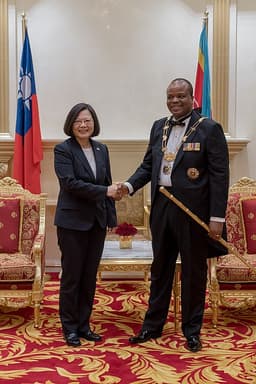
Mswati I
Emperor · Modern
43.9Total

Napoleon Bonaparte
General · Modern
70.9Total
Basic Information
Born
1800
1769
Died
1840
1821
Era
Modern
Modern
Nationality
Eswatini
France
Occupation
Emperor
General
Civilization
Other
Western
Score Comparison
Military (10%)
50.0
94.0
Political (20%)
32.2
72.0
Influence (20%)
48.6
40.0
Legacy (20%)
37.5
80.0
Leadership (15%)
58.8
78.0
Strategy (15%)
36.8
90.0
TOTAL
43.9
70.9
Mswati I — Complete Timeline
1836 AD
First Contact with European TradersPolitical Action◆ Major
Mswati I established initial diplomatic and trade relations with European hunters and traders entering Swazi territory. This opened the kingdom to external commerce and introduced firearms, altering the regional balance of power.
European ContactTradeDiplomacy
Impact: regional
1838 AD
Expansion of Swazi TerritoryWar◆ Major
Mswati I led military campaigns that expanded Swazi control northward into present-day Mpumalanga and southward toward the Pongola River. These conquests secured valuable grazing lands and trade routes.
Territorial ExpansionMilitary CampaignConquest
Impact: regional
1840 AD
Conflict with the Zulu KingdomWar
Mswati I engaged in a series of skirmishes with the Zulu kingdom under Dingane and later Mpande. The conflict ended with a negotiated boundary agreement that stabilized the southern frontier.
Zulu ConflictBorder DisputeWar
Impact: regional
Napoleon Bonaparte — Complete Timeline
1799 AD
Coup of 18 BrumaireOther◆ Major
Napoleon Bonaparte, with support from his brother Lucien and key political figures, overthrew the Directory in a bloodless coup. He established the Consulate with himself as First Consul, effectively becoming the ruler of France. This event ended the French Revolution's most unstable period.
French RevolutionCoupRise to Power
Impact: regional
1804 AD
Promulgation of the Napoleonic CodeOther◆ Major
Napoleon enacted the Civil Code of the French, known as the Napoleonic Code, a comprehensive set of laws that replaced the fragmented feudal legal systems. The code established legal equality, protected property rights, and secularized law. It became the basis for legal systems in many European and world countries.
Legal ReformNapoleonic CodeCivil Law
Impact: globalconstructive
1805 AD
Battle of AusterlitzWar◆ Major
Napoleon's Grande Arm
Napoleonic WarsBattleDecisive Victory
Impact: global
1812 AD
Invasion of RussiaWar◆ Major
Napoleon led the Grande Arm
Napoleonic WarsInvasionDisaster
Impact: globaldestructive
1815 AD
Battle of WaterlooWar◆ Major
Napoleon's French army was defeated by the combined forces of the Duke of Wellington's Anglo-Allied army and Gebhard Leberecht von Bl
Napoleonic WarsBattleFinal Defeat
Impact: globaldestructive
Expert Analysis
mswati-i-vs-napoleon-bonaparte
# The Emperor and the King: Two Paths to Power in a Transforming World
On a June morning in 1815, Napoleon Bonaparte watched his Imperial Guard march toward the ridge of Mont-Saint-Jean, their bearskin caps silhouetted against the Belgian sky. He had conquered Vienna, Berlin, and Moscow—but within hours, the Duke of Wellington’s redcoats would shatter his army, and the man who had remade Europe would sail for his final exile on a remote Atlantic island. Half a world away and two decades later, Mswati I stood on a hill in what is now Eswatini, watching his own warriors return from skirmishes with the Zulu kingdom. He had never seen the sea, never commanded a cannon, never signed a treaty that mattered beyond his own borders. Yet both men faced the same fundamental question: how does a leader navigate a world being torn apart by forces beyond his control?
Origins
Napoleon Bonaparte was born in 1769 on Corsica, an island that had just been sold to France by Genoa. His family were minor nobles of Italian origin, speaking Corsican dialect in a French-speaking kingdom. He was small, ambitious, and burning with resentment—a provincial outsider who would never be fully accepted by the old aristocracy. The French Revolution, which erupted when he was twenty, tore down every barrier that had blocked his path.
Mswati I was born around 1800 into the Dlamini dynasty, a ruling house that had consolidated power in the highlands between the Pongola and Komati rivers. His people called themselves the Swazi. He inherited not a revolution but a world in motion: the Mfecane, the violent upheaval caused by Zulu expansion, was reshaping southern Africa. Refugees, warriors, and displaced clans were streaming across the landscape, and the old rules of power were dissolving.
Rise to Power
Napoleon’s ascent was meteoric and spectacular. In 1793, at age twenty-four, he drove the British from Toulon and was promoted to brigadier general. By 1796, he commanded the Army of Italy, where he discovered his genius: not just tactics, but the art of inspiring starving soldiers to conquer the richest provinces of Austria. "Soldiers," he told them before the Battle of Lodi, "you have fought like lions, but you are naked and hungry. I will lead you into the most fertile plains in the world." By 1799, he had seized power as First Consul. He was thirty.
Mswati’s path was slower and more defensive. He became king around 1836, inheriting a kingdom that existed in the shadow of the Zulu empire under Dingane. His first major act was not conquest but negotiation: in 1836, he established contact with European hunters and traders who had begun entering Swazi territory. These were not armies but individuals, offering guns, cloth, and beads in exchange for ivory and cattle. Mswati saw them as tools to balance against the Zulu threat.
Leadership & Governance
Napoleon ruled like a force of nature. He reorganized France into departments, centralized the tax system, founded the Bank of France, and—most enduringly—created the Napoleonic Code, a legal framework that abolished feudal privileges and established equality before the law. He appointed officials based on merit, not birth. "The tools to the man who can use them," he said. On the battlefield, his speed and decisiveness were legendary: he could march an army 200 miles in two weeks, concentrate his forces at the decisive point, and shatter an enemy with artillery and cavalry. His political score of 75.0 reflects a ruler who was brilliant at administration but ultimately consumed by his own ambition.
Mswati governed through consensus and adaptation. He expanded Swazi territory northward into present-day Mpumalanga in 1838, not by destroying his enemies but by absorbing them—offering protection to displaced clans in exchange for allegiance. When Boer trekkers arrived after their Great Trek, Mswati did not wage war but negotiated boundaries and trade agreements. His political score of 43.3 reflects the reality of a small kingdom in a brutal neighborhood: he could not command, only persuade.
Triumph & Tragedy
Napoleon’s greatest triumph was Austerlitz in 1805, where he lured the combined Russian and Austrian armies into a trap and destroyed them. His greatest tragedy was the invasion of Russia in 1812: 600,000 men marched east; fewer than 40,000 returned. He never recovered.
Mswati’s triumph was simply survival. While the Zulu kingdom collapsed into civil war and the Boer republics fought the British, the Swazi kingdom remained intact. His tragedy was that he could not stop what was coming. By 1840, when he died, the first European settlers were already claiming land. The precedents he set—trade, treaties, accommodation—would not save his successors from eventual colonization.
Character & Destiny
Napoleon was driven by an insatiable hunger for glory. "What is the throne?" he once asked. "A bit of wood covered with velvet." But he could not stop. He needed to conquer, to prove himself to a world that had once dismissed him as a Corsican upstart. That hunger made him unstoppable—and then made him blind.
Mswati was driven by survival. He saw the world as it was, not as he wished it to be. He knew he could not defeat the Zulu or the Boers or the British, so he learned to maneuver between them. His caution was not cowardice but wisdom.
Legacy
Napoleon’s legacy is stamped across Europe: the Napoleonic Code, the metric system, the modern nation-state. His military tactics are still studied. His name is synonymous with genius and hubris. His total score of 82.4 reflects a titan.
Mswati’s legacy is quieter but no less real. The kingdom he preserved became modern Eswatini, one of the few African states to survive the colonial era with its monarchy intact. His total score of 46.0 reflects a world that measures power in empires, not in survival.
Conclusion
We remember Napoleon because he changed the world. We should remember Mswati because he kept his world from being changed beyond recognition. One man conquered; the other endured. In the end, both were swept away by forces larger than themselves—the first by the limits of ambition, the second by the iron logic of empire. Their stories remind us that history is not only written by the victors, but also by those who simply refused to disappear.
Rankings
🥇
Napoleon BonaparteLeader
Mil: 94.0Pol: 72.0Inf: 40.0
70.9
🥈
Mswati I
Mil: 50.0Pol: 32.2Inf: 48.6
43.9
+27.0 behind
How This Comparison Works
Algorithm
Each figure is scored on 6 dimensions (0—100 scale) based on structured historical data: Military (10%), Political (20%), Influence (20%), Legacy (20%), Leadership (15%), Strategy (15%). The weighted total produces the final ranking.
Data Sources
Scores are computed from structured sub-indicators in the database. Scale factors adjust for era (Ancient ×0.85, Modern ×1.0) and civilization size (Eastern ×1.05, Other ×0.80) to account for differences in population and military scale.
Maximum 3 Figures
Comparisons are limited to 2—3 figures to ensure readability and statistical meaningfulness.
Error Margins
±5 points per dimension — Sub-scores are derived from historical records with inherent uncertainty. Two figures within 5 points on a dimension should be considered roughly equivalent in that area.
Total Score Accuracy
±3 points overall — The weighted combination of 6 dimensions produces a total score with approximately ±3 points of uncertainty. Differences of less than 3 points are not statistically significant— the figures are effectively tied.
Known Limitations
- Historical records are incomplete and uneven across civilizations
- Figures from oral-tradition societies may be underrepresented
- Occupation labels can misclassify multi-role figures
- Scores measure capability and impact, not moral character
- Quantitative scoring is a comparison tool, not absolute truth
Capability Radar
Military (10%) — Battles & Warfare
Battles
15
95
Win Rate
20
90
Expansion
25
95
Political (20%) — Governance & Reform
Reform
20
95
Diplomacy
25
80
Economy
20
85
Influence (20%) — Cultural & Global Reach
Cultural
20
85
Global
10
90
Legacy (20%) — Historical Impact
Historical
20
95
Longevity
15
90
Leadership (15%) — Power & Stability
Tenure
30
85
Stability
25
70
Strategy (15%) — Tactics & Innovation
Strategy
20
95
Tactics
15
98
Reform
10
92
Similar Comparisons
Comments & Discussion
NICKNAME: The Little Corporal6/17/2026
Comparing Mswati I to Napoleon is like comparing a village mayor to a world icon. Napoleon commanded 600,000 men into Russia and rewrote European law with the Code Civil. Mswati consolidated some cattle raids. Let’s not pretend these are the same species of “power.” One reshaped civilization; the other mattered regionally for a few decades. History isn’t a participation trophy.
大数据老K6/17/2026
数据层面这对比纯属搞笑。拿破仑控制过7个欧洲首都,指挥过超90场大战役。姆斯瓦蒂一世?他统治的所谓“领土”大概只有1.7万平方公里,还没一个法国省大。你们把地方酋长和欧洲征服者放同一台秤上,不是无知就是故意。历史不是幼儿园,评分得讲基本面。
Jules the Classicist6/17/2026
Napoleon understood institutions—he’s the man who said “What is history but a fable agreed upon?” Mswati I never wrote a memoir or a law code. His legacy is oral tradition and a shrinking kingdom. One built a bureaucracy that still shapes France; the other built a kraal. That’s not a comparison; that’s a category error. Let’s not inflate local chieftaincy to imperial stature.
Revisionist Rick6/17/2026
你们全被欧洲中心主义洗脑了。拿破仑输掉了滑铁卢,被流放,死得孤寂。姆斯瓦蒂一世稳压了祖鲁扩张,稳住了王权,至今斯威士兰王室还存续。拿破仑的帝国活了多少年?十年。姆斯瓦蒂的王国传了快两百年。谁是真正的成功者?权力不是看有多少大炮,而是看留给子孙什么。
历史老炮儿6/17/2026
我站拿破仑那边。姆斯瓦蒂一世一辈子没见过海岸线,没读过一本书,没造过一座城。拿破仑搞了巴黎凯旋门、埃及学、公制系统。一个把欧洲从封建残余里拖出来,一个守着部落火堆。别拿部落首领碰瓷帝国建筑师,这跟说业余乐队能比贝多芬一样滑稽。