Loading...
This comparison has not been analyzed yet.
One-time AI generation (~1 minute). Scores and timeline are already available below.
Muhammad Shah I Bahmani vs Prithviraj Chauhan
Prithviraj Chauhan leads by 1.2 pts · 2 figures compared
…
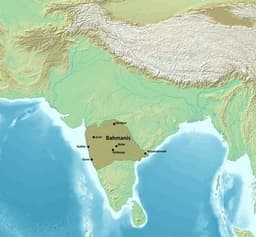
Muhammad Shah I Bahmani
Emperor · Medieval
54.3Total
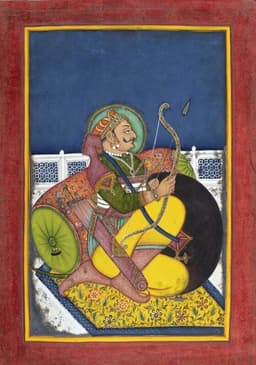
Prithviraj Chauhan
Emperor · Medieval
55.5Total
Basic Information
Born
1358
1166
Died
1375
1192
Era
Medieval
Medieval
Nationality
India
India
Occupation
Emperor
Emperor
Civilization
Indian
Indian
Score Comparison
Military (10%)
25.0
60.0
Political (20%)
62.7
39.4
Influence (20%)
60.0
59.0
Legacy (20%)
49.2
54.0
Leadership (15%)
66.0
67.0
Strategy (15%)
51.7
52.5
TOTAL
54.3
55.5
Muhammad Shah I Bahmani — Complete Timeline
1360 AD
Reorganization of Bahmani administrationReform◆ Major
Muhammad Shah I Bahmani restructured the Bahmani administration by dividing the sultanate into four provinces (tarafs), each governed by a tarafdar. This system improved tax collection and military organization.
Administrative ReformProvincial System
Impact: regionalconstructive
1365 AD
War with Vijayanagara over Raichur DoabWar◆ Major
Muhammad Shah I Bahmani fought a war against the Vijayanagara Empire for control of the Raichur Doab. The conflict ended with a treaty that temporarily ceded the region to Vijayanagara.
WarVijayanagaraTerritorial Dispute
Impact: regional
1367 AD
Construction of the Jami Masjid at GulbargaCultural
Muhammad Shah I Bahmani commissioned the construction of the Jami Masjid in Gulbarga, a large congregational mosque. The mosque became a center for Islamic worship and learning in the Bahmani capital.
ArchitectureReligion
constructive
1370 AD
Suppression of the rebellion of Bahram KhanPolitical Action
Muhammad Shah I Bahmani crushed a rebellion led by the noble Bahram Khan, who had challenged his authority. The revolt was put down with force, and Bahram Khan was executed.
RebellionInternal Conflict
Impact: nationaldestructive
Prithviraj Chauhan — Complete Timeline
1177 AD
Accession to the Chauhan ThronePolitical Action
Prithviraj Chauhan succeeded his father Someshvara as ruler of the Chauhan kingdom of Ajmer and Delhi. He was a young king who soon faced threats from the Ghurid Empire under Muhammad of Ghor.
ChauhanAjmerDelhi
Impact: regional
1191 AD
First Battle of TarainWar◆ Major
Prithviraj Chauhan defeated Muhammad of Ghor at the First Battle of Tarain near Thanesar. The Ghurid army was routed, and Muhammad was captured but later released. This victory temporarily halted Ghurid expansion into northern India.
TarainGhuridVictory
Impact: regional
1192 AD
Second Battle of TarainWar
Muhammad of Ghor returned with a larger army and defeated Prithviraj Chauhan at the Second Battle of Tarain. Prithviraj was captured and executed, and the Chauhan kingdom was annexed by the Ghurids, leading to the establishment of Muslim rule in Delhi.
TarainGhuridDefeat
Impact: regionaltragic
Capture and Execution by Muhammad of GhorWar◆ Major
After the Second Battle of Tarain, Prithviraj Chauhan was taken prisoner by Muhammad of Ghor. He was executed shortly after, ending the Chauhan dynasty's rule. His death marked the beginning of the Delhi Sultanate.
ExecutionDelhi SultanateChauhan
Impact: regionaltragic
This comparison has not been analyzed yet.
One-time AI generation (~1 minute). Scores and timeline are already available below.
Rankings
🥇
Prithviraj ChauhanLeader
Mil: 60.0Pol: 39.4Inf: 59.0
55.5
🥈
Muhammad Shah I Bahmani
Mil: 25.0Pol: 62.7Inf: 60.0
54.3
+1.2 behind
How This Comparison Works
Algorithm
Each figure is scored on 6 dimensions (0—100 scale) based on structured historical data: Military (10%), Political (20%), Influence (20%), Legacy (20%), Leadership (15%), Strategy (15%). The weighted total produces the final ranking.
Data Sources
Scores are computed from structured sub-indicators in the database. Scale factors adjust for era (Ancient ×0.85, Modern ×1.0) and civilization size (Eastern ×1.05, Other ×0.80) to account for differences in population and military scale.
Maximum 3 Figures
Comparisons are limited to 2—3 figures to ensure readability and statistical meaningfulness.
Error Margins
±5 points per dimension — Sub-scores are derived from historical records with inherent uncertainty. Two figures within 5 points on a dimension should be considered roughly equivalent in that area.
Total Score Accuracy
±3 points overall — The weighted combination of 6 dimensions produces a total score with approximately ±3 points of uncertainty. Differences of less than 3 points are not statistically significant— the figures are effectively tied.
Known Limitations
- Historical records are incomplete and uneven across civilizations
- Figures from oral-tradition societies may be underrepresented
- Occupation labels can misclassify multi-role figures
- Scores measure capability and impact, not moral character
- Quantitative scoring is a comparison tool, not absolute truth
Capability Radar
Military (10%) — Battles & Warfare
Battles
45
65
Win Rate
50
60
Expansion
40
45
Political (20%) — Governance & Reform
Reform
65
30
Diplomacy
55
40
Economy
50
35
Influence (20%) — Cultural & Global Reach
Cultural
40
55
Global
30
40
Legacy (20%) — Historical Impact
Historical
45
60
Longevity
40
55
Leadership (15%) — Power & Stability
Tenure
60
50
Stability
55
40
Strategy (15%) — Tactics & Innovation
Strategy
45
55
Tactics
40
70
Reform
55
30
Similar Comparisons
Comments & Discussion
No comments yet. Be the first to share your thoughts!