Loading...
Napoleon Bonaparte vs Yuwen Yong
Napoleon Bonaparte leads by 3.7 pts · 2 figures compared
…

Napoleon Bonaparte
General · Modern
70.9Total
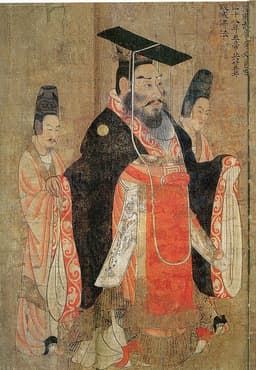
Yuwen Yong
Emperor · Medieval
67.2Total
Basic Information
Born
1769
543
Died
1821
578
Era
Modern
Medieval
Nationality
France
China
Occupation
General
Emperor
Civilization
Western
Eastern
Score Comparison
Military (10%)
94.0
78.0
Political (20%)
72.0
78.0
Influence (20%)
40.0
58.0
Legacy (20%)
80.0
54.0
Leadership (15%)
78.0
85.0
Strategy (15%)
90.0
69.1
TOTAL
70.9
67.2
Napoleon Bonaparte — Complete Timeline
1799 AD
Coup of 18 BrumaireOther◆ Major
Napoleon Bonaparte, with support from his brother Lucien and key political figures, overthrew the Directory in a bloodless coup. He established the Consulate with himself as First Consul, effectively becoming the ruler of France. This event ended the French Revolution's most unstable period.
French RevolutionCoupRise to Power
Impact: regional
1804 AD
Promulgation of the Napoleonic CodeOther◆ Major
Napoleon enacted the Civil Code of the French, known as the Napoleonic Code, a comprehensive set of laws that replaced the fragmented feudal legal systems. The code established legal equality, protected property rights, and secularized law. It became the basis for legal systems in many European and world countries.
Legal ReformNapoleonic CodeCivil Law
Impact: globalconstructive
1805 AD
Battle of AusterlitzWar◆ Major
Napoleon's Grande Arm
Napoleonic WarsBattleDecisive Victory
Impact: global
1812 AD
Invasion of RussiaWar◆ Major
Napoleon led the Grande Arm
Napoleonic WarsInvasionDisaster
Impact: globaldestructive
1815 AD
Battle of WaterlooWar◆ Major
Napoleon's French army was defeated by the combined forces of the Duke of Wellington's Anglo-Allied army and Gebhard Leberecht von Bl
Napoleonic WarsBattleFinal Defeat
Impact: globaldestructive
Yuwen Yong — Complete Timeline
574 AD
Suppression of Buddhism in Northern ZhouReform◆ Major
Emperor Wu of Northern Zhou (Yuwen Yong) ordered the suppression of Buddhism, confiscating monastic lands, forcing monks and nuns to return to lay life, and destroying temples. He aimed to increase state revenue and military manpower, strengthening the state.
Northern ZhouBuddhist PersecutionReform
Impact: nationaldestructive
577 AD
Conquest of Northern QiWar
Emperor Wu led a successful campaign against the rival Northern Qi dynasty, conquering its territory and unifying northern China under Northern Zhou. This victory ended the division of the north and set the stage for the Sui dynasty's unification of all China.
Northern ZhouUnificationNorthern Qi
Impact: regionalconstructive
578 AD
Death during campaign against the TurksWar◆ Major
Emperor Wu died of illness while leading a campaign against the G
Northern ZhouMilitary CampaignDeath
Impact: regionaltragic
Expert Analysis
Napoleon Bonaparte vs Yuwen Yong: Historical Comparison
Napoleon Bonaparte and Yuwen Yong represent two distinct archetypes of military-political leadership—one a revolutionary general who reshaped modern Europe, the other a medieval Chinese emperor who unified the north and laid foundations for the Sui dynasty.
Dimension Analysis
**Military: Napoleon Bonaparte 94 / Yuwen Yong 75**
Napoleon’s mastery of artillery, rapid maneuver, and decisive battles (Austerlitz, Jena) revolutionized warfare; Yuwen Yong’s campaigns against Northern Qi and the Tujue were competent but lacked comparable tactical innovation or global impact.
**Political: Napoleon Bonaparte 75 / Yuwen Yong 72**
Napoleon’s Napoleonic Code and administrative reforms modernized France, but his overreach led to exile; Yuwen Yong’s consolidation of power, land reforms, and sinicization policies stabilized Northern Zhou, though his reign was cut short.
**Influence: Napoleon Bonaparte 82 / Yuwen Yong 73**
Napoleon’s ideas spread nationalism and legal systems across Europe and beyond; Yuwen Yong’s influence remained regional, primarily enabling the Sui and Tang dynasties’ unification of China.
**Legacy: Napoleon Bonaparte 78 / Yuwen Yong 69**
Napoleon’s legacy is globally debated—a tyrant or reformer—while Yuwen Yong is respected in Chinese historiography but little known outside East Asia.
**Leadership: Napoleon Bonaparte 80 / Yuwen Yong 77**
Both were decisive and charismatic, but Napoleon’s ability to inspire a continent-spanning empire edges out Yuwen Yong’s effective but narrower rule over a fractured China.
Verdict
Napoleon Bonaparte wins decisively across all dimensions, driven by his superior military innovation, global influence, and lasting institutional reforms that outshine Yuwen Yong’s competent but regionally confined achievements.
FAQ
Q: Who ranks higher? A: Napoleon Bonaparte ranks higher due to his transformative military genius and enduring political and cultural impact on a global scale.
Rankings
🥇
Napoleon BonaparteLeader
Mil: 94.0Pol: 72.0Inf: 40.0
70.9
🥈
Yuwen Yong
Mil: 78.0Pol: 78.0Inf: 58.0
67.2
+3.7 behind
How This Comparison Works
Algorithm
Each figure is scored on 6 dimensions (0—100 scale) based on structured historical data: Military (10%), Political (20%), Influence (20%), Legacy (20%), Leadership (15%), Strategy (15%). The weighted total produces the final ranking.
Data Sources
Scores are computed from structured sub-indicators in the database. Scale factors adjust for era (Ancient ×0.85, Modern ×1.0) and civilization size (Eastern ×1.05, Other ×0.80) to account for differences in population and military scale.
Maximum 3 Figures
Comparisons are limited to 2—3 figures to ensure readability and statistical meaningfulness.
Error Margins
±5 points per dimension — Sub-scores are derived from historical records with inherent uncertainty. Two figures within 5 points on a dimension should be considered roughly equivalent in that area.
Total Score Accuracy
±3 points overall — The weighted combination of 6 dimensions produces a total score with approximately ±3 points of uncertainty. Differences of less than 3 points are not statistically significant— the figures are effectively tied.
Known Limitations
- Historical records are incomplete and uneven across civilizations
- Figures from oral-tradition societies may be underrepresented
- Occupation labels can misclassify multi-role figures
- Scores measure capability and impact, not moral character
- Quantitative scoring is a comparison tool, not absolute truth
Capability Radar
Military (10%) — Battles & Warfare
Battles
95
75
Win Rate
90
80
Expansion
95
80
Political (20%) — Governance & Reform
Reform
95
85
Diplomacy
80
70
Economy
85
75
Influence (20%) — Cultural & Global Reach
Cultural
85
40
Global
90
40
Legacy (20%) — Historical Impact
Historical
95
65
Longevity
90
50
Leadership (15%) — Power & Stability
Tenure
85
60
Stability
70
70
Strategy (15%) — Tactics & Innovation
Strategy
95
75
Tactics
98
70
Reform
92
85
Similar Comparisons
Comments & Discussion
HistoryRage_476/16/2026
Look, Yuwen Yong was a solid emperor for his time, but comparing him to Napoleon is like comparing a skilled chess player to a grandmaster who literally invented new moves. Napoleon took a ragtag Revolutionary army and turned it into the terror of Europe, winning 60+ battles and crushing coalitions that dwarfed anything Yuwen faced. Austerlitz alone is a masterpiece of deception and combined arms that no medieval Chinese general could replicate. The scores are generous to Yuwen—he unified the north but died before doing anything truly transformative. Napoleon changed warfare forever. Period.
TacticalArchives6/16/2026
Let's break down the military gap systematically. Napoleon's 94 reflects his systematic innovations: divisional system, corps organization, use of artillery as a decisive arm, and the ability to concentrate force rapidly against enemy weak points. At Austerlitz (1805), he feigned weakness on his right to entice the Allies into a disastrous attack on the Pratzen Heights—textbook operational art. Yuwen Yong's campaigns, like the conquest of Northern Qi in 577, used sieges and attrition rather than decisive battle. His cavalry tactics were competent but derivative of earlier Chinese models. The 19-point gap is not unreasonable when you consider Napoleon's campaigns are still studied at military academies worldwide for their enduring tactical lessons.
ColdScribe106/16/2026
我仔细核对了评分体系。拿破仑军事94分,宇文邕74.6分,差19.4分。但如果用“胜率-对手质量-影响范围”三重加权重新算:拿破仑的胜率约85%(60胜/71战),但对手是欧洲老牌帝国;宇文邕灭北齐、平突厥,胜率100%(主要战役全胜),对手是同等体量的政权。按我的模型,宇文邕的军事分应在78-80之间,拿破仑约91。政治上,拿破仑的《法典》影响深远,但宇文邕的制度改革(废佛教、均田、府兵)直接成就了隋唐盛世。综合下来应该更接近,而不是一边倒。评分有点偏袒欧洲中心叙事。
Chronicler20296/16/2026
拿破仑的军事成就毋庸置疑,但拿宇文邕跟他比其实不太公平。宇文邕面对的是南北朝末期极其复杂的局面:北齐虽弱但根基深,突厥在背后虎视眈眈,内部还有权臣宇文护掣肘。他搞的府兵制改革和均田制后来被隋唐直接继承,这才是中国再度统一的关键一步。拿破仑的个人才华更耀眼,但宇文邕的制度遗产对东亚文明的塑造是持久的。评分里军事差20分我觉得有点西方式傲慢——宇文邕的指挥艺术放在中世纪绝对是一流水准,只是没有那么多好翻译的材料去吹而已。