Loading...
Neagoe Basarab vs Qapaghan Qaghan
Qapaghan Qaghan leads by 4.8 pts · 2 figures compared
…
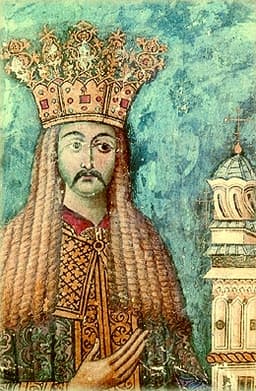
Neagoe Basarab
Emperor · Medieval
54.3Total
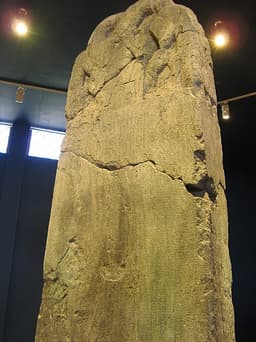
Qapaghan Qaghan
Emperor · Medieval
59.1Total
Basic Information
Born
1481
664
Died
1521
716
Era
Medieval
Medieval
Nationality
Wallachia
Gokturk Khaganate
Occupation
Emperor
Emperor
Civilization
Western
Eastern
Score Comparison
Military (10%)
47.5
72.0
Political (20%)
68.0
68.0
Influence (20%)
54.1
59.0
Legacy (20%)
45.0
49.2
Leadership (15%)
64.0
53.2
Strategy (15%)
50.0
66.3
TOTAL
54.3
59.1
Neagoe Basarab — Complete Timeline
1514 AD
Alliance with the Ottoman EmpirePolitical Action
Neagoe Basarab established a tributary relationship with the Ottoman Empire, paying annual tribute while maintaining internal autonomy. This policy preserved Wallachian stability and avoided military conflict with the expanding Ottoman state.
DiplomacyOttoman RelationsTribute
Impact: regional
1517 AD
Construction of Curtea de Arges MonasteryCultural◆ Major
Neagoe Basarab commissioned the construction of the Curtea de Arges Monastery in Wallachia. The monastery became a masterpiece of Romanian medieval architecture and a major religious center, reflecting his patronage of Orthodox Christianity.
ArchitectureReligious PatronageCultural Heritage
Impact: nationalconstructive
1520 AD
Writing of the Teachings of Neagoe BasarabCultural◆ Major
Neagoe Basarab authored 'The Teachings of Neagoe Basarab to His Son Theodosie', a religious and political treatise. The work combined Orthodox Christian theology with advice on governance, becoming a significant text in Romanian literature.
LiteratureReligious WritingPolitical Philosophy
Impact: nationalconstructive
Qapaghan Qaghan — Complete Timeline
690 AD
Expansion of the Gokturk KhaganateWar◆ Major
Qapaghan Qaghan led military campaigns that expanded the Gokturk Khaganate's territory from the Great Wall of China to the Caspian Sea. He subjugated the Kyrgyz, Turgesh, and other steppe tribes, establishing Gokturk dominance over the eastern steppes.
ExpansionSteppe EmpireMilitary Campaign
Impact: regional
695 AD
Submission of the Khitans and TatarsWar
Qapaghan Qaghan forced the Khitan and Tatar confederations to submit to Gokturk authority. He incorporated their cavalry into his army and used them as vassals in campaigns against China and other steppe peoples.
SubjugationSteppe PoliticsVassalage
Impact: regional
698 AD
Defeat of the Tang Dynasty at the Battle of QarabaliqWar◆ Major
Qapaghan Qaghan defeated a Tang Chinese army near Qarabaliq, forcing the Tang to recognize Gokturk suzerainty over the Tarim Basin. This victory secured Gokturk control over the Silk Road trade routes for a decade.
Tang-Gokturk WarBattleSilk Road
Impact: regional
716 AD
Death in Battle against the BasmylWar◆ Major
Qapaghan Qaghan was killed in a battle against the Basmyl tribe, a former vassal that rebelled. His death led to a succession crisis and the eventual decline of the Gokturk Khaganate, as his son was unable to maintain control.
DeathBattleSuccession Crisis
Impact: regionaltragic
Expert Analysis
Origins
Neagoe Basarab was born around 1459 into the ruling family of Wallachia, a principality between the Ottoman Empire and Hungary. His father was Basarab III, but his early life is poorly documented. He likely received a religious education, which later influenced his writings. In contrast, Qapaghan Qaghan was born around 665 AD into the Ashina clan, the ruling dynasty of the Gokturk Khaganate. He was the younger brother of the khagan Ilterish Qaghan, and grew up in a militaristic steppe society where warfare and loyalty were paramount. His early years were marked by the Gokturk struggle against Tang Chinese domination.
Rise to Power
Neagoe Basarab became prince of Wallachia in 1512 after a period of internal strife. He secured his position by paying tribute to the Ottoman Empire, ensuring their non-interference. His key ally was the Orthodox Church, which supported his reign. Qapaghan Qaghan rose to power in 691 AD after his brother Ilterish died. He quickly consolidated control and launched campaigns to restore Gokturk dominance. His major turning point was the defeat of the Tang at the Battle of Qarabaliq in 696, which forced Tang recognition of Gokturk suzerainty over the Tarim Basin. He also subjugated the Khitans and Tatars, incorporating their cavalry into his army.
Leadership & Governance
Neagoe Basarab's leadership focused on cultural and religious development. He commissioned the Curtea de Arges Monastery, a masterpiece of Romanian medieval architecture, and authored 'The Teachings of Neagoe Basarab to His Son Theodosie', a religious and political treatise blending Orthodox Christianity with advice on governance. His approach was diplomatic, maintaining autonomy through tribute to the Ottomans. Qapaghan Qaghan's leadership was militaristic and expansionist. He extended the Gokturk Khaganate from the Great Wall of China to the Caspian Sea, using a combination of direct conquest and vassalage. His governance relied on a confederation of tribes, with strict loyalty demanded. While Neagoe scored 64.0 in leadership, Qapaghan scored 53.2, reflecting different contexts: Neagoe's stability versus Qapaghan's aggressive expansion.
Triumph & Tragedy
Neagoe's greatest success was the construction of the Curtea de Arges Monastery, which remains a symbol of Romanian culture, and the writing of his Teachings, which influenced Orthodox thought. His greatest failure was his inability to secure lasting independence from the Ottomans; after his death in 1521, Wallachia remained tributary. Qapaghan's greatest triumph was the massive expansion of the Khaganate, dominating Central Asia and defeating the Tang. His tragedy was his death in battle against the Basmyl tribe in 716, a former vassal. This led to a succession crisis and the eventual decline of the Gokturk Khaganate.
Character & Destiny
Neagoe Basarab appears as a pious and cultured ruler, using religion and diplomacy to maintain power. His destiny was to be remembered as a builder and writer, not a warrior. Qapaghan Qaghan was a ruthless conqueror, whose character drove him to constant warfare. His destiny was to die in battle, a common end for steppe khans. Historical assessments note Neagoe's influence on Romanian identity, while Qapaghan is seen as a key figure in Turkic history despite his violent end.
Legacy
Neagoe Basarab's legacy is cultural: the Curtea de Arges Monastery is a UNESCO World Heritage site, and his Teachings are studied as early Romanian literature. He scored 45.0 in legacy. Qapaghan Qaghan's legacy is territorial and political: the Gokturk Khaganate he expanded set the stage for later Turkic empires. His legacy score is 49.2, slightly higher due to long-term geopolitical impact.
Conclusion
Qapaghan Qaghan had greater impact due to his military and political expansion, scoring 59.1 overall versus Neagoe's 54.3. While Neagoe's cultural contributions are significant, Qapaghan's conquests reshaped Central Asia and influenced the balance of power with China. The score gap of 4.8 points reflects Qapaghan's broader historical influence.
Rankings
🥇
Qapaghan QaghanLeader
Mil: 72.0Pol: 68.0Inf: 59.0
59.1
🥈
Neagoe Basarab
Mil: 47.5Pol: 68.0Inf: 54.1
54.3
+4.8 behind
How This Comparison Works
Algorithm
Each figure is scored on 6 dimensions (0—100 scale) based on structured historical data: Military (10%), Political (20%), Influence (20%), Legacy (20%), Leadership (15%), Strategy (15%). The weighted total produces the final ranking.
Data Sources
Scores are computed from structured sub-indicators in the database. Scale factors adjust for era (Ancient ×0.85, Modern ×1.0) and civilization size (Eastern ×1.05, Other ×0.80) to account for differences in population and military scale.
Maximum 3 Figures
Comparisons are limited to 2—3 figures to ensure readability and statistical meaningfulness.
Error Margins
±5 points per dimension — Sub-scores are derived from historical records with inherent uncertainty. Two figures within 5 points on a dimension should be considered roughly equivalent in that area.
Total Score Accuracy
±3 points overall — The weighted combination of 6 dimensions produces a total score with approximately ±3 points of uncertainty. Differences of less than 3 points are not statistically significant— the figures are effectively tied.
Known Limitations
- Historical records are incomplete and uneven across civilizations
- Figures from oral-tradition societies may be underrepresented
- Occupation labels can misclassify multi-role figures
- Scores measure capability and impact, not moral character
- Quantitative scoring is a comparison tool, not absolute truth
Capability Radar
Military (10%) — Battles & Warfare
Battles
25
85
Win Rate
30
80
Expansion
15
85
Political (20%) — Governance & Reform
Reform
45
55
Diplomacy
50
65
Economy
40
60
Influence (20%) — Cultural & Global Reach
Cultural
45
45
Global
20
50
Legacy (20%) — Historical Impact
Historical
40
55
Longevity
30
40
Leadership (15%) — Power & Stability
Tenure
40
70
Stability
35
50
Strategy (15%) — Tactics & Innovation
Strategy
30
80
Tactics
35
75
Reform
20
60
Similar Comparisons
Comments & Discussion
No comments yet. Be the first to share your thoughts!