Loading...
This comparison has not been analyzed yet.
One-time AI generation (~1 minute). Scores and timeline are already available below.
Ngola Kiluanje vs Taejo of Joseon
Taejo of Joseon leads by 22.4 pts · 2 figures compared
…

Ngola Kiluanje
Emperor · Medieval
48.0Total
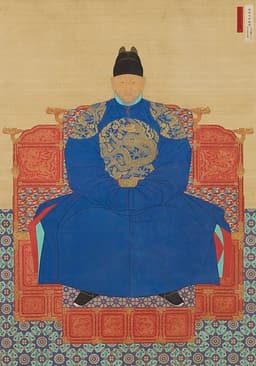
Taejo of Joseon
Emperor · Medieval
70.4Total
Basic Information
Born
1480
1335
Died
1530
1408
Era
Medieval
Medieval
Nationality
Angola
Korea
Occupation
Emperor
Emperor
Civilization
Other
Eastern
Score Comparison
Military (10%)
10.0
74.7
Political (20%)
43.7
65.0
Influence (20%)
55.7
65.0
Legacy (20%)
49.2
80.0
Leadership (15%)
67.0
72.0
Strategy (15%)
41.7
61.2
TOTAL
48.0
70.4
Ngola Kiluanje — Complete Timeline
1500 AD
Foundation of Ndongo KingdomPolitical Action◆ Major
Ngola Kiluanje founded the Ndongo kingdom in the highlands of present-day Angola. He established the capital at Kabasa and organized the Mbundu people into a centralized state, laying the foundation for the kingdom that later resisted Portuguese colonization.
FoundationNdongoMbundu
Impact: regionalconstructive
1510 AD
Consolidation of Mbundu ChiefdomsPolitical Action◆ Major
Ngola Kiluanje unified various Mbundu chiefdoms under his rule, creating a cohesive kingdom. This consolidation allowed Ndongo to become a significant power in the region, controlling trade in slaves and ivory.
ConsolidationMbunduNdongo
Impact: regionalconstructive
1530 AD
Death of Ngola KiluanjePolitical Action◆ Major
Ngola Kiluanje died around 1530, ending his reign as founder of Ndongo. His successors continued to expand the kingdom, and the title 'Ngola' became synonymous with the region, eventually giving rise to the name Angola.
DeathNdongoLegacy
Impact: regional
Taejo of Joseon — Complete Timeline
1380 AD
Battle of HwangsanWar
General Yi Seong-gye defeated a Japanese pirate (wokou) force at Hwangsan. This victory enhanced his military reputation and demonstrated his capability as a commander.
WokouGoryeo Military
1388 AD
Wihwado RetreatPolitical Action
General Yi Seong-gye, ordered to invade the Ming dynasty's Liaodong region, turned his army back at Wihwado Island. This act of defiance against the Goryeo court led to a coup that eventually brought him to power.
CoupGoryeo-Ming RelationsPower Shift
Impact: national
1391 AD
Land Reform and the Gwajeon LawReform◆ Major
Taejo implemented the Gwajeon Law, a land reform that redistributed land from the old Goryeo aristocracy to his supporters and the state. This weakened the old elite and strengthened the new Joseon ruling class.
Land ReformSocial ChangeJoseon
Impact: nationalconstructive
1392 AD
Founding of the Joseon DynastyPolitical Action
Yi Seong-gye deposed the last Goryeo king and founded the Joseon dynasty, with its capital at Hanyang (modern Seoul). He established a new ruling class based on Confucian ideology, replacing the Buddhist-influenced Goryeo system.
Joseon DynastyConfucianismKorean History
Impact: regionalconstructive
1394 AD
Promulgation of the Gyeongguk DaejeonReform◆ Major
Taejo of Joseon ordered the compilation of the Gyeongguk Daejeon, a comprehensive legal code that established the administrative and social structure of the Joseon dynasty. This code remained in effect for centuries.
Legal CodeGovernanceConfucianism
Impact: nationalconstructive
This comparison has not been analyzed yet.
One-time AI generation (~1 minute). Scores and timeline are already available below.
Rankings
🥇
Taejo of JoseonLeader
Mil: 74.7Pol: 65.0Inf: 65.0
70.4
🥈
Ngola Kiluanje
Mil: 10.0Pol: 43.7Inf: 55.7
48.0
+22.4 behind
How This Comparison Works
Algorithm
Each figure is scored on 6 dimensions (0—100 scale) based on structured historical data: Military (10%), Political (20%), Influence (20%), Legacy (20%), Leadership (15%), Strategy (15%). The weighted total produces the final ranking.
Data Sources
Scores are computed from structured sub-indicators in the database. Scale factors adjust for era (Ancient ×0.85, Modern ×1.0) and civilization size (Eastern ×1.05, Other ×0.80) to account for differences in population and military scale.
Maximum 3 Figures
Comparisons are limited to 2—3 figures to ensure readability and statistical meaningfulness.
Error Margins
±5 points per dimension — Sub-scores are derived from historical records with inherent uncertainty. Two figures within 5 points on a dimension should be considered roughly equivalent in that area.
Total Score Accuracy
±3 points overall — The weighted combination of 6 dimensions produces a total score with approximately ±3 points of uncertainty. Differences of less than 3 points are not statistically significant— the figures are effectively tied.
Known Limitations
- Historical records are incomplete and uneven across civilizations
- Figures from oral-tradition societies may be underrepresented
- Occupation labels can misclassify multi-role figures
- Scores measure capability and impact, not moral character
- Quantitative scoring is a comparison tool, not absolute truth
Capability Radar
Military (10%) — Battles & Warfare
Battles
35
75
Win Rate
40
80
Expansion
45
65
Political (20%) — Governance & Reform
Reform
30
85
Diplomacy
35
70
Economy
25
65
Influence (20%) — Cultural & Global Reach
Cultural
40
80
Global
35
60
Legacy (20%) — Historical Impact
Historical
45
85
Longevity
50
80
Leadership (15%) — Power & Stability
Tenure
40
70
Stability
30
75
Strategy (15%) — Tactics & Innovation
Strategy
35
75
Tactics
30
70
Reform
25
60
Similar Comparisons
Comments & Discussion
No comments yet. Be the first to share your thoughts!