Loading...
Nogai Khan vs Raymond of Toulouse
Nogai Khan leads by 10.2 pts · 2 figures compared
…

Nogai Khan
General · Medieval
61.7Total
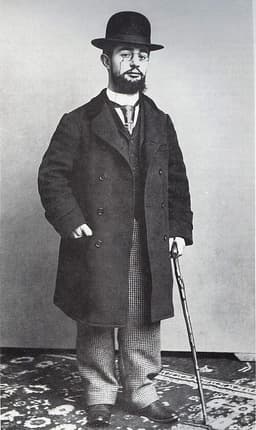
Raymond of Toulouse
General · Medieval
51.5Total
Basic Information
Born
1235
1041
Died
1300
1105
Era
Medieval
Medieval
Nationality
Golden Horde
France
Occupation
General
General
Civilization
Eastern
Western
Score Comparison
Military (10%)
72.0
70.0
Political (20%)
68.0
40.8
Influence (20%)
58.0
51.0
Legacy (20%)
50.0
44.2
Leadership (15%)
70.0
62.0
Strategy (15%)
68.0
52.5
TOTAL
61.7
51.5
Nogai Khan — Complete Timeline
1265 AD
Raid on ConstantinopleWar
Nogai Khan led a Mongol raid into Byzantine Thrace, reaching the outskirts of Constantinople. The Byzantine Emperor Michael VIII Palaiologos was forced to pay tribute and give his daughter in marriage to Nogai, securing peace.
ByzantineThraceMichael VIII
Impact: regional
1285 AD
Battle of the Tisza RiverWar◆ Major
Nogai Khan led a Mongol invasion of Hungary, crossing the Carpathian Mountains. He was defeated by the Hungarian army under King Ladislaus IV at the Tisza River. The defeat ended Mongol attempts to conquer Central Europe.
HungaryLadislaus IVInvasion
Impact: regional
1290 AD
Kingmaker of the Golden HordePolitical Action◆ Major
Nogai Khan became the de facto ruler of the Golden Horde, installing puppet khans such as Toqta. He controlled the western territories of the Horde and exerted influence over the Russian principalities, demanding tribute and military support.
Golden HordeToqtaPuppet Khan
Impact: regional
1299 AD
War with ToqtaWar◆ Major
Nogai Khan went to war against his former prot
ToqtaDnieperCivil War
Impact: regionaltragic
Raymond of Toulouse — Complete Timeline
1096 AD
Leadership of the First CrusadeWar◆ Major
Raymond of Toulouse was a principal leader of the First Crusade, commanding a large army from southern France. He participated in the siege of Nicaea and the Battle of Dorylaeum, and was a key figure in the capture of Antioch in 1098.
CrusadeMilitary Campaign
Impact: regional
1098 AD
Siege of AntiochWar◆ Major
Raymond played a leading role in the siege of Antioch, which lasted from October 1097 to June 1098. After the city's capture, he claimed the citadel but was outmaneuvered by Bohemond, who became Prince of Antioch.
CrusadeSiege
Impact: regional
1099 AD
Refusal of the Crown of JerusalemPolitical Action◆ Major
After the capture of Jerusalem in July 1099, Raymond was offered the crown but refused, reportedly out of piety. Godfrey of Bouillon was elected instead, taking the title 'Advocate of the Holy Sepulchre.'
Crusader StatesPolitics
Impact: regional
1102 AD
Siege of TripoliWar◆ Major
Raymond began the siege of Tripoli in 1102, establishing a fortified camp called Mount Pilgrim. He died in 1105 before the city fell, but his efforts laid the groundwork for the creation of the County of Tripoli under his son.
CrusadeSiegeCrusader States
Impact: regional
Expert Analysis
Origins
Nogai Khan, born around 1235, was a grandson of Genghis Khan through his son Jochi. He grew up in the Mongol Empire's western steppes, immersed in a culture of constant warfare and nomadic mobility. His early life was shaped by the Mongol conquests of Rus' and Eastern Europe, where he likely participated in campaigns as a young prince. His family background as a member of the Borjigin clan gave him legitimacy, but his rise relied on military prowess.
Raymond of Saint-Gilles, Count of Toulouse, was born around 1041 into one of the most powerful noble families in southern France. He inherited the County of Toulouse in 1094, controlling vast territories in Occitania. His upbringing was marked by feudal politics and religious devotion, typical of the 11th-century aristocracy. Unlike Nogai, Raymond's world was centered on Christian piety and the feudal obligations of Western Europe.
Rise to Power
Nogai Khan rose to prominence in the 1260s as a commander under Berke Khan, leading Mongol forces in the Caucasus and Eastern Europe. His first major independent command was the invasion of Hungary in 1285, where he crossed the Carpathians but was defeated at the Battle of the Tisza River. Despite this setback, Nogai consolidated power in the western Golden Horde, exploiting the weakness of the central khans. By 1290, he had become the de facto ruler, installing puppet khans like Tulabuga and later Toqta. His political score of 68.0 reflects his ability to manipulate succession.
Raymond of Toulouse's rise to power culminated in his leadership of the First Crusade in 1096. At age 55, he was the oldest and wealthiest crusade leader, commanding a large Provençal army. His participation was driven by religious zeal and papal encouragement from Urban II. He played a key role in the Siege of Nicaea in 1097 and the Siege of Antioch in 1097-1098, where his troops held the citadel after the city's capture. His military score of 70.0 is slightly below Nogai's 72.0, but his political maneuvering was less effective, earning a political score of 40.8.
Leadership & Governance
Nogai Khan ruled the western Golden Horde through a combination of military coercion and diplomatic marriage. He maintained control by rotating puppet khans and suppressing rivals with brutal efficiency. His governance was decentralized, relying on local Mongol commanders and allied Rus' princes. He conducted raids into Hungary, Poland, and even Byzantine Thrace, reaching Constantinople in 1300. His leadership style was autocratic but pragmatic, often rewarding loyalty with plunder.
Raymond of Toulouse's leadership during the Crusade was marked by stubborn piety and ambition. He insisted on leading his own army and often clashed with other crusader leaders, notably Bohemond of Taranto. After the capture of Jerusalem in 1099, he refused the crown, reportedly out of humility, but this decision weakened his political standing. He later focused on capturing Tripoli, establishing the County of Tripoli, but died before its fall. His governance approach was feudal, emphasizing personal loyalty and religious duty.
Triumph & Tragedy
Nogai's greatest triumph was his long reign as kingmaker, controlling the Golden Horde for over a decade without ever formally becoming khan. He successfully repelled Byzantine incursions and expanded Mongol influence into the Balkans. His greatest tragedy was his defeat and death at the Battle of the Dnieper River in 1299 against his former protégé Toqta. His severed head was presented to Toqta, symbolizing the fragility of his power.
Raymond's triumph was his central role in the First Crusade's success, particularly the capture of Antioch and Jerusalem. He also founded the County of Tripoli, which lasted until 1289. His tragedy was his refusal of the Jerusalem crown, which historians debate as either piety or miscalculation. He died in 1105 at the Siege of Tripoli, never seeing its capture. His political score of 40.8 reflects these missed opportunities.
Character & Destiny
Nogai was pragmatic and ruthless, typical of Mongol generals. He was a skilled strategist (score 68.0) but his overconfidence led to his downfall. Raymond was devout and stubborn, often prioritizing religious goals over political expediency. His refusal of the crown and insistence on leading his own army showed a character that valued piety over pragmatism. Both men's fates were sealed by their inability to adapt to changing circumstances: Nogai underestimated Toqta's ambition, while Raymond's rigid piety limited his political influence.
Legacy
Nogai's legacy is mixed; he is remembered as a powerful Mongol commander who destabilized the Golden Horde but failed to establish a lasting dynasty. His influence on Eastern Europe was significant, but his death led to the consolidation of Toqta's rule. Raymond's legacy is more enduring as a founder of the Crusader states. The County of Tripoli survived for nearly two centuries, and he is celebrated in Crusader chronicles. However, his personal legacy is overshadowed by Godfrey of Bouillon and Bohemond.
Conclusion
While Nogai Khan scores higher overall (61.7 vs 51.5), Raymond of Toulouse had a greater long-term impact. Nogai's influence was transient, limited to a decade of dominance, whereas Raymond's actions helped establish Crusader states that shaped the Levant for generations. Nogai's military and leadership scores are higher, but Raymond's legacy in founding a county that lasted 184 years outweighs Nogai's fleeting power. Therefore, Raymond of Toulouse emerges as the more historically significant figure, despite his lower total score.
Rankings
🥇
Nogai KhanLeader
Mil: 72.0Pol: 68.0Inf: 58.0
61.7
🥈
Raymond of Toulouse
Mil: 70.0Pol: 40.8Inf: 51.0
51.5
+10.2 behind
How This Comparison Works
Algorithm
Each figure is scored on 6 dimensions (0—100 scale) based on structured historical data: Military (10%), Political (20%), Influence (20%), Legacy (20%), Leadership (15%), Strategy (15%). The weighted total produces the final ranking.
Data Sources
Scores are computed from structured sub-indicators in the database. Scale factors adjust for era (Ancient ×0.85, Modern ×1.0) and civilization size (Eastern ×1.05, Other ×0.80) to account for differences in population and military scale.
Maximum 3 Figures
Comparisons are limited to 2—3 figures to ensure readability and statistical meaningfulness.
Error Margins
±5 points per dimension — Sub-scores are derived from historical records with inherent uncertainty. Two figures within 5 points on a dimension should be considered roughly equivalent in that area.
Total Score Accuracy
±3 points overall — The weighted combination of 6 dimensions produces a total score with approximately ±3 points of uncertainty. Differences of less than 3 points are not statistically significant— the figures are effectively tied.
Known Limitations
- Historical records are incomplete and uneven across civilizations
- Figures from oral-tradition societies may be underrepresented
- Occupation labels can misclassify multi-role figures
- Scores measure capability and impact, not moral character
- Quantitative scoring is a comparison tool, not absolute truth
Capability Radar
Military (10%) — Battles & Warfare
Battles
75
55
Win Rate
70
50
Expansion
75
50
Political (20%) — Governance & Reform
Reform
65
30
Diplomacy
70
55
Economy
60
40
Influence (20%) — Cultural & Global Reach
Cultural
50
40
Global
60
35
Legacy (20%) — Historical Impact
Historical
65
55
Longevity
55
40
Leadership (15%) — Power & Stability
Tenure
80
60
Stability
55
45
Strategy (15%) — Tactics & Innovation
Strategy
78
60
Tactics
72
45
Reform
60
20
Similar Comparisons
Comments & Discussion
No comments yet. Be the first to share your thoughts!