Loading...
This comparison has not been analyzed yet.
One-time AI generation (~1 minute). Scores and timeline are already available below.
Pedro de Valdivia vs Xu Da
Xu Da leads by 15.6 pts · 2 figures compared
…

Pedro de Valdivia
General · Medieval
59.3Total
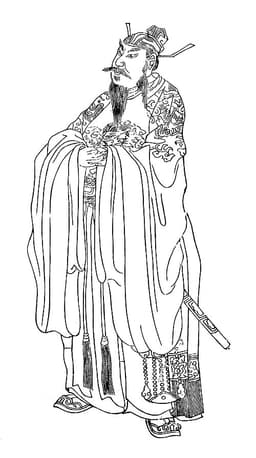
Xu Da
General · Medieval
74.9Total
Basic Information
Born
1497
1332
Died
1553
1385
Era
Medieval
Medieval
Nationality
Spain
China
Occupation
General
General
Civilization
Western
Eastern
Score Comparison
Military (10%)
60.0
88.0
Political (20%)
68.0
68.0
Influence (20%)
58.3
82.0
Legacy (20%)
54.0
72.0
Leadership (15%)
62.0
62.0
Strategy (15%)
57.5
80.8
TOTAL
59.3
74.9
Pedro de Valdivia — Complete Timeline
1541 AD
Destruction of Santiago by the MapucheWar◆ Major
Mapuche warriors led by Chief Michimalonco attacked and destroyed Santiago in September 1541. Valdivia and his men were forced to flee the city. The Spanish rebuilt the settlement, but the attack marked the beginning of the Arauco War.
WarMapucheArauco War
Impact: regionaldestructive
Founding of SantiagoPolitical Action
Valdivia founded the city of Santiago de la Nueva Extremadura on February 12, 1541, in the Mapocho Valley. The city became the capital of the Captaincy General of Chile and the center of Spanish colonization in the region.
FoundingColonizationChile
Impact: regionalconstructive
Appointment as first Governor of ChilePolitical Action◆ Major
Valdivia was appointed Governor and Captain General of Chile by Francisco Pizarro. He was given authority to conquer and colonize the region south of Peru. He established the first Spanish settlements in Chile and organized the colonial administration.
GovernorshipColonial AdministrationChile
Impact: regionalconstructive
1550 AD
Founding of ConcepciónPolitical Action◆ Major
Valdivia founded the city of Concepci
FoundingColonizationChile
Impact: regionalconstructive
1553 AD
Battle of Tucapel and deathWar◆ Major
Valdivia was captured and killed by Mapuche forces led by Lautaro at the Battle of Tucapel on December 25, 1553. According to accounts, he was executed by the Mapuche after refusing to convert to their religion. His death was a major setback for Spanish colonization.
BattleDeathArauco War
Impact: regionaltragic
Xu Da — Complete Timeline
1368 AD
Capture of Dadu (Beijing)War
Xu Da led the Ming army in the capture of Dadu, the Yuan capital. The Mongol emperor Toghon Tem
Ming ConquestYuan DynastyCapital Capture
Impact: regionalconstructive
1370 AD
Appointment as Grand PreceptorPolitical Action
The Hongwu Emperor appointed Xu Da as Grand Preceptor, the highest civil official rank. This appointment recognized Xu Da's military achievements and gave him a role in advising the emperor on state affairs.
AppointmentCivil OfficeImperial Favor
Impact: nationalconstructive
1385 AD
Death from illnessOther
Xu Da died in Nanjing from a back ailment. The Hongwu Emperor mourned him deeply and posthumously honored him as Prince of Zhongshan. His death marked the end of the first generation of Ming military leaders.
DeathMing DynastyMilitary Leader
Impact: nationaltragic
This comparison has not been analyzed yet.
One-time AI generation (~1 minute). Scores and timeline are already available below.
Rankings
🥇
Xu DaLeader
Mil: 88.0Pol: 68.0Inf: 82.0
74.9
🥈
Pedro de Valdivia
Mil: 60.0Pol: 68.0Inf: 58.3
59.3
+15.6 behind
How This Comparison Works
Algorithm
Each figure is scored on 6 dimensions (0—100 scale) based on structured historical data: Military (10%), Political (20%), Influence (20%), Legacy (20%), Leadership (15%), Strategy (15%). The weighted total produces the final ranking.
Data Sources
Scores are computed from structured sub-indicators in the database. Scale factors adjust for era (Ancient ×0.85, Modern ×1.0) and civilization size (Eastern ×1.05, Other ×0.80) to account for differences in population and military scale.
Maximum 3 Figures
Comparisons are limited to 2—3 figures to ensure readability and statistical meaningfulness.
Error Margins
±5 points per dimension — Sub-scores are derived from historical records with inherent uncertainty. Two figures within 5 points on a dimension should be considered roughly equivalent in that area.
Total Score Accuracy
±3 points overall — The weighted combination of 6 dimensions produces a total score with approximately ±3 points of uncertainty. Differences of less than 3 points are not statistically significant— the figures are effectively tied.
Known Limitations
- Historical records are incomplete and uneven across civilizations
- Figures from oral-tradition societies may be underrepresented
- Occupation labels can misclassify multi-role figures
- Scores measure capability and impact, not moral character
- Quantitative scoring is a comparison tool, not absolute truth
Capability Radar
Military (10%) — Battles & Warfare
Battles
45
95
Win Rate
55
95
Expansion
60
95
Political (20%) — Governance & Reform
Reform
45
50
Diplomacy
40
65
Economy
45
55
Influence (20%) — Cultural & Global Reach
Cultural
50
70
Global
40
80
Legacy (20%) — Historical Impact
Historical
55
85
Longevity
50
75
Leadership (15%) — Power & Stability
Tenure
50
60
Stability
35
70
Strategy (15%) — Tactics & Innovation
Strategy
55
92
Tactics
50
90
Reform
40
70
Similar Comparisons
Comments & Discussion
No comments yet. Be the first to share your thoughts!