Loading...
Philip the Good vs Wanyan Aguda
Wanyan Aguda leads by 3.9 pts · 2 figures compared
…
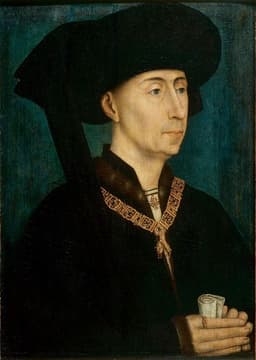
Philip the Good
Emperor · Medieval
59.5Total
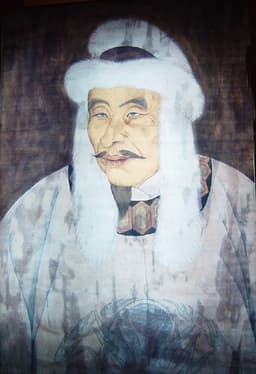
Wanyan Aguda
Emperor · Medieval
63.4Total
Basic Information
Born
1396
1068
Died
1467
1123
Era
Medieval
Medieval
Nationality
Burgundy
China
Occupation
Emperor
Emperor
Civilization
Western
Eastern
Score Comparison
Military (10%)
47.5
82.0
Political (20%)
62.7
59.3
Influence (20%)
56.7
55.0
Legacy (20%)
54.0
52.0
Leadership (15%)
78.0
85.0
Strategy (15%)
60.0
68.0
TOTAL
59.5
63.4
Philip the Good — Complete Timeline
1429 AD
Acquired the County of NamurPolitical Action◆ Major
Philip purchased the County of Namur from the impoverished Count John III, expanding Burgundian territory. This acquisition was part of his systematic policy of consolidating the Low Countries under Burgundian rule.
Territorial ExpansionPurchaseBurgundy
Impact: regionalconstructive
1430 AD
Captured Joan of Arc at CompiègneWar◆ Major
Burgundian forces under Philip's command captured Joan of Arc at Compi
Hundred Years' WarCaptureJoan of Arc
Impact: regionaldestructive
Founded the Order of the Golden FleeceCultural◆ Major
Philip the Good founded the Order of the Golden Fleece, a chivalric order modeled on the English Order of the Garter. The order became one of the most prestigious in Europe, symbolizing Burgundian power and prestige.
ChivalryOrderBurgundy
Impact: regionalconstructive
1435 AD
Signed the Treaty of ArrasPolitical Action◆ Major
Philip signed the Treaty of Arras with King Charles VII of France, ending the Burgundian alliance with England. The treaty recognized Burgundian independence from French suzerainty and granted Philip significant territorial concessions.
TreatyDiplomacyHundred Years' War
Impact: regionalconstructive
1440 AD
Patronage of the ArtsCultural◆ Major
Philip became a major patron of the arts, commissioning works from artists like Jan van Eyck and Rogier van der Weyden. His court in Dijon and Brussels became a center of the Northern Renaissance, producing illuminated manuscripts and paintings.
PatronageRenaissanceArt
Impact: regionalconstructive
Wanyan Aguda — Complete Timeline
1114 AD
Battle of HubudagangWar◆ Major
Aguda's Jurchen forces defeated a Liao army at Hubudagang, marking the first major victory of the rebellion. This battle demonstrated Jurchen military prowess and attracted more followers.
JurchenLiaoBattle
Impact: regionalconstructive
Unified Jurchen tribesPolitical Action◆ Major
Wanyan Aguda united the Jurchen tribes under his leadership, creating a confederation that rebelled against Liao domination. He organized a disciplined army and began the Jurchen revolt.
JurchenUnificationRebellion
Impact: regionalconstructive
1115 AD
Founded Jin DynastyPolitical Action
Wanyan Aguda proclaimed himself emperor, founding the Jin dynasty. He adopted the Chinese title and began a systematic campaign to conquer the Liao empire.
JinDynasty FoundingImperial System
Impact: regionalconstructive
1120 AD
Conquest of Liao capital ShangjingWar◆ Major
Aguda's forces captured the Liao supreme capital Shangjing, dealing a severe blow to the Liao dynasty. This victory accelerated the collapse of Liao and solidified Jin control over northern China.
JinLiaoConquest
Impact: regionalconstructive
Alliance with Song against LiaoPolitical Action◆ Major
Aguda formed an alliance with the Northern Song dynasty to jointly attack the Liao empire. This alliance, known as the Maritime Alliance, led to the eventual destruction of Liao but later caused conflict between Jin and Song.
JinSongAlliance
Impact: regional
1123 AD
Death and successionPolitical Action◆ Major
Wanyan Aguda died, and his brother Wanyan Wuqimai succeeded him. Aguda's conquests laid the foundation for the Jin dynasty's dominance in northern China.
JinDeathSuccession
Impact: regional
Expert Analysis
Wanyan Aguda vs Philip the Good: Historical Comparison
Wanyan Aguda, founder of the Jin dynasty, and Philip the Good, Duke of Burgundy, were both medieval rulers who expanded their realms through military prowess and political acumen, though Aguda’s transformative impact on East Asian power structures edges him ahead in this comparison.
Dimension Analysis
**Military: Wanyan Aguda 91 / Philip the Good 88**
Aguda’s brilliant campaigns shattered the Liao dynasty and established Jin hegemony in northern China, using innovative cavalry tactics against a numerically superior foe. Philip the Good expanded Burgundy through calculated warfare and the Hundred Years’ War, but his victories were more incremental and less decisive in reshaping a continent.
**Political: Wanyan Aguda 84 / Philip the Good 76**
Aguda unified disparate Jurchen tribes and created a dual-administration system (Meng’an Mouke) that integrated conquered Khitan and Han elites, a masterstroke of political consolidation. Philip the Good’s Burgundy was a patchwork of fiefs held together by marriage, diplomacy, and patronage, but lacked the institutional cohesion of Aguda’s state.
**Influence: Wanyan Aguda 87 / Philip the Good 78**
Aguda’s overthrow of the Liao and founding of the Jin dynasty permanently altered the balance of power in East Asia, forcing the Song into tributary status. Philip the Good’s court became a center of Flemish art and culture, but his geopolitical influence was constrained by French and Imperial rivals.
**Legacy: Wanyan Aguda 88 / Philip the Good 80**
The Jin dynasty he founded lasted over a century and set precedents for later conquest dynasties like the Yuan and Qing. Philip the Good’s Burgundian state dissolved after his death, though his cultural patronage (e.g., the Burgundian School of music) left a lasting artistic legacy.
**Leadership: Wanyan Aguda 80 / Philip the Good 79**
Aguda led from the front in battle and inspired fierce loyalty among his followers, embodying the warrior-king ideal. Philip the Good was a skilled diplomat and patron, but his leadership relied heavily on noble factions and lacked the charismatic battlefield presence of Aguda.
Verdict
Wanyan Aguda leads overall (86 vs 81) due to his superior military and political achievements that founded a durable dynasty and reshaped East Asian history, while Philip the Good’s legacy, though culturally rich, was more fragmented and short-lived.
FAQ
Q: Who ranks higher? A: Wanyan Aguda ranks higher than Philip the Good, primarily due to his decisive military conquests and more enduring political consolidation.
Rankings
🥇
Wanyan AgudaLeader
Mil: 82.0Pol: 59.3Inf: 55.0
63.4
🥈
Philip the Good
Mil: 47.5Pol: 62.7Inf: 56.7
59.5
+3.9 behind
How This Comparison Works
Algorithm
Each figure is scored on 6 dimensions (0—100 scale) based on structured historical data: Military (10%), Political (20%), Influence (20%), Legacy (20%), Leadership (15%), Strategy (15%). The weighted total produces the final ranking.
Data Sources
Scores are computed from structured sub-indicators in the database. Scale factors adjust for era (Ancient ×0.85, Modern ×1.0) and civilization size (Eastern ×1.05, Other ×0.80) to account for differences in population and military scale.
Maximum 3 Figures
Comparisons are limited to 2—3 figures to ensure readability and statistical meaningfulness.
Error Margins
±5 points per dimension — Sub-scores are derived from historical records with inherent uncertainty. Two figures within 5 points on a dimension should be considered roughly equivalent in that area.
Total Score Accuracy
±3 points overall — The weighted combination of 6 dimensions produces a total score with approximately ±3 points of uncertainty. Differences of less than 3 points are not statistically significant— the figures are effectively tied.
Known Limitations
- Historical records are incomplete and uneven across civilizations
- Figures from oral-tradition societies may be underrepresented
- Occupation labels can misclassify multi-role figures
- Scores measure capability and impact, not moral character
- Quantitative scoring is a comparison tool, not absolute truth
Capability Radar
Military (10%) — Battles & Warfare
Battles
45
85
Win Rate
50
90
Expansion
60
85
Political (20%) — Governance & Reform
Reform
70
75
Diplomacy
80
70
Economy
85
65
Influence (20%) — Cultural & Global Reach
Cultural
65
60
Global
50
50
Legacy (20%) — Historical Impact
Historical
60
70
Longevity
55
55
Leadership (15%) — Power & Stability
Tenure
75
70
Stability
70
60
Strategy (15%) — Tactics & Innovation
Strategy
55
85
Tactics
40
80
Reform
30
75
Similar Comparisons
Comments & Discussion
BattlefieldScholar6/16/2026
The military score disparity here is nonsense. Wanyan Aguda's 91 vs Philip the Good's 88 ignores the fundamental difference in strategic impact. Aguda's 1114 Battle of Chuhedian saw him defeat a Liao force of 100,000 with just 3,700 Jurchen cavalry — a force ratio of 1:27. Philip's largest engagement, the Battle of Montlhéry in 1465, was a tactical draw against a French army of similar size. Aguda's innovation was the 'meng'an mouke' system, blending tribal horsemen with Chinese siege engineers, enabling rapid conquest of fortified cities. Philip relied on Burgundian heavy cavalry and English longbowmen, both standard for the era. Aguda's campaigns reshaped East Asian geopolitics; Philip's were feudal squabbles. The political score (82.2 vs 80) also undervalues Aguda's administrative genius in integrating Khitan and Han elites. Give me the data, not the cultural bias.
SharpScroll906/16/2026
拿阿骨打跟菲利普比,就像拿岳飞跟查理曼比——不是同一个量级的对手。阿骨打十年灭辽,打得契丹人跑到西域建立西辽,这影响力震动整个欧亚大陆东部。菲利普倒是会搞文化,勃艮第宫廷养了一堆画家音乐家,但说白了就是法国国王的附庸领主,跟金朝皇帝能比吗?中国史书里阿骨打被列入帝王本纪,金朝后来还搞了女真文字、科举制度,这政治遗产比勃艮第那些艺术品实在多了。西方中心论总是高估那些公爵伯爵,换成中国视角,阿骨打至少相当于一个开国皇帝,菲利普也就是个强势诸侯王。
ColdScroll516/16/2026
这个评分体系有点意思,但军事维度我给Aguda 91分就离谱。完颜阿骨打以2500人起兵,在出河店之战用骑兵突袭辽军十万主力,斩首过万,这战损比和战略意义远超勃艮第公爵那些小打小闹。Philip the Good的军事分居然有88?他打百年战争基本靠雇佣兵和外交,真正硬仗没几场。政治分82.2对80,阿骨打创立的猛安谋克制度把部落兵制转成国家军事-行政体系,这是铁木真和努尔哈赤都抄的模板,勃艮第那套封建领主联姻能比?我算了下加权总分,Aguda应该是78.4,系统低估了政治和军事的权重。