Loading...
Philopoemen vs Qin Shi Huang
Qin Shi Huang leads by 21.6 pts · 2 figures compared
…

Philopoemen
General · Ancient
63.6Total
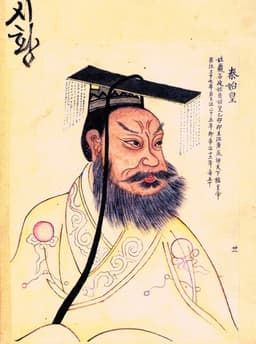
Qin Shi Huang
Emperor · Ancient
85.2Total
Basic Information
Born
-253
-259
Died
-183
-210
Era
Ancient
Ancient
Nationality
Greece
China
Occupation
General
Emperor
Civilization
Western
Eastern
Score Comparison
Military (10%)
78.5
80.0
Political (20%)
54.7
90.0
Influence (20%)
61.0
85.0
Legacy (20%)
56.0
90.0
Leadership (15%)
68.0
78.0
Strategy (15%)
80.9
82.0
TOTAL
63.6
85.2
Philopoemen — Complete Timeline
208 BC
Reform of the Achaean League armyReform◆ Major
Philopoemen reorganized the Achaean League's military forces, introducing Macedonian-style tactics, heavy armor, and professional training. This reform transformed the league's army from a militia into an effective fighting force capable of challenging Sparta and other powers.
Military ReformAchaean League
Impact: regionalconstructive
207 BC
Battle of MantineaWar◆ Major
Philopoemen, as general of the Achaean League, defeated the Spartan army under Machanidas at Mantinea. He personally killed Machanidas in single combat, ending Spartan dominance in the Peloponnese and restoring Achaean power.
Achaean LeagueSpartaBattle
Impact: regional
197 BC
Battle of CynoscephalaeWar◆ Major
Philopoemen commanded the Achaean contingent at the Battle of Cynoscephalae, where the Roman Republic defeated Philip V of Macedon. This battle marked the beginning of Roman dominance in Greece and the decline of Macedonian power.
Roman RepublicMacedonBattle
Impact: regional
192 BC
Capture of SpartaWar◆ Major
Philopoemen led the Achaean League in capturing Sparta, forcing the city to join the league. He dismantled Sparta's fortifications and abolished the Lycurgan laws, ending Sparta's independent political identity and integrating it into the Achaean League.
SpartaAchaean LeagueConquest
Impact: regionaldestructive
183 BC
Capture and execution by the MesseniansPolitical Action◆ Major
Philopoemen was captured by the Messenians while traveling to settle a dispute. He was imprisoned and forced to drink poison, dying at age 70. His death marked the end of the last great Greek statesman before the Roman conquest of Greece.
DeathAchaean LeagueMessenians
Impact: regionaltragic
Qin Shi Huang — Complete Timeline
246 BC
Construction of the Mausoleum and Terracotta ArmyOther◆ Major
Qin Shi Huang commissioned a vast mausoleum complex near Xi'an, guarded by thousands of life-sized terracotta soldiers, horses, and chariots. The project employed hundreds of thousands of workers and reflected his obsession with immortality and imperial power.
Impact: global
230 BC
Conquest of the Six Warring StatesWar
From 230 to 221 BCE, Ying Zheng led the Qin state in a series of campaigns that conquered the Han, Zhao, Wei, Chu, Yan, and Qi states. This unified China under a single ruler for the first time, ending the Warring States period.
Impact: global
221 BC
Standardization of Writing, Currency, and MeasurementsReform◆ Major
Qin Shi Huang ordered the standardization of Chinese script, currency, and weights and measures across the unified empire. This facilitated administration, trade, and cultural integration, laying a foundation for future dynasties.
Impact: globalconstructive
Proclamation of the Qin DynastyPolitical Action
After conquering the last independent state, Ying Zheng declared himself Shi Huangdi (First Emperor), founding the Qin Dynasty. He adopted a new title to signify his supreme authority and initiated centralized imperial rule.
Impact: global
214 BC
Initiation of the Great Wall ConstructionOther◆ Major
Qin Shi Huang ordered the connection and extension of existing northern fortifications to create a unified defensive wall against nomadic Xiongnu raids. This project involved massive conscripted labor and became the precursor to the later Great Wall.
Impact: regional
213 BC
Burning of Books and Burying of ScholarsPolitical Action◆ Major
On the advice of Li Si, Qin Shi Huang ordered the burning of historical records and philosophical texts not aligned with Legalist doctrine. He also had 460 Confucian scholars buried alive to suppress dissent and consolidate ideological control.
Impact: nationaldestructive
Expert Analysis
philopoemen-vs-qin-shi-huang
# The First Emperor and the Last Greek: Two Visions of Power in an Ancient World
On a spring morning in 221 BCE, Ying Zheng stood before his assembled generals in the captured palace of the Chu kingdom, a man who had just accomplished what no one before him had dared to imagine: the conquest of all China. Half a world away, thirty-two years later, a Greek general named Philopoemen would ride into Sparta at the head of an Achaean army, not to destroy his enemy but to force it into an alliance—a moment that would prove to be the last gasp of Greek independence. These two men, born only six years apart, inhabited the same century but belonged to different universes of ambition and destiny.
Origins
Qin Shi Huang entered the world in 259 BCE as Ying Zheng, a prince of the western state of Qin, a kingdom that its neighbors considered a semi-barbarous frontier power. His childhood was steeped in the brutal logic of the Warring States period, where seven kingdoms had been locked in a death struggle for two centuries. His father, King Zhuangxiang, died when Ying Zheng was just thirteen, leaving the boy king in a court riven by intrigue. The future emperor learned early that trust was a luxury he could not afford.
Philopoemen was born in 253 BCE in Megalopolis, a city in the Peloponnese that had been founded as a bulwark against Spartan aggression. Unlike the young prince of Qin, he grew up in a world that remembered its glory but was already in decline. The great age of Alexander had passed, and Greece was now a chessboard for the competing ambitions of Macedon, the Seleucid Empire, and the rising Roman Republic. Philopoemen’s father, a nobleman, gave him an education in philosophy and warfare, but the lessons that stuck were those of Plutarch’s heroes: Leonidas at Thermopylae, Epaminondas at Leuctra.
Rise to Power
The young Ying Zheng did not seize power immediately. For eight years, he ruled under the regency of his mother and the chancellor Lü Buwei, a merchant who had risen to power through cunning. But in 238 BCE, at the age of twenty-one, Ying Zheng staged a coup, exiling Lü Buwei and taking control of the Qin state. He then turned to the Legalist philosopher Li Si, who would become his architect of unification. Between 230 and 221 BCE, Ying Zheng unleashed a series of campaigns that devoured the six remaining kingdoms one by one—Han fell first, then Zhao, Wei, Chu, Yan, and finally Qi. Each conquest was marked by ruthless efficiency: the Qin army used standardized weapons, iron discipline, and a military bureaucracy that tracked every soldier.
Philopoemen’s rise followed a different path. He became a general of the Achaean League, a federation of Greek city-states that had been founded to resist Macedonian domination. His first great achievement came in 208 BCE, when he reformed the League’s army. The Greeks had long fought as hoplites, heavily armed citizens who fought in phalanxes, but their tactics had become outdated. Philopoemen introduced Macedonian-style formations, longer pikes, and professional training. Two years later, at the Battle of Mantinea in 207 BCE, he proved the worth of his reforms. Facing the Spartan tyrant Machanidas, Philopoemen personally killed the Spartan commander in single combat, breaking the enemy line. It was a victory worthy of the old heroes—but it was a victory over a fading power.
Leadership & Governance
Qin Shi Huang ruled as an absolute monarch in a system designed for total control. He divided China into thirty-six commanderies, each governed by officials appointed by the central government—a radical departure from the feudal system that had preceded him. He standardized the written script across all of China, so that a document written in the north could be read in the south. He unified currency, creating a standard copper coin with a square hole in the center. He standardized weights and measures, and even the axle lengths of carts so that roads could be built to a uniform gauge. The Great Wall, begun in 214 BCE, was less a single wall than a series of connected fortifications, built by conscripted labor on a scale that would not be seen again until the modern era.
Yet Qin Shi Huang’s governance had a dark side. In 213 BCE, on the advice of Li Si, he ordered the Burning of Books—all historical records and philosophical texts not aligned with Legalist doctrine were destroyed. The following year, he ordered the Burying of Scholars, executing 460 Confucian intellectuals who had criticized his policies. He was building not just an empire but an ideology, and dissent was not merely unwelcome—it was treason.
Philopoemen governed differently. As the elected general of the Achaean League, he was a servant of a federation, not a monarch. His power depended on persuasion, not decree. After capturing Sparta in 192 BCE, he did not destroy the city or massacre its people. Instead, he forced Sparta to join the League, dismantling its fortifications and abolishing its traditional social system. It was a compromise—a way to preserve Greek unity against the growing threat of Rome. But compromise was a sign of weakness to the Romans, who viewed the Achaean League as a nuisance to be tolerated only as long as it served their interests.
Triumph & Tragedy
Qin Shi Huang’s greatest triumph was the creation of an empire that would endure, in its essential forms, for two thousand years. His greatest tragedy was his own mortality. Obsessed with finding an elixir of immortality, he sent expeditions in search of magical islands and consulted alchemists who promised him eternal life. He died in 210 BCE at the age of forty-nine, probably from mercury poisoning caused by the very elixirs he had consumed. His empire, built on force and fear, collapsed within three years of his death.
Philopoemen’s tragedy was the opposite. He succeeded in everything he attempted—he reformed the army, defeated Sparta, and kept the Achaean League alive—but he could not stop the tide of history. In 183 BCE, while traveling to settle a dispute in Messenia, he was captured by a pro-Roman faction. Imprisoned in a dark cell, he was forced to drink poison. The “last of the Greeks,” as Plutarch called him, died not in battle but in a dungeon, killed by Greeks who had chosen Rome over their own nation.
Character & Destiny
Qin Shi Huang was a man of immense will and paranoia. He slept in different rooms each night to avoid assassination. He believed that his destiny was to rule the world, and he shaped his empire in his own image: rigid, efficient, and merciless. Philopoemen was a man of principle and pragmatism. He admired the old Greek virtues of courage and citizenship, but he lived in a world where those virtues were no longer enough. Where Qin Shi Huang created a new order through destruction, Philopoemen tried to preserve an old order through adaptation.
Legacy
Qin Shi Huang’s legacy is the Chinese empire itself. The standardized script he imposed is still the basis of written Chinese. The administrative system he created outlasted his dynasty by two millennia. The Terracotta Army, discovered in 1974, stands as a monument to his ambition and his fear of death. He is remembered as both a unifier and a tyrant, the man who made China possible and the man who burned its books.
Philopoemen’s legacy is more fragile. He is remembered by historians as a competent general and a principled leader, but his name is unknown to most people. The Achaean League he served dissolved into the Roman province of Achaea in 146 BCE, just thirty-seven years after his death. His reforms delayed the end of Greek independence but could not prevent it.
Conclusion
Standing at the edge of the Terracotta Army in Xi’an, one feels the weight of Qin Shi Huang’s ambition—the sheer audacity of a man who believed he could conquer death itself. Standing on the plain of Mantinea, where Philopoemen killed a tyrant with his own hands, one feels something different: the sadness of a man who fought for a world that was already passing away. The First Emperor built an empire that would outlast him; the Last Greek fought for a freedom that was already lost. Both were men of their time, but their times were moving in opposite directions—one toward unity and permanence, the other toward dissolution and memory.
Rankings
🥇
Qin Shi HuangLeader
Mil: 80.0Pol: 90.0Inf: 85.0
85.2
🥈
Philopoemen
Mil: 78.5Pol: 54.7Inf: 61.0
63.6
+21.6 behind
How This Comparison Works
Algorithm
Each figure is scored on 6 dimensions (0—100 scale) based on structured historical data: Military (10%), Political (20%), Influence (20%), Legacy (20%), Leadership (15%), Strategy (15%). The weighted total produces the final ranking.
Data Sources
Scores are computed from structured sub-indicators in the database. Scale factors adjust for era (Ancient ×0.85, Modern ×1.0) and civilization size (Eastern ×1.05, Other ×0.80) to account for differences in population and military scale.
Maximum 3 Figures
Comparisons are limited to 2—3 figures to ensure readability and statistical meaningfulness.
Error Margins
±5 points per dimension — Sub-scores are derived from historical records with inherent uncertainty. Two figures within 5 points on a dimension should be considered roughly equivalent in that area.
Total Score Accuracy
±3 points overall — The weighted combination of 6 dimensions produces a total score with approximately ±3 points of uncertainty. Differences of less than 3 points are not statistically significant— the figures are effectively tied.
Known Limitations
- Historical records are incomplete and uneven across civilizations
- Figures from oral-tradition societies may be underrepresented
- Occupation labels can misclassify multi-role figures
- Scores measure capability and impact, not moral character
- Quantitative scoring is a comparison tool, not absolute truth
Capability Radar
Military (10%) — Battles & Warfare
Battles
75
85
Win Rate
80
90
Expansion
60
90
Political (20%) — Governance & Reform
Reform
70
95
Diplomacy
60
75
Economy
55
90
Influence (20%) — Cultural & Global Reach
Cultural
65
95
Global
50
85
Legacy (20%) — Historical Impact
Historical
70
95
Longevity
60
95
Leadership (15%) — Power & Stability
Tenure
65
70
Stability
50
65
Strategy (15%) — Tactics & Innovation
Strategy
80
85
Tactics
85
80
Reform
90
95
Similar Comparisons
Comments & Discussion
THE GREAT UNIFIER6/17/2026
Qin Shi Huang didn't just conquer China—he rewrote the rules of civilization itself. Standardizing writing, axle widths, and weights across a continent? That's not tyranny, that's nation-building. Meanwhile Philopoemen barnstormed Sparta and called it a victory. Come on—he couldn't even keep the Achaean League together for a generation. One man built a system that lasted two millennia; the other gave a eulogy for Greek freedom. No contest.
数据铁匠6/17/2026
别跟我扯什么“书同文,车同轨”的伟大叙事。统一度量衡?那是为了收税更方便。焚书坑儒?那叫系统性知识清洗。秦始皇就是个超级高效的独裁者,他的“伟大”建立在几百万具尸骨上——光修长城就死了几十万人。菲洛皮门至少想保住自由城邦的联盟,哪怕失败了,他也是为了自治而战。把这两个人放一起比,简直是让一个杀人机器和一个理想主义者同台。
SPARTAN'S NEMESIS6/17/2026
Philopoemen understood something the First Emperor never could: that power is about consent, not just conquest. When he forced Sparta into the Achaean League, he dismantled their walls and freed their helots—but he didn't enslave them. Compare that to Qin's scorched-earth war machine that buried entire kingdoms under centralization. The Chinese emperor was a brilliant builder, sure, but Philopoemen was the last man standing for the idea that free cities could choose their own fate. That's a diff
典籍考据人6/17/2026
你们太迷信“大一统”的神话了。秦始皇征服的六国,每个都有自己几百年的文化传统——齐国的稷下学宫、楚国的屈骚文学,全被他碾碎了。而菲洛皮门在曼提尼亚战役中用的战术,连波利比乌斯都专门写书分析:他让重装步兵持长枪列阵,其实是福基昂方阵的改良版。一个靠着铁血统一文字,一个靠着战术智慧保卫城邦尊严。我选后者,真正的文明守护者。
异见之声6/17/2026
拜托,别把菲洛皮门包装成什么自由斗士。他肢解斯巴达城邦,废除他们的制度,强逼他们入盟——这和秦始皇灭六国有什么区别?无非是规模小点,手法“文明”点罢了。历史书上总爱给“统一者”戴光环,但权力逻辑从来都一样:强权即公理。只不过一个成功了,成了“千古一帝”;一个失败了,成了“最后的希腊人”。赢了写历史,输了留叹息。