Loading...
This comparison has not been analyzed yet.
One-time AI generation (~1 minute). Scores and timeline are already available below.
Radu cel Frumos vs William II Rufus
William II Rufus leads by 14.1 pts · 2 figures compared
…

Radu cel Frumos
Emperor · Medieval
35.7Total
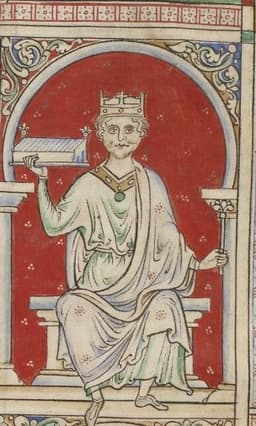
William II Rufus
Emperor · Medieval
49.8Total
Basic Information
Born
1438
1056
Died
1475
1100
Era
Medieval
Medieval
Nationality
Wallachia
England
Occupation
Emperor
Emperor
Civilization
Western
Western
Score Comparison
Military (10%)
10.2
55.0
Political (20%)
29.3
48.0
Influence (20%)
47.1
50.2
Legacy (20%)
35.8
41.7
Leadership (15%)
38.1
64.0
Strategy (15%)
38.6
45.0
TOTAL
35.7
49.8
Radu cel Frumos — Complete Timeline
1462 AD
Fought Against Vlad the ImpalerWar◆ Major
Radu led Ottoman forces against his brother Vlad the Impaler during the Wallachian-Ottoman conflict. He successfully captured the Wallachian capital of T
Civil WarOttoman CampaignBrother vs Brother
Impact: regionaldestructive
Became Ottoman Puppet Ruler of WallachiaPolitical Action◆ Major
After the Ottoman Sultan Mehmed II deposed Vlad the Impaler, Radu cel Frumos was installed as the ruler of Wallachia. He ruled as an Ottoman vassal, paying tribute and providing military support to the Sultan, which made him unpopular among the Romanian boyars.
Ottoman VassalPuppet RulerWallachia
Impact: regionaldestructive
1463 AD
Married to a Byzantine PrincessCultural
Radu married Maria, a Byzantine princess from the Palaiologos dynasty. This marriage was arranged by the Ottomans to legitimize his rule and connect him to the former Byzantine imperial family, but it did little to increase his popularity.
MarriageByzantine DynastyLegitimacy
1473 AD
Lost the Throne to Basarab LaiotăPolitical Action
Radu was deposed by Basarab Laiot
DepositionPower StruggleInstability
Impact: regionaldestructive
William II Rufus — Complete Timeline
1087 AD
Coronation of William IIPolitical Action◆ Major
William was crowned king of England on September 26, 1087, after the death of his father William the Conqueror. He inherited the English throne while his brother Robert Curthose received Normandy.
CoronationSuccessionNorman Dynasty
Impact: national
1088 AD
Rebellion of 1088War◆ Major
William faced a rebellion led by Norman barons supporting his brother Robert Curthose. William suppressed the revolt by promising reforms and confiscating rebel lands.
RebellionCivil WarBarons
Impact: nationaldestructive
1097 AD
Conflict with Anselm of CanterburyPolitical Action◆ Major
William quarreled with Archbishop Anselm over church revenues and authority. Anselm went into exile in 1097, and William seized the revenues of the archbishopric.
Church-State ConflictExilePower Struggle
Impact: nationaldestructive
1100 AD
Death of William IIPolitical Action◆ Major
William was killed by an arrow while hunting in the New Forest on August 2, 1100. The circumstances were suspicious, and his brother Henry I quickly seized the throne.
DeathHunting AccidentSuccession
Impact: nationaltragic
This comparison has not been analyzed yet.
One-time AI generation (~1 minute). Scores and timeline are already available below.
Rankings
🥇
William II RufusLeader
Mil: 55.0Pol: 48.0Inf: 50.2
49.8
🥈
Radu cel Frumos
Mil: 10.2Pol: 29.3Inf: 47.1
35.7
+14.1 behind
How This Comparison Works
Algorithm
Each figure is scored on 6 dimensions (0—100 scale) based on structured historical data: Military (10%), Political (20%), Influence (20%), Legacy (20%), Leadership (15%), Strategy (15%). The weighted total produces the final ranking.
Data Sources
Scores are computed from structured sub-indicators in the database. Scale factors adjust for era (Ancient ×0.85, Modern ×1.0) and civilization size (Eastern ×1.05, Other ×0.80) to account for differences in population and military scale.
Maximum 3 Figures
Comparisons are limited to 2—3 figures to ensure readability and statistical meaningfulness.
Error Margins
±5 points per dimension — Sub-scores are derived from historical records with inherent uncertainty. Two figures within 5 points on a dimension should be considered roughly equivalent in that area.
Total Score Accuracy
±3 points overall — The weighted combination of 6 dimensions produces a total score with approximately ±3 points of uncertainty. Differences of less than 3 points are not statistically significant— the figures are effectively tied.
Known Limitations
- Historical records are incomplete and uneven across civilizations
- Figures from oral-tradition societies may be underrepresented
- Occupation labels can misclassify multi-role figures
- Scores measure capability and impact, not moral character
- Quantitative scoring is a comparison tool, not absolute truth
Capability Radar
Military (10%) — Battles & Warfare
Battles
10
35
Win Rate
10
40
Expansion
5
30
Political (20%) — Governance & Reform
Reform
10
40
Diplomacy
20
45
Economy
10
50
Influence (20%) — Cultural & Global Reach
Cultural
5
25
Global
5
15
Legacy (20%) — Historical Impact
Historical
10
30
Longevity
5
20
Leadership (15%) — Power & Stability
Tenure
30
55
Stability
15
40
Strategy (15%) — Tactics & Innovation
Strategy
5
35
Tactics
5
30
Reform
0
20
Similar Comparisons
Comments & Discussion
No comments yet. Be the first to share your thoughts!