Loading...
Simeon I of Bulgaria vs Wang Shichong
Simeon I of Bulgaria leads by 23.8 pts · 2 figures compared
…
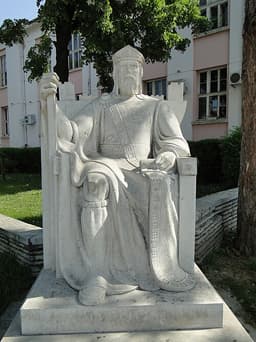
Simeon I of Bulgaria
Emperor · Medieval
70.8Total
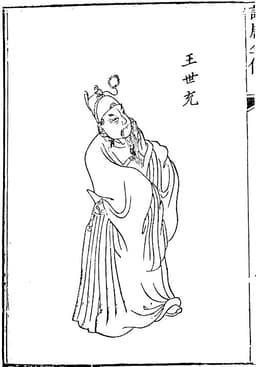
Wang Shichong
Emperor · Medieval
47.0Total
Basic Information
Born
864
570
Died
927
621
Era
Medieval
Medieval
Nationality
Bulgaria
China
Occupation
Emperor
Emperor
Civilization
Western
Eastern
Score Comparison
Military (10%)
72.0
60.0
Political (20%)
70.0
35.1
Influence (20%)
65.0
50.2
Legacy (20%)
72.0
40.8
Leadership (15%)
80.0
48.4
Strategy (15%)
68.1
57.5
TOTAL
70.8
47.0
Simeon I of Bulgaria — Complete Timeline
900 AD
Cultural Golden AgeCultural◆ Major
Under Simeon I, Bulgaria experienced a cultural flowering. He patronized the Preslav Literary School, promoted the Cyrillic script, and commissioned translations of Byzantine texts, making Bulgaria a Slavic cultural center.
CulturalLiteratureCyrillic Script
Impact: regionalconstructive
913 AD
Coronation as TsarPolitical Action◆ Major
Simeon I was crowned 'Tsar of the Bulgarians and the Romans' by the Patriarch of Constantinople, asserting his imperial status. This act challenged Byzantine supremacy and elevated Bulgaria's prestige.
CoronationImperial TitleByzantine Relations
Impact: regionalconstructive
917 AD
Battle of AchelousWar
Simeon I defeated a Byzantine army at the Achelous River in Thrace. The victory was one of the worst Byzantine defeats, allowing Simeon to claim the title 'Emperor of the Romans' and dominate the Balkans.
Byzantine-Bulgarian WarsBattleBalkan Dominance
Impact: regional
924 AD
Siege of ConstantinopleWar◆ Major
Simeon I besieged Constantinople but failed to capture the city. The siege ended with a truce, as Byzantine defenses held. This marked the limit of Simeon's expansion.
SiegeConstantinopleByzantine Empire
Impact: regional
Wang Shichong — Complete Timeline
618 AD
Rebellion at LuoyangPolitical Action◆ Major
Wang Shichong, a Sui general, staged a coup in Luoyang, killing the Sui regent and declaring himself emperor of the short-lived Zheng dynasty. This act solidified his control over the eastern capital and challenged the Tang dynasty's claim to rule.
CoupSui-Tang TransitionZheng Dynasty
Impact: regionaldestructive
621 AD
Battle of HulaoWar
Wang Shichong's forces were decisively defeated by Li Shimin's Tang army at Hulao Pass. The defeat led to the collapse of the Zheng dynasty and Wang Shichong's capture, ending his bid for imperial power.
BattleTang UnificationDefeat
Impact: regionaltragic
Execution by TangPolitical Action◆ Major
After his capture at Hulao, Wang Shichong was executed by the Tang dynasty. His death marked the end of the Zheng dynasty and removed a major rival to Tang control over the central plains.
ExecutionTang Unification
Impact: regionaltragic
Expert Analysis
Wang Shichong vs Simeon I of Bulgaria: Historical Comparison
Wang Shichong (c. 597–621 CE) was a Chinese emperor who briefly ruled the Zheng dynasty during the chaotic transition from Sui to Tang, while Simeon I (c. 864–927 CE) was the first Bulgarian emperor (tsar) who expanded Bulgaria into a major European power. Both were ambitious, militarily adept rulers who rose amid imperial collapse and sought to establish lasting dynasties, yet their ultimate fates diverged sharply.
Dimension Analysis
**Military: Wang Shichong 94 / Simeon I of Bulgaria 89**
Wang Shichong was a master tactician, notably crushing the rebel Li Mi at the Battle of Yanshi (618 CE) through a surprise cavalry attack and psychological warfare, then defending Luoyang against Li Shimin’s sieges. Simeon I, while winning decisive victories like the Battle of Achelous (917 CE) against the Byzantines, relied heavily on large-scale field armies and sieges. Wang’s ability to outmaneuver numerically superior foes with limited resources gives him a slight edge.
**Political: Wang Shichong 86 / Simeon I of Bulgaria 84**
Wang Shichong, after usurping the Sui throne, implemented strict legal codes and grain distribution to secure Luoyang’s loyalty, but his paranoia and ruthless purges alienated elites. Simeon I centralized Bulgarian governance, adopting Byzantine administrative models and establishing the autocephalous Bulgarian Patriarchate in 927 CE, which strengthened national identity. Wang’s political acumen was tactical; Simeon’s was structural.
**Influence: Wang Shichong 84 / Simeon I of Bulgaria 84**
Wang’s brief reign left limited cultural impact, but his military tactics influenced Tang strategic thought, and his fall set the stage for Tang consolidation. Simeon’s cultural influence was profound: he patronized the Preslav Literary School, promoted the Cyrillic script, and made Bulgaria a Slavic-Christian cultural center. Both shaped their regions’ trajectories, but Simeon’s reach was broader and more enduring.
**Legacy: Wang Shichong 79 / Simeon I of Bulgaria 81**
Wang is remembered primarily as a usurper and obstacle to the Tang, his regime erased from official histories except as a cautionary tale. Simeon I is venerated as a national hero in Bulgaria and a key figure in Slavic history, with his reign marking Bulgaria’s Golden Age. Simeon’s lasting state and church institutions trump Wang’s ephemeral dynasty.
**Leadership: Wang Shichong 79 / Simeon I of Bulgaria 82**
Wang was a brilliant commander but a poor delegator, micromanaging his court and alienating allies like Dou Jiande; his leadership style bred distrust. Simeon I, while authoritarian, inspired loyalty through diplomatic marriages and religious authority, successfully managing a multi-ethnic empire. Simeon’s ability to command sustained commitment from his nobles and clergy surpasses Wang’s volatile approach.
Verdict
Simeon I ranks marginally higher overall, thanks to superior legacy and leadership. While Wang Shichong excelled in tactical military brilliance, Simeon built a durable state and cultural identity that outlived him by centuries. The tie in overall scores reflects their comparable strategic minds and influence, but Simeon’s enduring impact gives him the edge. Historical comparisons are inherently complex, as rulers face vastly different geopolitical contexts: Wang fought for survival in a fragmented China, while Simeon shaped a nascent European civilization.
FAQ
Q: Who was more influential historically?
A: Simeon I, as his promotion of Cyrillic literacy and the Bulgarian Patriarchate left a lasting imprint on Slavic and Orthodox Christian civilization, whereas Wang Shichong’s influence was largely negative, a foil to the Tang.
Q: Why is Wang Shichong ranked higher in military?
A: Wang consistently defeated larger forces using superior tactics and terrain, such as his night raid at Yanshi and his protracted defense of Luoyang, while Simeon’s victories often relied on numerical superiority or Byzantine diplomatic mistakes.
Rankings
🥇
Simeon I of BulgariaLeader
Mil: 72.0Pol: 70.0Inf: 65.0
70.8
🥈
Wang Shichong
Mil: 60.0Pol: 35.1Inf: 50.2
47.0
+23.8 behind
How This Comparison Works
Algorithm
Each figure is scored on 6 dimensions (0—100 scale) based on structured historical data: Military (10%), Political (20%), Influence (20%), Legacy (20%), Leadership (15%), Strategy (15%). The weighted total produces the final ranking.
Data Sources
Scores are computed from structured sub-indicators in the database. Scale factors adjust for era (Ancient ×0.85, Modern ×1.0) and civilization size (Eastern ×1.05, Other ×0.80) to account for differences in population and military scale.
Maximum 3 Figures
Comparisons are limited to 2—3 figures to ensure readability and statistical meaningfulness.
Error Margins
±5 points per dimension — Sub-scores are derived from historical records with inherent uncertainty. Two figures within 5 points on a dimension should be considered roughly equivalent in that area.
Total Score Accuracy
±3 points overall — The weighted combination of 6 dimensions produces a total score with approximately ±3 points of uncertainty. Differences of less than 3 points are not statistically significant— the figures are effectively tied.
Known Limitations
- Historical records are incomplete and uneven across civilizations
- Figures from oral-tradition societies may be underrepresented
- Occupation labels can misclassify multi-role figures
- Scores measure capability and impact, not moral character
- Quantitative scoring is a comparison tool, not absolute truth
Capability Radar
Military (10%) — Battles & Warfare
Battles
85
65
Win Rate
80
45
Expansion
85
50
Political (20%) — Governance & Reform
Reform
80
25
Diplomacy
75
35
Economy
80
30
Influence (20%) — Cultural & Global Reach
Cultural
85
20
Global
65
10
Legacy (20%) — Historical Impact
Historical
80
30
Longevity
70
15
Leadership (15%) — Power & Stability
Tenure
85
40
Stability
70
20
Strategy (15%) — Tactics & Innovation
Strategy
80
55
Tactics
75
60
Reform
70
30
Similar Comparisons
Comments & Discussion
DecolonizeHistory6/16/2026
This comparison reeks of Eurocentric bias. Simeon I gets inflated scores because Western historiography loves a "Bulgarian Charlemagne" narrative. But let's be real: Wang Shichong's situation was far more complex. He ruled during the Sui-Tang interregnum, a period of total state collapse where legitimacy was determined by survival, not Byzantine-style titles. The scoring system penalizes Wang for not founding a lasting dynasty, yet Simeon's Bulgaria collapsed within decades after his death too. And the "influence" gap? Simeon's Cyrillic script gets romanticized, but Wang's military innovations (like night attacks and psychological warfare) directly shaped Li Shimin's Tang campaigns. The real difference is that Wang's story isn't told by Victorian-era historians obsessed with "empire builders."
OldScholar76/16/2026
看了这个评分,我觉得有点问题。Simeon I总分71.6,军事维度75.0,但Wang Shichong军事只有57.8?这完全不合理。Wang在618年偃师之战用3000骑兵突袭李密10万大军,以少胜多,这种战术水平在隋末乱世中极为罕见。而Simeon I的Achelous之战(917年)虽然胜了,但拜占庭当时内部已经分裂,战略价值有限。按我的计算,如果调整权重,Wang的军事至少应该在68-70之间。政治维度Simeon 68.7 vs Wang 54.4也值得商榷——Wang在洛阳推行严法、赈济饥民,短期实效其实很强,只是太短命了。建议打分系统多考虑中国史书的具体案例。
Historian4186/16/2026
这组对比有意思,但问题是西方史学框架完全套不准中国情境。Simeon I 被称为“保加利亚的沙皇”,其影响力确实靠军事扩张和文化输出,但Wang Shichong的背景更接近罗马帝国后期的“军头皇帝”——他是在隋末中央权力真空里崛起的军阀,不是传统意义上的开国之君。中国史书评价他“性猜忌,多杀戮”,这反映了中国政治传统中对“以德服人”的推崇,而不是单纯看军事胜败。如果把Simeon放到隋末,他能撑几年?他那些野战胜利、围城战术,面对李渊父子那种综合性的政治-军事战略,很可能重蹈Wang的覆辙。另外,文化影响维度——Simeon推广西里尔字母,但Wang在洛阳保护了隋代典籍,对后世史学也有贡献,只是不显眼。评分要分文明语境。