Loading...
This comparison has not been analyzed yet.
One-time AI generation (~1 minute). Scores and timeline are already available below.
Stephen the Great vs Yaqub al-Mansur
Stephen the Great leads by 0.0 pts · 2 figures compared
…
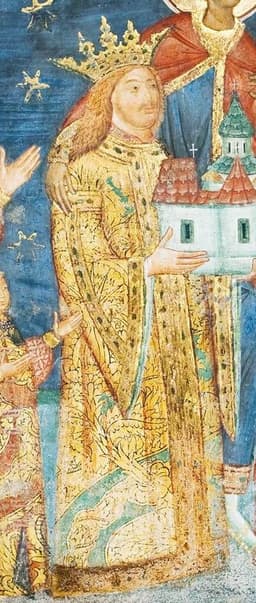
Stephen the Great
Emperor · Medieval
61.6Total

Yaqub al-Mansur
Emperor · Medieval
61.6Total
Basic Information
Born
1433
1160
Died
1504
1199
Era
Medieval
Medieval
Nationality
Moldavia
Almohad Caliphate
Occupation
Emperor
Emperor
Civilization
Western
Middle Eastern
Score Comparison
Military (10%)
67.3
82.0
Political (20%)
59.3
62.7
Influence (20%)
55.0
55.0
Legacy (20%)
55.0
54.0
Leadership (15%)
78.0
68.0
Strategy (15%)
68.1
65.4
TOTAL
61.6
61.6
Stephen the Great — Complete Timeline
1470 AD
Construction of Fortresses and ChurchesCultural◆ Major
Stephen the Great commissioned the construction of numerous fortresses, including those at Suceava, Neam
ArchitectureFortificationsOrthodox Church
Impact: nationalconstructive
1475 AD
Battle of VasluiWar
Stephen the Great led a Moldavian army of about 40,000 men against an Ottoman force of up to 120,000 under Had
BattleOttoman EmpireMoldavia
Impact: regional
1476 AD
Battle of Valea AlbăWar◆ Major
Stephen the Great suffered a major defeat at Valea Alb
BattleMehmed IIDefeat
Impact: regionaltragic
1489 AD
Treaty with the Ottoman EmpirePolitical Action◆ Major
Stephen the Great signed a treaty with Sultan Bayezid II, agreeing to pay an annual tribute to the Ottoman Empire in exchange for peace. The treaty recognized Moldavia's autonomy and ended decades of warfare, though it placed Moldavia in a vassal relationship with the Ottomans.
TreatyVassalageBayezid II
Impact: regional
Yaqub al-Mansur — Complete Timeline
1184 AD
Accession as CaliphPolitical Action◆ Major
Yaqub al-Mansur succeeded his father Abu Yaqub Yusuf as Almohad caliph after the latter's death in battle. He inherited a stable empire and immediately faced challenges from Christian kingdoms in Iberia and internal Berber revolts.
Almohad CaliphateSuccessionDynasty
Impact: regional
1195 AD
Battle of AlarcosWar
Yaqub al-Mansur defeated King Alfonso VIII of Castile at the Battle of Alarcos in central Iberia. The Almohad victory was decisive, forcing Castile to sue for peace and halting Christian expansion for over a decade.
AlarcosAlmohad VictoryReconquista
Impact: regionalconstructive
1197 AD
Construction of the Koutoubia MosqueCultural◆ Major
Yaqub al-Mansur commissioned the expansion and completion of the Koutoubia Mosque in Marrakesh. The mosque became a masterpiece of Almohad architecture, featuring a 77-meter minaret that served as a model for later structures like the Giralda in Seville.
ArchitectureKoutoubiaAlmohad Culture
Impact: regionalconstructive
Peace Treaty with CastilePolitical Action◆ Major
After the Battle of Alarcos, Yaqub al-Mansur negotiated a truce with Alfonso VIII of Castile. The treaty secured Almohad control over central Iberia and established a period of peace that allowed the caliph to focus on internal consolidation.
DiplomacyTruceAlmohad-Castile Relations
Impact: regionalconstructive
1198 AD
Suppression of Berber RevoltsWar
Yaqub al-Mansur crushed a series of revolts by Berber tribes in the Atlas Mountains and the Sahara. He executed rebel leaders and reasserted Almohad authority, but the campaigns drained the treasury and sowed resentment among the Berber population.
Berber RevoltAlmohad RepressionInternal Conflict
Impact: regionaldestructive
This comparison has not been analyzed yet.
One-time AI generation (~1 minute). Scores and timeline are already available below.
Rankings
🥇
Stephen the GreatLeader
Mil: 67.3Pol: 59.3Inf: 55.0
61.6
🥈
Yaqub al-Mansur
Mil: 82.0Pol: 62.7Inf: 55.0
61.6
How This Comparison Works
Algorithm
Each figure is scored on 6 dimensions (0—100 scale) based on structured historical data: Military (10%), Political (20%), Influence (20%), Legacy (20%), Leadership (15%), Strategy (15%). The weighted total produces the final ranking.
Data Sources
Scores are computed from structured sub-indicators in the database. Scale factors adjust for era (Ancient ×0.85, Modern ×1.0) and civilization size (Eastern ×1.05, Other ×0.80) to account for differences in population and military scale.
Maximum 3 Figures
Comparisons are limited to 2—3 figures to ensure readability and statistical meaningfulness.
Error Margins
±5 points per dimension — Sub-scores are derived from historical records with inherent uncertainty. Two figures within 5 points on a dimension should be considered roughly equivalent in that area.
Total Score Accuracy
±3 points overall — The weighted combination of 6 dimensions produces a total score with approximately ±3 points of uncertainty. Differences of less than 3 points are not statistically significant— the figures are effectively tied.
Known Limitations
- Historical records are incomplete and uneven across civilizations
- Figures from oral-tradition societies may be underrepresented
- Occupation labels can misclassify multi-role figures
- Scores measure capability and impact, not moral character
- Quantitative scoring is a comparison tool, not absolute truth
Capability Radar
Military (10%) — Battles & Warfare
Battles
72
75
Win Rate
78
80
Expansion
65
70
Political (20%) — Governance & Reform
Reform
75
60
Diplomacy
80
65
Economy
70
60
Influence (20%) — Cultural & Global Reach
Cultural
65
60
Global
55
55
Legacy (20%) — Historical Impact
Historical
70
65
Longevity
60
50
Leadership (15%) — Power & Stability
Tenure
85
70
Stability
75
55
Strategy (15%) — Tactics & Innovation
Strategy
80
75
Tactics
75
70
Reform
70
65
Similar Comparisons
Comments & Discussion
No comments yet. Be the first to share your thoughts!