Loading...
Wenceslaus II of Bohemia vs Wuzong Qaghan
Wenceslaus II of Bohemia leads by 7.5 pts · 2 figures compared
…
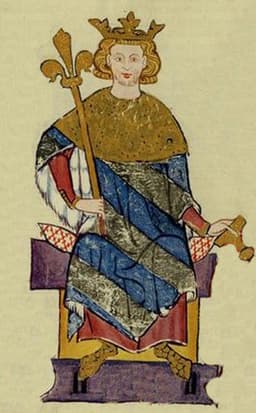
Wenceslaus II of Bohemia
Emperor · Medieval
55.0Total

Wuzong Qaghan
Emperor · Medieval
47.5Total
Basic Information
Born
1271
800
Died
1305
846
Era
Medieval
Medieval
Nationality
Bohemia
Uyghur Khaganate
Occupation
Emperor
Emperor
Civilization
Western
Eastern
Score Comparison
Military (10%)
55.0
55.0
Political (20%)
53.8
36.5
Influence (20%)
56.4
49.4
Legacy (20%)
48.3
41.7
Leadership (15%)
74.0
51.9
Strategy (15%)
41.7
60.0
TOTAL
55.0
47.5
Wenceslaus II of Bohemia — Complete Timeline
1300 AD
Minting of the Prague GroschenReform◆ Major
Wenceslaus II introduced the Prague groschen, a silver coin that became the standard currency in Central Europe for centuries. This monetary reform stabilized the Bohemian economy and facilitated trade across the region.
Currency ReformEconomic PolicyTrade
Impact: regionalconstructive
Coronation as King of PolandPolitical Action◆ Major
Wenceslaus II was crowned King of Poland in Gniezno, uniting Bohemia and Poland under his rule. This coronation was part of his efforts to expand his influence in Central Europe, but it was contested by Polish nobles.
CoronationPersonal UnionPoland
Impact: regional
1305 AD
Death of Wenceslaus IIOther◆ Major
Wenceslaus II died suddenly at the age of 34, likely from tuberculosis. His death left the Bohemian-Polish union fragile, and his son Wenceslaus III was unable to maintain control, leading to the collapse of the P
DeathDynastic CrisisSuccession
Impact: regionaltragic
Wuzong Qaghan — Complete Timeline
840 AD
Battle of the Uyghur Capital Ordu-BaliqWar
The Yenisei Kirghiz, led by their khagan, attacked and captured the Uyghur capital Ordu-Baliq. Wuzong Qaghan was unable to prevent the fall of the city, which led to the collapse of the Uyghur Khaganate and the dispersal of its people.
Uyghur Khaganate collapseKirghiz invasionCapital fall
Impact: regionaltragic
841 AD
Flight from the Mongol SteppePolitical Action◆ Major
Following the Kirghiz victory, Wuzong Qaghan led a remnant of the Uyghur nobility and army in a retreat from the Mongol steppe. This flight marked the end of Uyghur political independence in the region and the beginning of their diaspora.
Uyghur diasporaRetreatSteppe
Impact: regionaltragic
Expert Analysis
Origins
Wenceslaus II (1271–1305) was born into the Přemyslid dynasty, the son of King Ottokar II of Bohemia. His early life was marked by political turmoil: after his father's death in 1278, the young prince was imprisoned by Otto IV of Brandenburg. He spent seven years in captivity, an experience that shaped his cautious and pragmatic approach to governance. Upon his release in 1283, he returned to a kingdom weakened by factionalism.
Wuzong Qaghan (c. 790–840) was a ruler of the Uyghur Khaganate, a Turkic steppe empire that dominated the Mongolian Plateau. His exact birth year is uncertain, but he rose to power during a period of internal strife and external threats. The Uyghurs had been allies of the Tang dynasty, but by Wuzong's time, the khaganate faced increasing pressure from the Yenisei Kirghiz, a rival Turkic group from the north.
Rise to Power
Wenceslaus II ascended the Bohemian throne in 1283 at age 12, initially under regency. He consolidated power by marrying Judith of Habsburg in 1285, aligning with the powerful Habsburg family. His major political achievement came in 1300 when he was crowned King of Poland in Gniezno, uniting Bohemia and Poland under his rule. This was achieved through a combination of diplomacy, marriage alliances, and the weakness of Polish principalities. He also claimed the Hungarian throne for his son, but this was never realized.
Wuzong Qaghan became khagan around 820, likely after a period of internal conflict. His rise was marked by military campaigns to assert Uyghur dominance over the steppe. He maintained the khaganate's tributary relationship with Tang China, extracting silk and other goods. However, his reign was overshadowed by the growing power of the Yenisei Kirghiz, who had been building strength for decades.
Leadership & Governance
Wenceslaus II was a capable administrator and economic reformer. His most enduring achievement was the minting of the Prague groschen in 1300, a high-quality silver coin that became the standard currency in Central Europe for centuries. This monetary reform stabilized the Bohemian economy and facilitated trade. He also implemented mining reforms in Kutná Hora, boosting silver production. Politically, he pursued a policy of centralization, weakening the nobility by appointing loyal officials. His leadership score of 74.0 reflects his effectiveness in governance.
Wuzong Qaghan's governance was typical of steppe khagans: he relied on a tribal confederation and distributed booty to maintain loyalty. His political score is only 36.5, indicating weaker institutional control. He faced the challenge of managing a multi-ethnic empire that included Sogdian merchants and Manichaean clergy. Unlike Wenceslaus, he did not introduce lasting administrative reforms. His military strategy score of 60.0 suggests competence in warfare, but he was ultimately outmaneuvered by the Kirghiz.
Triumph & Tragedy
Wenceslaus II's greatest success was the unification of Bohemia and Poland, creating a significant Central European power. His monetary reforms had a lasting impact, with the Prague groschen used until the 16th century. However, his sudden death at age 34 from tuberculosis (likely) left his kingdom vulnerable. His son Wenceslaus III was assassinated a year later, ending the Přemyslid dynasty and plunging Bohemia into chaos.
Wuzong Qaghan's triumph was maintaining Uyghur power for two decades, but his tragedy was the catastrophic defeat at the Battle of Ordu-Baliq in 840. The Yenisei Kirghiz captured the Uyghur capital, forcing Wuzong to flee with a remnant of his people. He died during the retreat, and the Uyghur Khaganate collapsed, with survivors scattering to become the Uyghurs of Xinjiang and Gansu.
Character & Destiny
Wenceslaus II was cautious, diplomatic, and reform-minded. His captivity in youth made him pragmatic and distrustful of the nobility. He preferred economic and political solutions over military ones, reflected in his low military score of 55.0. His early death was a tragic twist of fate that undid much of his work.
Wuzong Qaghan was a traditional steppe warrior, focused on military prowess and tribal alliances. His inability to adapt to the Kirghiz threat or form effective counter-alliances sealed his fate. His character was suited for a stable khaganate but not for a crisis. Historians note his strategy score of 60.0, but his political score of 36.5 shows a weakness in diplomacy.
Legacy
Wenceslaus II left a mixed legacy. The Prague groschen remained a standard currency, and his mining reforms boosted Bohemian wealth. However, the Bohemian-Polish union did not survive him. He is remembered as a competent ruler who strengthened the economy but failed to secure his dynasty. His total score of 55.0 reflects moderate overall impact.
Wuzong Qaghan is remembered as the last ruler of the Uyghur Khaganate. His defeat led to the diaspora of the Uyghur people, who later formed powerful states in Xinjiang. His legacy is tied to the end of an era, with the Kirghiz dominating the steppe until the rise of the Mongols. His total score of 47.5 places him below Wenceslaus.
Conclusion
Wenceslaus II of Bohemia had a greater impact than Wuzong Qaghan, as evidenced by his higher total score (55.0 vs 47.5). While Wuzong faced a more existential threat and his failure led to the collapse of his empire, Wenceslaus's economic reforms had a lasting positive effect on Central Europe. The Prague groschen facilitated trade for centuries, whereas the Uyghur Khaganate's fall was a setback for steppe civilization. Wenceslaus's political and leadership scores (53.8 and 74.0) significantly outpace Wuzong's (36.5 and 51.9), reflecting more effective governance. Although both rulers faced tragic ends, Wenceslaus's achievements endured beyond his death, making him the more consequential figure.
Rankings
🥇
Wenceslaus II of BohemiaLeader
Mil: 55.0Pol: 53.8Inf: 56.4
55.0
🥈
Wuzong Qaghan
Mil: 55.0Pol: 36.5Inf: 49.4
47.5
+7.5 behind
How This Comparison Works
Algorithm
Each figure is scored on 6 dimensions (0—100 scale) based on structured historical data: Military (10%), Political (20%), Influence (20%), Legacy (20%), Leadership (15%), Strategy (15%). The weighted total produces the final ranking.
Data Sources
Scores are computed from structured sub-indicators in the database. Scale factors adjust for era (Ancient ×0.85, Modern ×1.0) and civilization size (Eastern ×1.05, Other ×0.80) to account for differences in population and military scale.
Maximum 3 Figures
Comparisons are limited to 2—3 figures to ensure readability and statistical meaningfulness.
Error Margins
±5 points per dimension — Sub-scores are derived from historical records with inherent uncertainty. Two figures within 5 points on a dimension should be considered roughly equivalent in that area.
Total Score Accuracy
±3 points overall — The weighted combination of 6 dimensions produces a total score with approximately ±3 points of uncertainty. Differences of less than 3 points are not statistically significant— the figures are effectively tied.
Known Limitations
- Historical records are incomplete and uneven across civilizations
- Figures from oral-tradition societies may be underrepresented
- Occupation labels can misclassify multi-role figures
- Scores measure capability and impact, not moral character
- Quantitative scoring is a comparison tool, not absolute truth
Capability Radar
Military (10%) — Battles & Warfare
Battles
30
55
Win Rate
35
50
Expansion
40
40
Political (20%) — Governance & Reform
Reform
55
30
Diplomacy
65
35
Economy
70
30
Influence (20%) — Cultural & Global Reach
Cultural
45
20
Global
35
15
Legacy (20%) — Historical Impact
Historical
50
30
Longevity
40
20
Leadership (15%) — Power & Stability
Tenure
60
40
Stability
50
25
Strategy (15%) — Tactics & Innovation
Strategy
30
50
Tactics
25
45
Reform
20
30
Similar Comparisons
Comments & Discussion
No comments yet. Be the first to share your thoughts!