Loading...
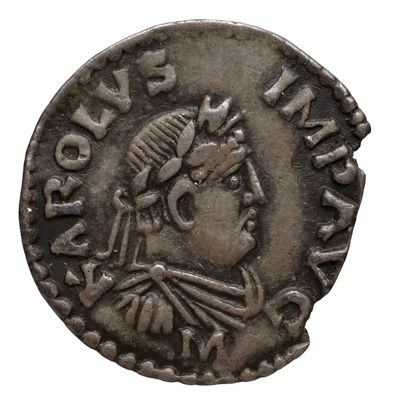
Charlemagne
MedievalEmperorFrankish Empire748 — 814
法兰克王国加洛林王朝国王,查理曼帝国建立者。被称为欧洲之父。
Compare Charlemagne with another historical figure:
Quick Facts
Born
748
Died
814
Country
Frankish Empire
Era
Medieval
Occupation
Emperor
Score Overview
Military (10%)80
Political (20%)78
Influence (20%)65
Legacy (20%)65
Leadership (15%)80
Strategy (15%)68
Total Score71.0
Charlemagne — Complete Timeline
772 AD
Saxon WarsWar◆ Major
Charlemagne launched a series of campaigns against the Saxons lasting over three decades. He forcibly converted them to Christianity, incorporated their territory into the Frankish Empire, and ordered the execution of thousands at the Massacre of Verden in 782.
ConquestChristianizationWar
Impact: regionaldestructive
774 AD
Conquest of the Lombard KingdomWar◆ Major
Charlemagne answered Pope Adrian I's call for aid against the Lombards. He besieged and captured Pavia, deposed King Desiderius, and annexed the Lombard Kingdom into his domain, assuming the title 'King of the Lombards' and solidifying Frankish control over Italy.
ConquestItalyPapal Alliance
Impact: regional
779 AD
Capitulary of HerstalReform
Charlemagne issued a series of legal and administrative reforms at the assembly in Herstal. He standardized weights and measures, reformed the coinage system, and strengthened the authority of royal officials (missi dominici) to oversee local governance and justice.
Legal ReformAdministrationStandardization
Impact: nationalconstructive
780 AD
Carolingian Renaissance ReformsCultural◆ Major
Charlemagne initiated a program of educational and cultural revival, inviting scholars like Alcuin of York to his court. He standardized Latin script (Carolingian minuscule), established palace schools, and promoted the copying of classical texts, preserving ancient knowledge.
EducationCultural RevivalScript
Impact: globalprogressive
800 AD
Coronation as Holy Roman EmperorPolitical Action
Pope Leo III crowned Charlemagne as Emperor of the Romans in St. Peter's Basilica on Christmas Day. This act revived the Western Roman Empire, established a precedent for papal authority over imperial titles, and created a political entity that shaped medieval European politics.
CoronationHoly Roman EmpirePapacy
Impact: globalconstructive
Detailed Scores
▶View all detailed scores
Military
Strategy
7
Tactics
7
Battles
7
Army Scale
7
War Impact
7
Political
Governance
7
Reform
7
Stability
7
Policy
7
Power
8
Influence
History
8
Global
8
Culture
8
Ideology
8
Legacy
8
People often compare with
See how Charlemagne stacks up against other historical figures
Popular Comparisons
Charlemagne vs Genghis Khan
vs Genghis Khan81
Charlemagne vs Kublai Khan
vs Kublai Khan74
Charlemagne vs Charles V
vs Charles V74
Charlemagne vs Suleiman the Magnificent
vs Suleiman the Magnificent73
Charlemagne vs Zhao Kuangyin
vs Zhao Kuangyin72
Charlemagne vs Wu Zetian
vs Wu Zetian70