Loading...
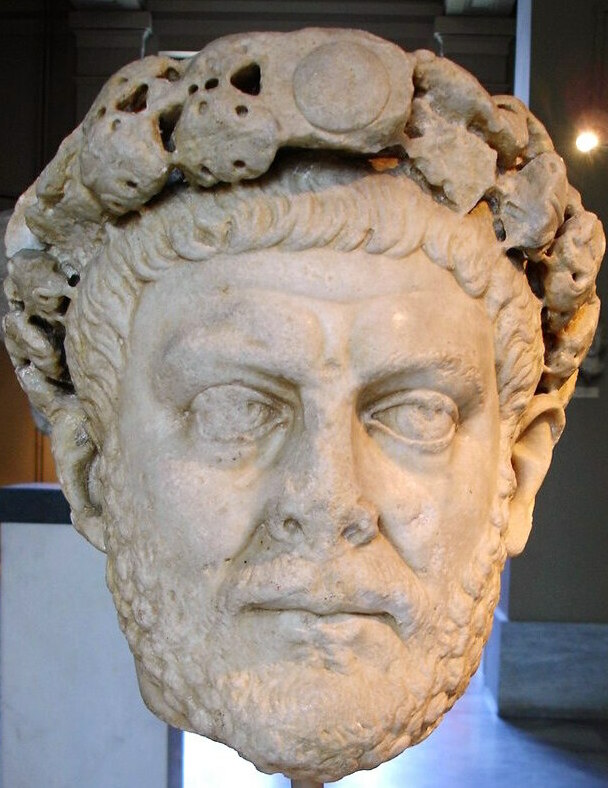
Diocletian
AncientEmperorRoman Empire244 — 311
Established the Tetrarchy system, stabilized the empire.
Compare Diocletian with another historical figure:
Quick Facts
Born
244
Died
311
Country
Roman Empire
Era
Ancient
Occupation
Emperor
Score Overview
Military (10%)65
Political (20%)82
Influence (20%)72
Legacy (20%)55
Leadership (15%)82
Strategy (15%)67
Total Score69.6
Diocletian — Complete Timeline
293 AD
Establishment of the TetrarchyReform
Diocletian created the Tetrarchy, dividing the Roman Empire into four administrative regions ruled by two senior emperors (Augusti) and two junior emperors (Caesares). This system aimed to improve governance and defense, and stabilize imperial succession.
TetrarchyReformAdministration
Impact: globalconstructive
Administrative Reorganization of the EmpireReform◆ Major
Diocletian reorganized the Roman provinces into smaller units (dioceses) grouped into four prefectures, separating civilian and military authority. This reform improved tax collection and administration, but also increased bureaucracy.
AdministrationReformProvinces
Impact: globalconstructive
301 AD
Economic Reforms (Edict on Maximum Prices)Reform◆ Major
Diocletian issued the Edict on Maximum Prices, setting price ceilings on over 1,000 goods and services to combat inflation. The edict was largely ineffective and led to black markets, but demonstrated the state's attempt to control the economy.
Economic ReformPrice ControlsInflation
Impact: global
303 AD
Diocletianic Persecution of ChristiansPolitical Action◆ Major
Diocletian issued a series of edicts ordering the persecution of Christians throughout the Roman Empire. Churches were destroyed, scriptures burned, and Christians were executed or forced to sacrifice to Roman gods. This was the last and most severe state-sponsored persecution.
PersecutionChristianityReligion
Impact: globaldestructive
305 AD
Abdication of DiocletianPolitical Action
Diocletian voluntarily abdicated the throne, retiring to his palace in Split (modern Croatia). He forced his co-emperor Maximian to do the same, setting a precedent for orderly succession, though the Tetrarchy soon collapsed after his departure.
AbdicationRetirementTetrarchy
Impact: global
Detailed Scores
▶View all detailed scores
Military
Strategy
7
Tactics
7
Battles
7
Army Scale
7
War Impact
7
Political
Governance
7
Reform
7
Stability
7
Policy
7
Power
7
Influence
History
8
Global
8
Culture
8
Ideology
9
Legacy
8
People often compare with
See how Diocletian stacks up against other historical figures
Popular Comparisons
Diocletian vs Qin Shi Huang
vs Qin Shi Huang85
Diocletian vs Suppiluliuma I
vs Suppiluliuma I64
Diocletian vs Gallienus
vs Gallienus59
Diocletian vs Chandragupta I
vs Chandragupta I57
Diocletian vs Antigonus II Gonatas
vs Antigonus II Gonatas56
Diocletian vs Kujula Kadphises
vs Kujula Kadphises55