Loading...
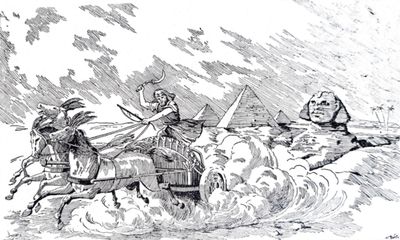
Ramesses II the Great
AncientEmperorNew Kingdom Egypt-1279 — -1213
Ozymandias, Battle of Kadesh, Abu Simbel, 66-year reign.
Compare Ramesses II the Great with another historical figure:
Quick Facts
Born
1279 BCE
Died
1213 BCE
Country
New Kingdom Egypt
Era
Ancient
Occupation
Emperor
Score Overview
Military (10%)82
Political (20%)59
Influence (20%)65
Legacy (20%)68
Leadership (15%)78
Strategy (15%)55
Total Score67.5
Ramesses II the Great — Complete Timeline
1279 BC
Building of Pi-RamessesCultural◆ Major
Ramesses II established a new capital city, Pi-Ramesses, in the eastern Nile Delta. The city served as a military and administrative center, featuring grand palaces, temples, and storehouses. It became a symbol of his reign and facilitated control over trade routes to Asia.
CapitalUrban PlanningAdministration
Impact: nationalconstructive
1275 BC
Campaigns in Nubia and LibyaWar
Ramesses II conducted military campaigns to secure Egypt's southern border in Nubia and to repel Libyan incursions from the west. These campaigns resulted in the construction of fortresses and the extraction of tribute, reinforcing Egyptian control over these regions.
Military CampaignNubiaLibya
Impact: regional
1274 BC
Battle of KadeshWar◆ Major
Ramesses II led Egyptian forces against the Hittite Empire under Muwatalli II near the Orontes River. The battle ended in a tactical stalemate but was claimed as a great Egyptian victory. It led to the first recorded peace treaty in history, signed around 1258 BC.
BattleHittite-Egyptian WarPeace Treaty
Impact: regional
1264 BC
Construction of Abu SimbelCultural◆ Major
Ramesses II ordered the construction of two rock-cut temples at Abu Simbel in Nubia. The Great Temple was dedicated to Ra-Horakhty and Ramesses himself, with four colossal seated statues of the pharaoh at the entrance. The complex demonstrated Egyptian power and religious devotion.
ArchitectureMonumentNubia
Impact: regionalconstructive
1258 BC
Treaty of KadeshPolitical Action◆ Major
Ramesses II and Hittite king Hattusili III signed a peace treaty ending decades of conflict. The treaty established mutual defense, extradition of refugees, and trade agreements. A copy in Akkadian cuneiform was found at Hattusa, and an Egyptian version is inscribed at Karnak.
DiplomacyPeace TreatyInternational Relations
Impact: regionalconstructive
1250 BC
Construction of the RamesseumCultural
Ramesses II built his mortuary temple, the Ramesseum, on the west bank of the Nile at Thebes. The temple featured a colossal statue of the pharaoh, extensive reliefs depicting the Battle of Kadesh, and a large library. It served as a center for his cult after death.
ArchitectureMortuary TempleThebes
Impact: nationalconstructive
1213 BC
Long Reign and SuccessionPolitical Action◆ Major
Ramesses II died after a 66-year reign, one of the longest in Egyptian history. He was succeeded by his son Merneptah. His reign left a lasting legacy of monumental architecture, military campaigns, and diplomatic achievements, but also strained state resources.
ReignSuccessionLegacy
Impact: national
Detailed Scores
▶View all detailed scores
Military
Strategy
7
Tactics
7
Battles
7
Army Scale
7
War Impact
7
Political
Governance
6
Reform
7
Stability
6
Policy
7
Power
7
Influence
History
8
Global
7
Culture
8
Ideology
8
Legacy
7
People often compare with
See how Ramesses II the Great stacks up against other historical figures
Popular Comparisons
Ramesses II the Great vs Khosrow I
vs Khosrow I72
Ramesses II the Great vs Sargon of Akkad
vs Sargon of Akkad70
Ramesses II the Great vs King Gwanggaeto
vs King Gwanggaeto60
Ramesses II the Great vs Antigonus III Doson
vs Antigonus III Doson52
Ramesses II the Great vs Attila the Hun
vs Attila the Hun50
Ramesses II the Great vs Agrippa I
vs Agrippa I42