Loading...
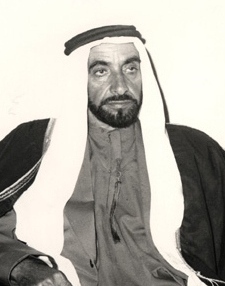
Zayed bin Sultan Al Nahyan
ModernEmperorUAE1918 — 2004
Founding father of the United Arab Emirates.
Compare Zayed bin Sultan Al Nahyan with another historical figure:
Quick Facts
Born
1918
Died
2004
Country
UAE
Era
Modern
Occupation
Emperor
Score Overview
Military (10%)11
Political (20%)82
Influence (20%)68
Legacy (20%)72
Leadership (15%)85
Strategy (15%)26
Total Score63.8
Zayed bin Sultan Al Nahyan — Complete Timeline
1970 AD
Oil Revenue Investment in InfrastructureReform◆ Major
After the discovery of oil in Abu Dhabi in the 1950s, Zayed directed oil revenues toward building modern infrastructure: roads, hospitals, schools, and housing. This transformed Abu Dhabi from a poor region into a wealthy state.
OilDevelopmentInfrastructure
Impact: nationalconstructive
1971 AD
Formation of the United Arab EmiratesPolitical Action
Zayed bin Sultan Al Nahyan, as ruler of Abu Dhabi, played a key role in uniting seven emirates to form the United Arab Emirates on December 2, 1971. He became the first President, a position he held until his death.
UnificationUAEIndependence
Impact: regionalconstructive
1990 AD
Environmental Conservation InitiativesReform
Zayed established the Zayed International Prize for the Environment and implemented policies to protect wildlife and habitats, including the creation of nature reserves. He was a pioneer in environmentalism in the Gulf region.
EnvironmentConservationAwards
Impact: regionalconstructive
Women's Rights ReformsReform◆ Major
Zayed supported women's education and employment, appointing women to government positions and promoting their participation in the workforce. These reforms were progressive for the region at the time.
Women's RightsEducationReform
Impact: nationalprogressive
2004 AD
Death and LegacyOther◆ Major
Zayed died on November 2, 2004, after a long illness. His funeral drew massive crowds, and he was mourned as the founding father of the UAE. His legacy includes a stable, prosperous federation.
DeathLegacyFounding Father
Impact: nationaltragic
Detailed Scores
▶View all detailed scores
Military
Strategy
7
Tactics
6
Battles
7
Army Scale
6
War Impact
7
Political
Governance
8
Reform
8
Stability
8
Policy
8
Power
8
Influence
History
9
Global
8
Culture
9
Ideology
10
Legacy
9
People often compare with
See how Zayed bin Sultan Al Nahyan stacks up against other historical figures
Popular Comparisons
Zayed bin Sultan Al Nahyan vs Bayinnaung
vs Bayinnaung69
Zayed bin Sultan Al Nahyan vs Elizabeth of Russia
vs Elizabeth of Russia59
Zayed bin Sultan Al Nahyan vs Albert I of Belgium
vs Albert I of Belgium57
Zayed bin Sultan Al Nahyan vs Charles Augustus of Saxe-Weimar
vs Charles Augustus of Saxe-Weimar56
Zayed bin Sultan Al Nahyan vs Gojong of Korea
vs Gojong of Korea56
Zayed bin Sultan Al Nahyan vs Emperor Pedro I of Brazil
vs Emperor Pedro I of Brazil56