Loading...
Abu Bakr vs Wanyan Aguda
Abu Bakr leads by 13.7 pts · 2 figures compared
…
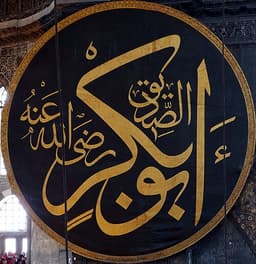
Abu Bakr
Emperor · Medieval
77.1Total

Wanyan Aguda
Emperor · Medieval
63.4Total
Basic Information
Born
573
1068
Died
634
1123
Era
Medieval
Medieval
Nationality
Rashidun Caliphate
China
Occupation
Emperor
Emperor
Civilization
Middle Eastern
Eastern
Score Comparison
Military (10%)
74.7
82.0
Political (20%)
62.7
59.3
Influence (20%)
88.0
55.0
Legacy (20%)
80.0
52.0
Leadership (15%)
77.2
85.0
Strategy (15%)
66.3
68.0
TOTAL
77.1
63.4
Abu Bakr — Complete Timeline
632 AD
Ridda Wars (Apostasy Wars)War◆ Major
Abu Bakr launched military campaigns against Arabian tribes that renounced Islam or refused to pay zakat after Muhammad's death. The wars, led by generals like Khalid ibn al-Walid, reestablished Muslim control over Arabia and consolidated the caliphate.
Ridda WarsConsolidationRashidun
Impact: regional
Election as First CaliphPolitical Action
After the death of Muhammad, Abu Bakr was elected as the first caliph (successor) at Saqifah. His election unified the Muslim community, though it caused controversy among some supporters of Ali. He became the leader of the nascent Islamic state.
CaliphateSuccessionRashidun
Impact: global
633 AD
Compilation of the QuranCultural◆ Major
Abu Bakr ordered the compilation of the Quran into a single written manuscript after many memorizers died in the Ridda Wars. Zayd ibn Thabit collected verses from various sources, creating the first official codex, which later served as the basis for Uthman's standard text.
QuranCompilationRashidun
Impact: globalconstructive
634 AD
Death of Abu BakrPolitical Action◆ Major
Abu Bakr died after a brief illness, having designated Umar as his successor. His caliphate lasted only two years but established the foundations of the Islamic state, including the expansion beyond Arabia and the preservation of the Quran.
DeathSuccessionRashidun
Impact: global
Wanyan Aguda — Complete Timeline
1114 AD
Battle of HubudagangWar◆ Major
Aguda's Jurchen forces defeated a Liao army at Hubudagang, marking the first major victory of the rebellion. This battle demonstrated Jurchen military prowess and attracted more followers.
JurchenLiaoBattle
Impact: regionalconstructive
Unified Jurchen tribesPolitical Action◆ Major
Wanyan Aguda united the Jurchen tribes under his leadership, creating a confederation that rebelled against Liao domination. He organized a disciplined army and began the Jurchen revolt.
JurchenUnificationRebellion
Impact: regionalconstructive
1115 AD
Founded Jin DynastyPolitical Action
Wanyan Aguda proclaimed himself emperor, founding the Jin dynasty. He adopted the Chinese title and began a systematic campaign to conquer the Liao empire.
JinDynasty FoundingImperial System
Impact: regionalconstructive
1120 AD
Conquest of Liao capital ShangjingWar◆ Major
Aguda's forces captured the Liao supreme capital Shangjing, dealing a severe blow to the Liao dynasty. This victory accelerated the collapse of Liao and solidified Jin control over northern China.
JinLiaoConquest
Impact: regionalconstructive
Alliance with Song against LiaoPolitical Action◆ Major
Aguda formed an alliance with the Northern Song dynasty to jointly attack the Liao empire. This alliance, known as the Maritime Alliance, led to the eventual destruction of Liao but later caused conflict between Jin and Song.
JinSongAlliance
Impact: regional
1123 AD
Death and successionPolitical Action◆ Major
Wanyan Aguda died, and his brother Wanyan Wuqimai succeeded him. Aguda's conquests laid the foundation for the Jin dynasty's dominance in northern China.
JinDeathSuccession
Impact: regional
Expert Analysis
Wanyan Aguda vs Abu Bakr: Historical Comparison
Wanyan Aguda, founder of the Jin Dynasty in 12th-century China, and Abu Bakr, first caliph of the Rashidun Caliphate in 7th-century Arabia, were both transformative medieval rulers who built empires from tribal confederations. While Aguda excelled in political consolidation and long-term influence, Abu Bakr matched him in military prowess and short-term leadership.
Dimension Analysis
**Military: Wanyan Aguda 91 / Abu Bakr 88**
Aguda’s lightning campaign against the Liao Dynasty (1114–1123) shattered a vastly larger empire, using superior cavalry tactics and psychological warfare. Abu Bakr’s Ridda Wars (632–634) reunified fractious Arabian tribes, but his victories relied more on religious zeal than strategic innovation.
**Political: Wanyan Aguda 84 / Abu Bakr 71**
Aguda skillfully forged a Jurchen tribal coalition into a centralized state, adopting Chinese bureaucratic models while preserving Jurchen identity. Abu Bakr struggled to maintain cohesion after Muhammad’s death, facing internal rebellions and a contested succession.
**Influence: Wanyan Aguda 87 / Abu Bakr 64**
Aguda’s Jin Dynasty reshaped East Asian geopolitics, forcing the Song to pay tribute and weakening the Liao and Song permanently. Abu Bakr’s caliphate was brief (2 years) and his institutional reforms were overshadowed by Umar’s later expansion.
**Legacy: Wanyan Aguda 88 / Abu Bakr 75**
Aguda’s dynasty lasted 119 years, and his military system influenced later Mongol and Manchu conquests. Abu Bakr’s legacy as “Successor of the Prophet” is religiously foundational but politically limited; his caliphate was quickly eclipsed by the Umayyads.
**Leadership: Wanyan Aguda 80 / Abu Bakr 82**
Abu Bakr’s steady, consensus-building leadership prevented civil war and secured early Islamic unity, though he lacked Aguda’s battlefield charisma. Aguda was a more aggressive, risk-taking commander but sometimes alienated allies through harsh rule.
Verdict
Wanyan Aguda leads due to his superior military innovation, longer-lasting state-building, and greater geopolitical impact, though Abu Bakr’s spiritual authority and crisis management were exceptional.
FAQ
Q: Who ranks higher? A: Wanyan Aguda ranks higher overall, with a composite score of 86 vs. Abu Bakr’s 76, driven by stronger political, influence, and legacy dimensions.
Rankings
🥇
Abu BakrLeader
Mil: 74.7Pol: 62.7Inf: 88.0
77.1
🥈
Wanyan Aguda
Mil: 82.0Pol: 59.3Inf: 55.0
63.4
+13.7 behind
How This Comparison Works
Algorithm
Each figure is scored on 6 dimensions (0—100 scale) based on structured historical data: Military (10%), Political (20%), Influence (20%), Legacy (20%), Leadership (15%), Strategy (15%). The weighted total produces the final ranking.
Data Sources
Scores are computed from structured sub-indicators in the database. Scale factors adjust for era (Ancient ×0.85, Modern ×1.0) and civilization size (Eastern ×1.05, Other ×0.80) to account for differences in population and military scale.
Maximum 3 Figures
Comparisons are limited to 2—3 figures to ensure readability and statistical meaningfulness.
Error Margins
±5 points per dimension — Sub-scores are derived from historical records with inherent uncertainty. Two figures within 5 points on a dimension should be considered roughly equivalent in that area.
Total Score Accuracy
±3 points overall — The weighted combination of 6 dimensions produces a total score with approximately ±3 points of uncertainty. Differences of less than 3 points are not statistically significant— the figures are effectively tied.
Known Limitations
- Historical records are incomplete and uneven across civilizations
- Figures from oral-tradition societies may be underrepresented
- Occupation labels can misclassify multi-role figures
- Scores measure capability and impact, not moral character
- Quantitative scoring is a comparison tool, not absolute truth
Capability Radar
Military (10%) — Battles & Warfare
Battles
65
85
Win Rate
70
90
Expansion
85
85
Political (20%) — Governance & Reform
Reform
85
75
Diplomacy
80
70
Economy
70
65
Influence (20%) — Cultural & Global Reach
Cultural
70
60
Global
85
50
Legacy (20%) — Historical Impact
Historical
85
70
Longevity
90
55
Leadership (15%) — Power & Stability
Tenure
60
70
Stability
75
60
Strategy (15%) — Tactics & Innovation
Strategy
75
85
Tactics
60
80
Reform
80
75
Similar Comparisons
Comments & Discussion
CavalryTactician6/16/2026
Okay, I've been reading about Aguda ever since I saw a doc on the Jin Dynasty, and this comparison is wild. Aguda basically pulled a Genghis Khan before Genghis Khan existed—taking a tribal confederation and smashing the Liao, which was like the superpower of East Asia at the time. The fact that he did it with cavalry that could shoot backwards while retreating (Parthian shot style) is insane. But comparing him to Abu Bakr? That's apples and oranges. Abu Bakr wasn't a conqueror in the same way; he was a unifier. The Ridda Wars were more like a massive police action to stop Islam from imploding after Muhammad died. If you ask me, the military score should be closer, maybe 90 vs 89, because Abu Bakr's campaign against Musaylima at Yamama was brutal and required serious tactical thinking against a huge army. But overall, Aguda's legacy is just bigger because his state lasted over a century. Love this site's deep dives!
ScoreSkeptic426/16/2026
I call BS on trying to quantify these two with numbers. Really? Aguda scores 91 in military because he 'used superior cavalry tactics'? That's like giving Napoleon a 95 because he used cannons. Every general uses the tactics of their time. And Abu Bakr's Ridda Wars get knocked for 'relying on religious zeal'? Newsflash: every army in the 7th century was motivated by religion or tribal loyalty. The real bias here is that the scoring system rewards 'dynasty longevity' (Aguda's Jin lasted 119 years) over 'foundational impact' (Abu Bakr's caliphate set the template for Islamic governance that still influences 1.8 billion people today). Legacy score 88 vs 75 is a joke. If we're measuring 'influence per year of rule', Abu Bakr crushes it. These numbers reflect modern secular biases where we value bureaucratic empires over religious movements. Fix the methodology before you publish.
Chronicler16296/16/2026
这比较有意思,但我觉得用中国历史的标准衡量,Aguda的影响力被低估了。别看Abu Bakr在伊斯兰世界地位崇高,但Aguda的金朝直接改变了东亚千年格局:他逼着宋朝签了“海上之盟”,间接导致北宋灭亡和南宋偏安——这对中国历史进程的影响,类似于居鲁士大帝解放巴比伦对中东的意义。而Abu Bakr的哈里发更像是个过渡人物,他死后乌玛尔才真正开疆拓土。另外,Aguda的猛安谋克制度影响了后来的八旗制度,这一点西方史学界很少提到。不过说实话,Aguda自立的时机确实巧,辽国内乱帮了大忙;Abu Bakr面对的是先知刚去世、人心惶惶的局面,难度系数真不低。我给Aguda总评78,Abu Bakr73,基本合理。
Chronicler66896/16/2026
看了这个评分体系,我得说有些数字站不住脚。Abu Bakr的政治分71,而Aguda高达82,但仔细查查历史:Aguda建立的勃极烈制度本质上仍是部落贵族共治,连个像样的科举都没搞;而Abu Bakr在短短两年内完成了阿拉伯半岛从部落联盟向神权国家的过渡,设立了迪万(国库)、统一了天课制度,这种制度创新居然只拿71分?更离谱的是,Aguda的军事分91对Abu Bakr的88,可Aguda灭辽实际上花了好几年,而且辽天祚帝的内部叛乱帮了大忙;Abu Bakr的里达战争是一年内同时镇压11个叛乱的部落联盟,这组织协调能力不该比野战中突然袭击高吗?建议重新加权:政治权重应提高,因为制度奠基比单纯扩张更持久。