Loading...
Alcuin of York vs Raymond III of Tripoli
Alcuin of York leads by 1.0 pts · 2 figures compared
…
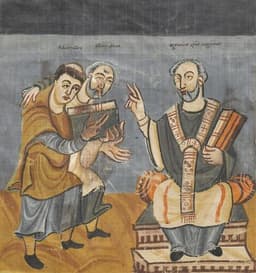
Alcuin of York
Politician · Medieval
53.2Total

Raymond III of Tripoli
Politician · Medieval
52.2Total
Basic Information
Born
735
1140
Died
804
1187
Era
Medieval
Medieval
Nationality
Frankish Empire
Kingdom of Jerusalem
Occupation
Politician
Politician
Civilization
Western
Western
Score Comparison
Military (10%)
28.8
21.2
Political (20%)
62.7
68.0
Influence (20%)
65.0
54.1
Legacy (20%)
40.0
46.7
Leadership (15%)
72.0
74.0
Strategy (15%)
38.5
35.7
TOTAL
53.2
52.2
Alcuin of York — Complete Timeline
782 AD
Appointment as Head of the Palace School at AachenCultural◆ Major
Alcuin of York was invited by Charlemagne to lead the Palace School at Aachen. He established a curriculum based on the seven liberal arts, including grammar, rhetoric, and logic. This school became a center of learning and a model for education in the Carolingian Empire.
EducationCarolingian RenaissanceScholarship
Impact: regionalconstructive
789 AD
Compilation of the 'Admonitio Generalis'Cultural
Alcuin contributed to the 'Admonitio Generalis', a set of reforms issued by Charlemagne. The document promoted education, the correction of texts, and the standardization of religious practices. It was a key text of the Carolingian Renaissance, emphasizing the importance of learning.
ReformEducationCarolingian Renaissance
Impact: regionalconstructive
790 AD
Development of the Carolingian Minuscule ScriptCultural◆ Major
Alcuin oversaw the development of the Carolingian minuscule script at the Palace School. This clear, standardized script improved readability and facilitated the copying of manuscripts. It became the standard script in medieval Europe and influenced later handwriting styles.
ScriptManuscriptCarolingian Renaissance
Impact: globalconstructive
800 AD
Correspondence with Charlemagne on Theological MattersCultural
Alcuin engaged in extensive correspondence with Charlemagne on theological and philosophical issues. His letters advised the emperor on matters of doctrine, liturgy, and education. This correspondence helped shape the intellectual climate of the Carolingian court.
CorrespondenceTheologyCarolingian Renaissance
Impact: regionalconstructive
Raymond III of Tripoli — Complete Timeline
1174 AD
Became Regent of Kingdom of JerusalemPolitical Action◆ Major
Raymond III of Tripoli was appointed regent for the young King Baldwin IV of Jerusalem. He used his position to pursue a policy of diplomacy with Saladin, favoring truces over military confrontation, which alienated hardline Crusader factions.
RegencyDiplomacyCrusader States
Impact: regional
1185 AD
Negotiated Treaty with SaladinPolitical Action
As regent, Raymond III negotiated a four-year truce with Saladin, allowing safe passage for Muslim pilgrims. This pragmatic agreement was criticized by hardliners like Reynald of Chatillon, whose violations later contributed to war.
TreatyDiplomacyTruce
Impact: regionalconstructive
1187 AD
Defeated at Battle of HattinWar
Raymond III commanded a wing of the Crusader army at the Battle of Hattin against Saladin. The disastrous defeat led to the capture of King Guy and the loss of Jerusalem. Raymond was blamed by many for the defeat due to his earlier policies.
BattleDefeatCrusader-Muslim Wars
Impact: regionaltragic
Expert Analysis
Origins
Alcuin of York was born around 735 AD into a noble Northumbrian family. He was educated at the cathedral school of York, which was a center of learning under Archbishop Ecgbert. Alcuin became a deacon and master of the school, gaining a reputation as a leading scholar. In 781, while returning from Rome, he met Charlemagne in Parma and was invited to the Frankish court.
Raymond III of Tripoli was born around 1140 into the House of Toulouse, a powerful Crusader dynasty. He became Count of Tripoli in 1152 at age 12 after his father was killed in battle. His early years were shaped by the volatile politics of the Crusader states, with frequent conflicts with Muslim neighbors and internal rivalries.
Rise to Power
Alcuin's rise came through his intellectual prowess. From 782, he headed the Palace School at Aachen, where he taught Charlemagne and his family. He established a curriculum based on the seven liberal arts (trivium and quadrivium), reviving classical education. His influence grew as he became Charlemagne's chief advisor on religious and educational matters, helping draft the Admonitio Generalis (789), which mandated schools in every monastery and bishopric.
Raymond III became regent of the Kingdom of Jerusalem in 1174 after the death of King Amalric I, serving for the leprous Baldwin IV. He pursued a pragmatic policy, negotiating a four-year truce with Saladin in 1177 that allowed safe passage for Muslim pilgrims. This earned him criticism from hardliners who favored confrontation. His regency ended in 1177 when Baldwin IV came of age, but he remained a key figure.
Leadership & Governance
Alcuin's leadership was scholarly and reformist. He standardized the liturgy, corrected biblical texts, and promoted the Carolingian minuscule script, which improved readability and facilitated the spread of knowledge. His governance was through influence rather than command, scoring 72.0 in leadership. He used correspondence to shape Charlemagne's policies, advising on theology and education.
Raymond III's leadership was political and military, scoring 74.0 in leadership. As regent, he favored diplomacy over warfare, seeking to preserve the Crusader states through truces. However, his strategic decisions were flawed; he scored only 35.7 in strategy. He alienated powerful factions like the Knights Templar and Guy of Lusignan, leading to internal strife.
Triumph & Tragedy
Alcuin's greatest triumph was the Carolingian Renaissance, a revival of learning that preserved classical texts and established educational foundations for medieval Europe. His development of Carolingian minuscule became the basis for modern lowercase script. His tragedy was the limited spread of his reforms after Charlemagne's death; many schools declined, and his influence waned.
Raymond III's triumph was negotiating the 1177 truce with Saladin, which provided a period of peace. However, his tragedy was the Battle of Hattin in 1187. Commanding a wing of the Crusader army, his forces were defeated, leading to the capture of King Guy and the fall of Jerusalem. He was blamed for the defeat, though factors like poor leadership by Guy and thirst contributed. Raymond died later that year, disgraced.
Character & Destiny
Alcuin was a dedicated scholar and loyal advisor, with a calm temperament. His character shaped his destiny as an architect of education rather than a political power. He focused on knowledge and reform, which gave him enduring influence but limited immediate political power. Historians view him as a pivotal figure in the transmission of classical learning.
Raymond III was pragmatic but indecisive, often vacillating between diplomacy and warfare. His character led to mistrust from both allies and enemies. His decision to advise the Crusader army to march to Hattin, despite knowing the water shortage, was a fatal error. He scored 68.0 in political skill but his strategic weakness (35.7) led to disaster.
Legacy
Alcuin's legacy is profound: the Carolingian Renaissance laid the groundwork for medieval universities and the preservation of classical texts. Carolingian minuscule influenced European scripts for centuries. His educational reforms set standards that persisted. He scored 65.0 in influence and 40.0 in legacy.
Raymond III's legacy is mixed. He is remembered as a capable regent but also as a scapegoat for Hattin. His diplomatic efforts were overshadowed by the Crusader defeat. The fall of Jerusalem in 1187 triggered the Third Crusade. He scored 54.1 in influence and 46.7 in legacy.
Conclusion
Alcuin of York had a greater impact on history. His educational reforms and script development shaped Western civilization's intellectual foundations, with effects lasting centuries. Raymond III's influence was confined to the narrow context of the Crusader states, and his legacy is tainted by failure. Alcuin's total score of 53.2 marginally exceeds Raymond's 52.2, but his contributions to culture and knowledge are far more enduring. While Raymond's political maneuvers were significant in his era, Alcuin's work transcended his time. Thus, Alcuin of York stands as the more consequential figure.
Rankings
🥇
Alcuin of YorkLeader
Mil: 28.8Pol: 62.7Inf: 65.0
53.2
🥈
Raymond III of Tripoli
Mil: 21.2Pol: 68.0Inf: 54.1
52.2
+1.0 behind
How This Comparison Works
Algorithm
Each figure is scored on 6 dimensions (0—100 scale) based on structured historical data: Military (10%), Political (20%), Influence (20%), Legacy (20%), Leadership (15%), Strategy (15%). The weighted total produces the final ranking.
Data Sources
Scores are computed from structured sub-indicators in the database. Scale factors adjust for era (Ancient ×0.85, Modern ×1.0) and civilization size (Eastern ×1.05, Other ×0.80) to account for differences in population and military scale.
Maximum 3 Figures
Comparisons are limited to 2—3 figures to ensure readability and statistical meaningfulness.
Error Margins
±5 points per dimension — Sub-scores are derived from historical records with inherent uncertainty. Two figures within 5 points on a dimension should be considered roughly equivalent in that area.
Total Score Accuracy
±3 points overall — The weighted combination of 6 dimensions produces a total score with approximately ±3 points of uncertainty. Differences of less than 3 points are not statistically significant— the figures are effectively tied.
Known Limitations
- Historical records are incomplete and uneven across civilizations
- Figures from oral-tradition societies may be underrepresented
- Occupation labels can misclassify multi-role figures
- Scores measure capability and impact, not moral character
- Quantitative scoring is a comparison tool, not absolute truth
Capability Radar
Military (10%) — Battles & Warfare
Battles
36
45
Win Rate
42
40
Expansion
43
25
Political (20%) — Governance & Reform
Reform
85
40
Diplomacy
75
60
Economy
60
35
Influence (20%) — Cultural & Global Reach
Cultural
85
35
Global
65
30
Legacy (20%) — Historical Impact
Historical
80
50
Longevity
75
40
Leadership (15%) — Power & Stability
Tenure
40
55
Stability
70
30
Strategy (15%) — Tactics & Innovation
Strategy
47
50
Tactics
51
55
Reform
53
30
Similar Comparisons
Comments & Discussion
No comments yet. Be the first to share your thoughts!