Loading...
Alcuin of York vs Sangha
Sangha leads by 0.3 pts · 2 figures compared
…
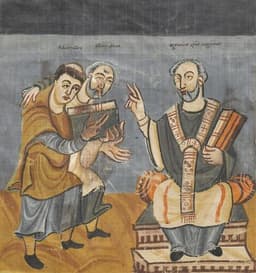
Alcuin of York
Politician · Medieval
53.2Total

Sangha
Politician · Medieval
53.5Total
Basic Information
Born
735
1249
Died
804
1291
Era
Medieval
Medieval
Nationality
Frankish Empire
China
Occupation
Politician
Politician
Civilization
Western
Eastern
Score Comparison
Military (10%)
28.8
33.1
Political (20%)
62.7
72.0
Influence (20%)
65.0
54.9
Legacy (20%)
40.0
43.3
Leadership (15%)
72.0
72.8
Strategy (15%)
38.5
39.1
TOTAL
53.2
53.5
Alcuin of York — Complete Timeline
782 AD
Appointment as Head of the Palace School at AachenCultural◆ Major
Alcuin of York was invited by Charlemagne to lead the Palace School at Aachen. He established a curriculum based on the seven liberal arts, including grammar, rhetoric, and logic. This school became a center of learning and a model for education in the Carolingian Empire.
EducationCarolingian RenaissanceScholarship
Impact: regionalconstructive
789 AD
Compilation of the 'Admonitio Generalis'Cultural
Alcuin contributed to the 'Admonitio Generalis', a set of reforms issued by Charlemagne. The document promoted education, the correction of texts, and the standardization of religious practices. It was a key text of the Carolingian Renaissance, emphasizing the importance of learning.
ReformEducationCarolingian Renaissance
Impact: regionalconstructive
790 AD
Development of the Carolingian Minuscule ScriptCultural◆ Major
Alcuin oversaw the development of the Carolingian minuscule script at the Palace School. This clear, standardized script improved readability and facilitated the copying of manuscripts. It became the standard script in medieval Europe and influenced later handwriting styles.
ScriptManuscriptCarolingian Renaissance
Impact: globalconstructive
800 AD
Correspondence with Charlemagne on Theological MattersCultural
Alcuin engaged in extensive correspondence with Charlemagne on theological and philosophical issues. His letters advised the emperor on matters of doctrine, liturgy, and education. This correspondence helped shape the intellectual climate of the Carolingian court.
CorrespondenceTheologyCarolingian Renaissance
Impact: regionalconstructive
Sangha — Complete Timeline
1285 AD
Appointed Finance Minister by Kublai KhanPolitical Action◆ Major
Sangha, a Tibetan monk, was appointed as finance minister of the Yuan dynasty. He continued Ahmad Fanakati's policies of state monopolies and tax collection, further centralizing fiscal control under the Mongol court.
Yuan DynastyFiscal PolicyTibetan Influence
Impact: national
1286 AD
Implemented Harsh Tax Collection MethodsReform
Sangha enforced strict tax collection through state monopolies on salt, iron, and tea, using coercive measures against defaulters. His policies increased revenue but caused widespread hardship among Chinese peasants and merchants, fueling resentment.
TaxationEconomic PolicySocial Unrest
Impact: nationaldestructive
1291 AD
Executed by Yuan AuthoritiesPolitical Action◆ Major
Sangha was executed on orders of Kublai Khan following accusations of corruption, embezzlement, and abuse of power. His death marked the end of a period of heavy-handed fiscal policies and led to a temporary relaxation of state monopolies.
ExecutionCorruptionPolitical Purge
Impact: nationaldestructive
Expert Analysis
Origins
Alcuin of York was born around 735 in Northumbria, England, into a noble family. He was educated at the cathedral school of York, which had a renowned library and strong scholarly tradition. Alcuin became a deacon and later the head of the York school, gaining expertise in the liberal arts. His intellectual reputation reached the court of Charlemagne, leading to his invitation to the Frankish empire.
Sangha was a Tibetan monk, likely born in the early 13th century in Tibet. Little is known of his early life, but he rose through the ranks of the Tibetan Buddhist hierarchy. He came to the attention of Kublai Khan, the Mongol ruler of the Yuan dynasty, who valued Tibetan Buddhism as a unifying force. Sangha's administrative skills led to his appointment in the imperial bureaucracy.
Rise to Power
Alcuin's rise came through his scholarly achievements. In 781, while returning from Rome, he met Charlemagne in Parma and was invited to become the head of the Palace School at Aachen. Alcuin accepted, becoming the emperor's chief advisor on educational and religious matters. He established a curriculum based on the seven liberal arts (trivium and quadrivium) and oversaw the copying and correction of manuscripts. His influence grew as he corresponded with Charlemagne on theology and governance.
Sangha's rise was more political. He served as a Tibetan monk at the Yuan court, where Kublai Khan sought to integrate Tibetan Buddhism into his rule. Sangha demonstrated financial acumen and was appointed finance minister (pingzhang zhengshi) around 1285. He continued policies of state monopolies on salt, iron, and tea, and enforced strict tax collection. His ability to increase revenues made him indispensable to Kublai, despite growing resentment from Chinese officials.
Leadership & Governance
Alcuin's leadership was intellectual and reformist. He focused on education, standardizing the Latin language, and promoting the Carolingian minuscule script—a clear, standardized writing system that improved readability. He contributed to the 'Admonitio Generalis' (789), a set of reforms that promoted education and correction of texts across the empire. Alcuin scored 72.0 in leadership and 62.7 in political, reflecting his advisory role rather than direct governance. His approach was collaborative, working through Charlemagne's authority.
Sangha's governance was authoritarian and financial. He centralized tax collection, using coercive measures against defaulters. His policies increased state revenue but alienated the Chinese populace and officials. He scored 72.8 in leadership but only 39.1 in strategy, indicating a focus on short-term gains. Unlike Alcuin, Sangha wielded direct power, but his methods bred corruption and resentment. His execution in 1291 for embezzlement and abuse of power shows the risks of his approach.
Triumph & Tragedy
Alcuin's greatest triumph was the Carolingian Renaissance, a revival of learning in Western Europe. He helped standardize Latin, preserve classical texts, and establish schools. His development of Carolingian minuscule influenced European script for centuries. His tragedy was the limited reach of his reforms; after his death (804), the Carolingian Renaissance faded due to political instability. His personal life was marked by nostalgia for York, but he remained in Francia until his death.
Sangha's triumph was filling the Yuan treasury, enabling Kublai's campaigns and projects. He increased revenues through monopolies and efficient collection. His tragedy was his downfall: accusations of corruption led to his execution in 1291. His policies, though effective, created economic strain and social unrest. He scored 33.1 in military, reflecting no direct combat role, but his financial support was crucial for military campaigns.
Character & Destiny
Alcuin was a devout scholar, dedicated to learning and the Church. His letters show a thoughtful, diplomatic character. He avoided political intrigue, focusing on education. His destiny was to be a catalyst for cultural revival, but his influence depended on Charlemagne's support. After Charlemagne's death, his reforms waned. Alcuin's character—intellectual, cautious, and pious—shaped his legacy as a scholar rather than a ruler.
Sangha was ambitious and ruthless. As a monk, he embraced power and wealth, ignoring Buddhist precepts. His character led him to prioritize revenue over ethics, causing his downfall. His destiny was tied to Kublai's favor; when corruption became too public, Kublai sacrificed him to appease critics. Sangha's scores (political 72.0, influence 54.9) reflect his effectiveness but also his fragility.
Legacy
Alcuin's legacy is monumental in European education. The Carolingian minuscule became the basis for modern Latin script. His emphasis on the liberal arts shaped medieval education. He scored 40.0 in legacy, but his impact on literacy and manuscript preservation is incalculable. Sangha's legacy is more mixed. He demonstrated the power of state monopolies, but his methods discredited Tibetan Buddhist officials in Chinese historiography. His reforms influenced later Yuan tax policies but were largely abandoned after his death. He scored 43.3 in legacy, slightly higher than Alcuin, but his impact was negative in many accounts.
Conclusion
Alcuin of York had a greater long-term impact than Sangha. While Sangha scored higher overall (53.5 vs 53.2), Alcuin's contributions to education and literacy shaped Western civilization for centuries. Sangha's financial policies were effective but short-lived and corrupt. Alcuin's total score of 53.2 is misleading; his influence score of 65.0 and leadership of 72.0 indicate his role in a cultural renaissance. Sangha's political score of 72.0 reflects his power, but his legacy is tainted by corruption. Data supports Alcuin as the more significant figure: his Carolingian minuscule script alone transformed European communication. Therefore, Alcuin of York ranks higher in historical importance.
Rankings
🥇
SanghaLeader
Mil: 33.1Pol: 72.0Inf: 54.9
53.5
🥈
Alcuin of York
Mil: 28.8Pol: 62.7Inf: 65.0
53.2
+0.3 behind
How This Comparison Works
Algorithm
Each figure is scored on 6 dimensions (0—100 scale) based on structured historical data: Military (10%), Political (20%), Influence (20%), Legacy (20%), Leadership (15%), Strategy (15%). The weighted total produces the final ranking.
Data Sources
Scores are computed from structured sub-indicators in the database. Scale factors adjust for era (Ancient ×0.85, Modern ×1.0) and civilization size (Eastern ×1.05, Other ×0.80) to account for differences in population and military scale.
Maximum 3 Figures
Comparisons are limited to 2—3 figures to ensure readability and statistical meaningfulness.
Error Margins
±5 points per dimension — Sub-scores are derived from historical records with inherent uncertainty. Two figures within 5 points on a dimension should be considered roughly equivalent in that area.
Total Score Accuracy
±3 points overall — The weighted combination of 6 dimensions produces a total score with approximately ±3 points of uncertainty. Differences of less than 3 points are not statistically significant— the figures are effectively tied.
Known Limitations
- Historical records are incomplete and uneven across civilizations
- Figures from oral-tradition societies may be underrepresented
- Occupation labels can misclassify multi-role figures
- Scores measure capability and impact, not moral character
- Quantitative scoring is a comparison tool, not absolute truth
Capability Radar
Military (10%) — Battles & Warfare
Battles
36
35
Win Rate
42
41
Expansion
43
45
Political (20%) — Governance & Reform
Reform
85
55
Diplomacy
75
60
Economy
60
75
Influence (20%) — Cultural & Global Reach
Cultural
85
35
Global
65
35
Legacy (20%) — Historical Impact
Historical
80
40
Longevity
75
30
Leadership (15%) — Power & Stability
Tenure
40
42
Stability
70
50
Strategy (15%) — Tactics & Innovation
Strategy
47
46
Tactics
51
49
Reform
53
55
Similar Comparisons
Comments & Discussion
No comments yet. Be the first to share your thoughts!