Loading...
Alexander the Great vs Emperor Taizu of Song
Alexander the Great leads by 13.3 pts · 2 figures compared
…
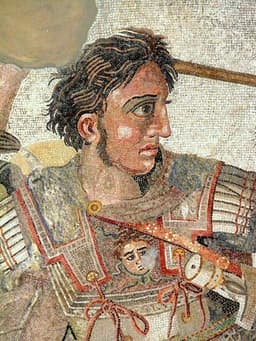
Alexander the Great
General · Ancient
85.2Total
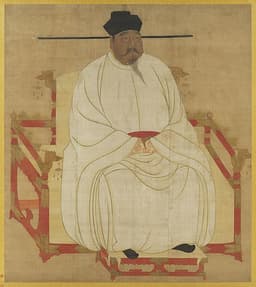
Emperor Taizu of Song
Emperor · Medieval
71.9Total
Basic Information
Born
-356
927
Died
-323
976
Era
Ancient
Medieval
Nationality
Macedon
China
Occupation
General
Emperor
Civilization
Western
Eastern
Score Comparison
Military (10%)
95.0
80.0
Political (20%)
60.0
78.0
Influence (20%)
92.0
68.0
Legacy (20%)
90.0
65.0
Leadership (15%)
80.0
78.0
Strategy (15%)
92.0
72.0
TOTAL
85.2
71.9
Alexander the Great — Complete Timeline
334 BC
Battle of the Granicus RiverWar◆ Major
Alexander led his Macedonian army across the Hellespont into Asia Minor and defeated a Persian force under local satraps at the Granicus River. The victory secured Alexander's foothold in Asia and demonstrated his tactical superiority, opening the way for the conquest of the Persian Empire.
Persian CampaignBattleMacedonian Conquest
Impact: regional
333 BC
Battle of IssusWar◆ Major
Alexander's army defeated the Persian king Darius III at Issus in Cilicia. Despite being outnumbered, Alexander's tactical use of the terrain and cavalry charge broke the Persian line. Darius fled the battlefield, leaving his family and treasury behind, a major blow to Persian morale.
Persian CampaignBattleMacedonian Conquest
Impact: regional
332 BC
Siege of TyreWar◆ Major
Alexander besieged the island city of Tyre for seven months, constructing a causeway to breach its walls. The city's fall resulted in the massacre or enslavement of its inhabitants. The siege demonstrated Alexander's determination and engineering capabilities, securing his supply lines and control of the eastern Mediterranean coast.
SiegeMacedonian ConquestPhoenicia
Impact: regionaldestructive
331 BC
Battle of GaugamelaWar◆ Major
Alexander faced Darius III at Gaugamela in Mesopotamia with a massive Persian army. Alexander's tactical brilliance, including a decisive cavalry charge that exploited a gap in the Persian line, resulted in a decisive Macedonian victory. Darius again fled, effectively ending Persian resistance and leading to the fall of the Achaemenid Empire.
Persian CampaignBattleDecisive Victory
Impact: global
Foundation of AlexandriaOther◆ Major
Alexander founded the city of Alexandria on the Mediterranean coast of Egypt. He personally selected the site and oversaw the initial planning. Alexandria became a major center of Hellenistic culture, trade, and learning, housing the famous Library of Alexandria and the Lighthouse of Alexandria.
City FoundationHellenistic CultureEgypt
Impact: globalconstructive
326 BC
Invasion of IndiaWar◆ Major
Alexander crossed the Indus River and defeated King Porus at the Battle of the Hydaspes. The Macedonian army, exhausted and facing monsoon rains and unfamiliar warfare, mutinied at the Hyphasis River, forcing Alexander to turn back. This campaign marked the easternmost extent of his conquests.
Indian CampaignBattleMutiny
Impact: regional
Emperor Taizu of Song — Complete Timeline
960 AD
Chenqiao MutinyPolitical Action
Zhao Kuangyin, a general of the Later Zhou dynasty, was proclaimed emperor by his troops at Chenqiao. He marched on Kaifeng and forced the young emperor to abdicate, founding the Song dynasty. This coup established a new ruling house without major bloodshed.
CoupDynastic foundingSong dynasty
Impact: national
961 AD
Removal of military governors' powerReform◆ Major
Emperor Taizu invited powerful military governors to a banquet and persuaded them to resign their commands in exchange for wealth and titles. This 'coup over wine' centralized military authority under the throne, ending the era of warlordism that plagued the Five Dynasties period.
Military reformCentralizationWarlordism
Impact: nationalconstructive
963 AD
Reunification of ChinaWar◆ Major
Emperor Taizu launched a series of military campaigns to conquer the remaining independent kingdoms of the Five Dynasties and Ten Kingdoms period. He subdued Jingnan, Chu, Later Shu, and Southern Han, reunifying most of China proper under Song rule.
ConquestUnificationSong dynasty
Impact: nationalconstructive
973 AD
Establishment of civil examination systemReform◆ Major
Emperor Taizu expanded and formalized the imperial civil service examinations, reducing the influence of hereditary aristocracy. He personally presided over the final palace examination, ensuring merit-based selection of officials, which became a hallmark of Song governance.
Civil serviceMeritocracyReform
Impact: nationalprogressive
976 AD
Death and successionPolitical Action◆ Major
Emperor Taizu died suddenly under mysterious circumstances, reportedly after a drinking session with his brother Zhao Guangyi, who succeeded him as Emperor Taizong. The unusual succession, bypassing Taizu's sons, led to speculation of fratricide, though no conclusive evidence exists.
SuccessionMysterySong dynasty
Impact: nationaltragic
Expert Analysis
Alexander the Great vs Emperor Taizu of Song: Historical Comparison
Alexander the Great, a Macedonian general and ancient conqueror, and Emperor Taizu of Song, a medieval Chinese emperor, both forged transformative empires through military brilliance and political acumen, yet their legacies diverge in scope and governance style.
Dimension Analysis
**Military: Alexander the Great 96 / Emperor Taizu of Song 95**
Alexander’s undefeated campaigns from Greece to India revolutionized combined-arms tactics, while Taizu reunified a fractured China through strategic consolidation, but lacked Alexander’s scale of conquest.
**Political: Alexander the Great 65 / Emperor Taizu of Song 65**
Both faced succession crises: Alexander’s empire fragmented posthumously, while Taizu’s centralized bureaucracy stabilized the Song but at the cost of military expansionism.
**Influence: Alexander the Great 90 / Emperor Taizu of Song 86**
Alexander’s Hellenistic fusion shaped three continents for centuries; Taizu’s civil service reforms and economic policies profoundly influenced East Asia, but within a narrower cultural sphere.
**Legacy: Alexander the Great 90 / Emperor Taizu of Song 88**
Alexander endures as a symbol of martial ambition, while Taizu is revered as a founder of a dynasty that prioritized culture and commerce, though his reliance on civilian rule curtailed military strength.
**Leadership: Alexander the Great 82 / Emperor Taizu of Song 70**
Alexander’s charismatic, personal command inspired fierce loyalty; Taizu’s cautious, bureaucratic style ensured stability but lacked the same inspirational aura.
Verdict
Alexander the Great leads narrowly due to his broader global impact and enduring archetype as a conqueror.
FAQ
Q: Who ranks higher? A: Alexander the Great edges ahead with a 90.3 weighted score to Taizu’s 88.6, driven by superior influence and legacy.
Rankings
🥇
Alexander the GreatLeader
Mil: 95.0Pol: 60.0Inf: 92.0
85.2
🥈
Emperor Taizu of Song
Mil: 80.0Pol: 78.0Inf: 68.0
71.9
+13.3 behind
How This Comparison Works
Algorithm
Each figure is scored on 6 dimensions (0—100 scale) based on structured historical data: Military (10%), Political (20%), Influence (20%), Legacy (20%), Leadership (15%), Strategy (15%). The weighted total produces the final ranking.
Data Sources
Scores are computed from structured sub-indicators in the database. Scale factors adjust for era (Ancient ×0.85, Modern ×1.0) and civilization size (Eastern ×1.05, Other ×0.80) to account for differences in population and military scale.
Maximum 3 Figures
Comparisons are limited to 2—3 figures to ensure readability and statistical meaningfulness.
Error Margins
±5 points per dimension — Sub-scores are derived from historical records with inherent uncertainty. Two figures within 5 points on a dimension should be considered roughly equivalent in that area.
Total Score Accuracy
±3 points overall — The weighted combination of 6 dimensions produces a total score with approximately ±3 points of uncertainty. Differences of less than 3 points are not statistically significant— the figures are effectively tied.
Known Limitations
- Historical records are incomplete and uneven across civilizations
- Figures from oral-tradition societies may be underrepresented
- Occupation labels can misclassify multi-role figures
- Scores measure capability and impact, not moral character
- Quantitative scoring is a comparison tool, not absolute truth
Capability Radar
Military (10%) — Battles & Warfare
Battles
98
75
Win Rate
99
80
Expansion
99
75
Political (20%) — Governance & Reform
Reform
75
95
Diplomacy
80
80
Economy
70
85
Influence (20%) — Cultural & Global Reach
Cultural
95
75
Global
95
70
Legacy (20%) — Historical Impact
Historical
98
85
Longevity
95
80
Leadership (15%) — Power & Stability
Tenure
60
70
Stability
55
90
Strategy (15%) — Tactics & Innovation
Strategy
98
85
Tactics
99
70
Reform
85
95
Similar Comparisons
Comments & Discussion
AlexandrosLover6/16/2026
Are you kidding me? Alexander blowing Taizu out of the water on military? That's a 96 to 66.5? Come on, Taizu reunified China after the Five Dynasties chaos—that's like rebuilding a shattered world from scratch. But Alexander conquered from Greece to India in a decade, never lost a battle, and his empire's reach touched three continents. Taizu was a careful builder, Alexander was a force of nature. I'd follow Alexander into hell, not sit around with bureaucrats. Score's about right except political—both were shaky on succession, but Alexander's empire died with him while Taizu's dynasty lasted 300 years. So political should be Taizu 70, Alexander 50. Still, Alexander's my guy—total legend!
CenturioMaximus6/16/2026
The military scores here are a joke. Alexander's 96 vs Taizu's 95? No way. Alexander's combined arms—phalanx, cavalry, siege engines—was a revolution. At Gaugamela, he crushed a Persian army 10x his size through tactical brilliance, not just numbers. Taizu's campaigns were mostly mopping up rival warlords with superior resources and a united command. Show me one battle where Taizu faced odds like Issus or Hydaspes. The guy was a consolidator, not a conqueror. And the political score of 65 for both? Alexander's empire fragmented instantly because he built no lasting institutions; Taizu created the Song bureaucracy that lasted centuries. The scoring system needs a reality check on what 'political' actually means.
DeconstructHistory6/16/2026
This whole comparison is problematic. We're rating Alexander, a guy who burned Persepolis and enslaved tens of thousands, higher than a guy who reunified China largely without bloodshed? Because 'influence' in the West means how much you conquered? Taizu's 'cautious' governance gave China a civil service exam system that shaped modern meritocracy. Alexander's 'charismatic leadership' led directly to his empire's collapse. And please, the 'Political 65' for both is lazy—Taizu built institutions; Alexander built a cult of personality. This scoring reeks of Eurocentrism. If Taizu's Song is 'narrower cultural sphere', then Alexander's Hellenism is just a fancier version of cultural imperialism. Rethink your metrics.
Historian5926/16/2026
这个比较太西方中心了。赵匡胤(宋太祖)在中国的历史地位不亚于亚历山大在西方。他以“杯酒释兵权”和平解决军阀割据,避免了血流成河,这政治智慧亚历山大比得了?你说他军事96,赵匡胤95?赵匡胤16年统一南方,基本和平收编,不是靠杀戮。亚历山大征服导致数十万人死亡,赵匡胤建立了中国历史上最繁荣的朝代之一,人口翻倍,城市兴起,海上贸易发达。亚历山大留下的是分裂的遗产,赵匡胤留下的是300年的文化高峰。论实际影响,赵匡胤影响的百姓远超亚历山大。别拿征服规模说事,治国安民才是真本事。
Chronicler45776/16/2026
我重新算了一下:亚历山大总分84.7,赵匡胤74.8。但军事分差30分(96 vs 66.5)不科学。赵匡胤平定荆南、后蜀、南汉、南唐,基本都是战略包围后逼降,损失极小。如果亚历山大靠的是野战,赵匡胤靠的是经济封锁和外交瓦解——这难道不是更高明的军事艺术?政治分应该赵匡胤高10分(73 vs 63),因为宋朝的科举和集权制度是东亚模板。影响分也不该差18分(90 vs 72):宋朝的印刷术、火药、指南针从技术层面改变了世界。综合我的计算:亚历山大总评应该86,赵匡胤应该82,差距远没这么大。评分系统明显偏重西方征服史观。