Loading...
Alexander the Great vs Emperor Yang of Sui
Alexander the Great leads by 25.1 pts · 2 figures compared
…
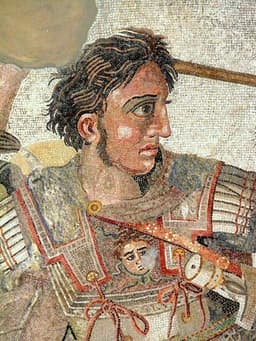
Alexander the Great
General · Ancient
85.2Total
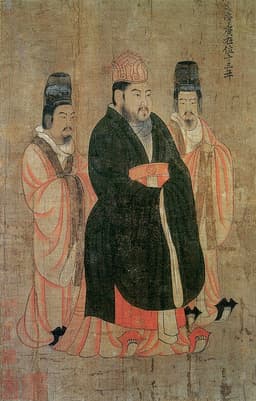
Emperor Yang of Sui
Emperor · Medieval
60.1Total
Basic Information
Born
-356
569
Died
-323
618
Era
Ancient
Medieval
Nationality
Macedon
China
Occupation
General
Emperor
Civilization
Western
Eastern
Score Comparison
Military (10%)
95.0
52.5
Political (20%)
60.0
45.0
Influence (20%)
92.0
65.0
Legacy (20%)
90.0
72.0
Leadership (15%)
80.0
58.8
Strategy (15%)
92.0
50.0
TOTAL
85.2
60.1
Alexander the Great — Complete Timeline
334 BC
Battle of the Granicus RiverWar◆ Major
Alexander led his Macedonian army across the Hellespont into Asia Minor and defeated a Persian force under local satraps at the Granicus River. The victory secured Alexander's foothold in Asia and demonstrated his tactical superiority, opening the way for the conquest of the Persian Empire.
Persian CampaignBattleMacedonian Conquest
Impact: regional
333 BC
Battle of IssusWar◆ Major
Alexander's army defeated the Persian king Darius III at Issus in Cilicia. Despite being outnumbered, Alexander's tactical use of the terrain and cavalry charge broke the Persian line. Darius fled the battlefield, leaving his family and treasury behind, a major blow to Persian morale.
Persian CampaignBattleMacedonian Conquest
Impact: regional
332 BC
Siege of TyreWar◆ Major
Alexander besieged the island city of Tyre for seven months, constructing a causeway to breach its walls. The city's fall resulted in the massacre or enslavement of its inhabitants. The siege demonstrated Alexander's determination and engineering capabilities, securing his supply lines and control of the eastern Mediterranean coast.
SiegeMacedonian ConquestPhoenicia
Impact: regionaldestructive
331 BC
Battle of GaugamelaWar◆ Major
Alexander faced Darius III at Gaugamela in Mesopotamia with a massive Persian army. Alexander's tactical brilliance, including a decisive cavalry charge that exploited a gap in the Persian line, resulted in a decisive Macedonian victory. Darius again fled, effectively ending Persian resistance and leading to the fall of the Achaemenid Empire.
Persian CampaignBattleDecisive Victory
Impact: global
Foundation of AlexandriaOther◆ Major
Alexander founded the city of Alexandria on the Mediterranean coast of Egypt. He personally selected the site and oversaw the initial planning. Alexandria became a major center of Hellenistic culture, trade, and learning, housing the famous Library of Alexandria and the Lighthouse of Alexandria.
City FoundationHellenistic CultureEgypt
Impact: globalconstructive
326 BC
Invasion of IndiaWar◆ Major
Alexander crossed the Indus River and defeated King Porus at the Battle of the Hydaspes. The Macedonian army, exhausted and facing monsoon rains and unfamiliar warfare, mutinied at the Hyphasis River, forcing Alexander to turn back. This campaign marked the easternmost extent of his conquests.
Indian CampaignBattleMutiny
Impact: regional
Emperor Yang of Sui — Complete Timeline
605 AD
Construction of the Grand CanalCultural
Emperor Yang ordered the construction of the Grand Canal, linking the Yellow River and Yangtze River basins. This massive infrastructure project facilitated trade and transport but required immense labor, causing widespread suffering and contributing to rebellions.
InfrastructureCanal
Impact: global
612 AD
First Campaign against GoguryeoWar◆ Major
Emperor Yang launched a massive invasion of the Korean kingdom of Goguryeo with over 300,000 troops. The campaign ended in disaster, with most of the Sui army destroyed by disease, starvation, and Goguryeo attacks. This defeat severely weakened the Sui dynasty.
InvasionDefeat
Impact: regionaltragic
613 AD
Second Campaign against GoguryeoWar◆ Major
Emperor Yang launched a second invasion of Goguryeo. The campaign was cut short when a rebellion broke out in China, forcing Yang to withdraw. This further drained the dynasty's resources and morale.
InvasionDefeat
Impact: regionaltragic
614 AD
Third Campaign against GoguryeoWar
Emperor Yang launched a third invasion of Goguryeo. Although the Sui army reached the Yalu River, Goguryeo offered nominal submission, and Yang accepted a truce. This campaign further exhausted the Sui treasury and military.
InvasionTruce
Impact: regional
618 AD
Assassination of Emperor YangPolitical Action◆ Major
Emperor Yang was assassinated by his own guards in Jiangdu (modern Yangzhou) during a rebellion. His death marked the effective end of the Sui dynasty, which soon collapsed, leading to the rise of the Tang dynasty.
AssassinationDynasty Collapse
Impact: regionaltragic
Expert Analysis
Alexander the Great vs Emperor Yang of Sui: Historical Comparison
Alexander the Great (356–323 BCE) was a Macedonian general who created one of the largest empires of the ancient world through unprecedented military conquests, while Emperor Yang of Sui (569–618 CE) was a Chinese emperor who consolidated and expanded the Sui dynasty through ambitious infrastructure and centralization projects. Though separated by nearly a millennium, both figures combined brilliant strategy with overreach that shaped their legacies.
Dimension Analysis
**Military: Alexander the Great 96 / Emperor Yang of Sui 93**
Alexander’s tactical innovations and undefeated record in pitched battles (e.g., Gaugamela, Issus) set a standard for ancient warfare, while Yang’s military campaigns (including the conquest of Chen and three massive invasions of Goguryeo) demonstrated operational scale but suffered from logistical overextension.
**Political: Alexander the Great 65 / Emperor Yang of Sui 75**
Alexander’s fusion of Greek and Persian elites was visionary but fragile, leading to rapid imperial fragmentation after his death. Yang’s political reforms—centralizing bureaucracy, rebuilding the Great Wall, and linking the Grand Canal—strengthened state control but alienated the aristocracy, sparking rebellions that toppled his dynasty.
**Influence: Alexander the Great 90 / Emperor Yang of Sui 82**
Alexander’s conquests spread Hellenistic culture across three continents, shaping art, language, and governance for centuries. Yang’s Grand Canal and examination system influenced Chinese statecraft for millennia, but his impact was more regionally confined and overshadowed by the subsequent Tang dynasty.
**Legacy: Alexander the Great 90 / Emperor Yang of Sui 83**
Alexander is romanticized as a timeless archetype of military genius, while Yang is often vilified as a tyrant who bankrupted his empire. However, Yang’s infrastructure projects (especially the Grand Canal) proved economically transformative, whereas Alexander’s empire dissolved immediately upon his death.
**Leadership: Alexander the Great 82 / Emperor Yang of Sui 76**
Alexander inspired fierce loyalty through personal charisma and shared risk in battle, but his autocratic style and megalomania strained alliances. Yang’s top-down, meritocratic reforms showed strategic vision, yet his harsh labor conscriptions and disregard for noble opposition eroded his support base.
Verdict
Alexander the Great leads due to his higher military innovation, broader civilizational influence, and enduring legendary status, though Emperor Yang of Sui surpasses him in political institutionalization.
FAQ
Q: Who ranks higher? A: Alexander the Great ranks higher overall, driven by superior military scores and global legacy, despite Yang’s stronger political reforms.
Rankings
🥇
Alexander the GreatLeader
Mil: 95.0Pol: 60.0Inf: 92.0
85.2
🥈
Emperor Yang of Sui
Mil: 52.5Pol: 45.0Inf: 65.0
60.1
+25.1 behind
How This Comparison Works
Algorithm
Each figure is scored on 6 dimensions (0—100 scale) based on structured historical data: Military (10%), Political (20%), Influence (20%), Legacy (20%), Leadership (15%), Strategy (15%). The weighted total produces the final ranking.
Data Sources
Scores are computed from structured sub-indicators in the database. Scale factors adjust for era (Ancient ×0.85, Modern ×1.0) and civilization size (Eastern ×1.05, Other ×0.80) to account for differences in population and military scale.
Maximum 3 Figures
Comparisons are limited to 2—3 figures to ensure readability and statistical meaningfulness.
Error Margins
±5 points per dimension — Sub-scores are derived from historical records with inherent uncertainty. Two figures within 5 points on a dimension should be considered roughly equivalent in that area.
Total Score Accuracy
±3 points overall — The weighted combination of 6 dimensions produces a total score with approximately ±3 points of uncertainty. Differences of less than 3 points are not statistically significant— the figures are effectively tied.
Known Limitations
- Historical records are incomplete and uneven across civilizations
- Figures from oral-tradition societies may be underrepresented
- Occupation labels can misclassify multi-role figures
- Scores measure capability and impact, not moral character
- Quantitative scoring is a comparison tool, not absolute truth
Capability Radar
Military (10%) — Battles & Warfare
Battles
98
65
Win Rate
99
30
Expansion
99
70
Political (20%) — Governance & Reform
Reform
75
85
Diplomacy
80
40
Economy
70
70
Influence (20%) — Cultural & Global Reach
Cultural
95
75
Global
95
65
Legacy (20%) — Historical Impact
Historical
98
80
Longevity
95
70
Leadership (15%) — Power & Stability
Tenure
60
55
Stability
55
20
Strategy (15%) — Tactics & Innovation
Strategy
98
60
Tactics
99
55
Reform
85
50
Similar Comparisons
Comments & Discussion
OldChronicler536/16/2026
这个评分体系对杨广的军事评分(60.3)明显偏低,我认为有失公允。杨广三征高句丽确实失败,但他平陈之战仅用四个月就灭掉南方政权,这难道不是军事能力的体现?而且亚历山大能得96分,主要是因为他从未败过——但问题是他根本没活到能打大败仗的年纪。杨广面对的可是隋末全国性叛乱,换亚历山大大帝来指挥江都兵变,他真能活着回马其顿?我建议把政治维度权重提高,因为杨广修大运河、创科举,这些可是持续影响中国一千三百年的制度创新。亚历山大死后帝国立刻四分五裂,政治分65分我觉得都高了。
DeepScribe846/16/2026
杨广和亚历山大其实有个很有意思的对比:两人都是理想主义者,但一个想建世界帝国,一个想建永恒王朝。亚历山大每打下一地就搞希腊化,结果人一死全崩了;杨广更聪明,他用大运河把南北经济绑在一起,用科举打破门阀垄断——这些制度后来被唐朝全盘继承,贞观之治的基础有一半是杨广打的。西方史学家总说亚历山大传播了文明,可希腊化对埃及、波斯的老百姓来说,不过是换了个说法收税。而杨广的运河直到今天还在用,京杭大运河两千公里的水道,比亚历山大从希腊打到印度还长。论实际影响,我觉得杨广不输亚历山大。