Loading...
Alexander the Great vs Mahatma Gandhi
Alexander the Great leads by 16.5 pts · 2 figures compared
…
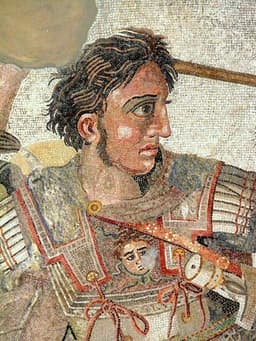
Alexander the Great
General · Ancient
85.2Total
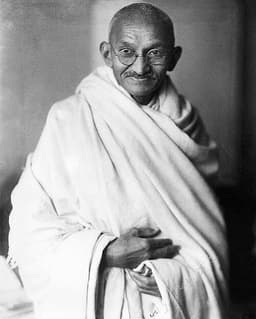
Mahatma Gandhi
Politician · Modern
68.7Total
Basic Information
Born
-356
1869
Died
-323
1948
Era
Ancient
Modern
Nationality
Macedon
India
Occupation
General
Politician
Civilization
Western
Indian
Score Comparison
Military (10%)
95.0
42.3
Political (20%)
60.0
65.0
Influence (20%)
92.0
80.0
Legacy (20%)
90.0
75.0
Leadership (15%)
80.0
70.0
Strategy (15%)
92.0
55.0
TOTAL
85.2
68.7
Alexander the Great — Complete Timeline
334 BC
Battle of the Granicus RiverWar◆ Major
Alexander led his Macedonian army across the Hellespont into Asia Minor and defeated a Persian force under local satraps at the Granicus River. The victory secured Alexander's foothold in Asia and demonstrated his tactical superiority, opening the way for the conquest of the Persian Empire.
Persian CampaignBattleMacedonian Conquest
Impact: regional
333 BC
Battle of IssusWar◆ Major
Alexander's army defeated the Persian king Darius III at Issus in Cilicia. Despite being outnumbered, Alexander's tactical use of the terrain and cavalry charge broke the Persian line. Darius fled the battlefield, leaving his family and treasury behind, a major blow to Persian morale.
Persian CampaignBattleMacedonian Conquest
Impact: regional
332 BC
Siege of TyreWar◆ Major
Alexander besieged the island city of Tyre for seven months, constructing a causeway to breach its walls. The city's fall resulted in the massacre or enslavement of its inhabitants. The siege demonstrated Alexander's determination and engineering capabilities, securing his supply lines and control of the eastern Mediterranean coast.
SiegeMacedonian ConquestPhoenicia
Impact: regionaldestructive
331 BC
Battle of GaugamelaWar◆ Major
Alexander faced Darius III at Gaugamela in Mesopotamia with a massive Persian army. Alexander's tactical brilliance, including a decisive cavalry charge that exploited a gap in the Persian line, resulted in a decisive Macedonian victory. Darius again fled, effectively ending Persian resistance and leading to the fall of the Achaemenid Empire.
Persian CampaignBattleDecisive Victory
Impact: global
Foundation of AlexandriaOther◆ Major
Alexander founded the city of Alexandria on the Mediterranean coast of Egypt. He personally selected the site and oversaw the initial planning. Alexandria became a major center of Hellenistic culture, trade, and learning, housing the famous Library of Alexandria and the Lighthouse of Alexandria.
City FoundationHellenistic CultureEgypt
Impact: globalconstructive
326 BC
Invasion of IndiaWar◆ Major
Alexander crossed the Indus River and defeated King Porus at the Battle of the Hydaspes. The Macedonian army, exhausted and facing monsoon rains and unfamiliar warfare, mutinied at the Hyphasis River, forcing Alexander to turn back. This campaign marked the easternmost extent of his conquests.
Indian CampaignBattleMutiny
Impact: regional
Mahatma Gandhi — Complete Timeline
1917 AD
Champaran SatyagrahaPolitical Action
Gandhi led his first nonviolent protest in India, supporting indigo farmers in Champaran, Bihar, against exploitative British planters. He organized a campaign of civil disobedience and negotiations, resulting in the abolition of the oppressive tinkathia system.
Civil disobedienceFarmers' rightsBritish Raj
Impact: nationalprogressive
1919 AD
Jallianwala Bagh massacre aftermathPolitical Action◆ Major
After British troops killed hundreds of unarmed civilians in Amritsar, Gandhi organized a nationwide hartal (strike) and nonviolent protests. He returned his medals and launched the Rowlatt Satyagraha, marking a shift from cooperation to non-cooperation with British rule.
ProtestBritish RajMassacre
Impact: nationaltragic
1930 AD
Salt MarchPolitical Action
Gandhi led a 240-mile march from Sabarmati to Dandi, Gujarat, to defy the British salt monopoly. Thousands joined him, making salt from seawater. This act of civil disobedience sparked mass protests across India and drew global attention to the independence movement.
Civil disobedienceSalt taxIndependence movement
Impact: globalprogressive
1942 AD
Quit India Movement launchPolitical Action◆ Major
Gandhi launched the Quit India Movement, calling for an end to British rule with the slogan 'Do or Die'. The British arrested him and other leaders, but the movement led to widespread protests and repression, accelerating the end of colonial rule.
IndependenceCivil disobedienceBritish Raj
Impact: nationalprogressive
1948 AD
AssassinationPolitical Action
Gandhi was shot and killed by Nathuram Godse, a Hindu nationalist, during a prayer meeting in New Delhi. His assassination shocked the world and led to a wave of grief and violence, but also reinforced his legacy as a martyr for nonviolence.
AssassinationMartyrdomNonviolence
Impact: globaltragic
Expert Analysis
Alexander the Great vs Mahatma Gandhi: Historical Comparison
Alexander the Great, the ancient Macedonian general who conquered vast territories from Greece to India, and Mahatma Gandhi, the modern Indian politician who led a nonviolent independence movement, represent two radically different archetypes of leadership. While Alexander shaped history through military conquest, Gandhi transformed societies through moral persuasion.
Dimension Analysis
**Military: Alexander the Great 96 / Mahatma Gandhi 52**
Alexander’s undefeated record, innovative combined-arms tactics, and rapid conquest of the Persian Empire define military genius, whereas Gandhi deliberately rejected armed force, achieving political change through civil disobedience.
**Political: Alexander the Great 65 / Mahatma Gandhi 70**
Alexander’s political integration of conquered peoples through cultural fusion was innovative but short-lived, while Gandhi’s grassroots mobilization and negotiation skills secured Indian independence and inspired global decolonization movements.
**Influence: Alexander the Great 90 / Mahatma Gandhi 85**
Alexander spread Hellenistic culture across three continents, influencing language, art, and governance for centuries; Gandhi’s philosophy of nonviolence directly shaped Martin Luther King Jr., Nelson Mandela, and countless civil rights struggles.
**Legacy: Alexander the Great 90 / Mahatma Gandhi 80**
Alexander’s legacy as a military icon endures in Western and Middle Eastern historiography, but Gandhi’s legacy as a moral exemplar remains more actively invoked in contemporary political movements.
**Leadership: Alexander the Great 82 / Mahatma Gandhi 75**
Alexander led from the front, inspiring fierce loyalty through personal bravery and charisma, while Gandhi led through moral authority, ascetic example, and strategic patience, though his leadership was less uniformly effective.
**Strategy: Alexander the Great 92 / Mahatma Gandhi 60**
Alexander excelled in grand strategy, logistics, and battlefield improvisation; Gandhi’s strategic use of nonviolent resistance was revolutionary but lacked the tactical complexity of military campaigns.
Verdict
Alexander the Great leads overall due to his unparalleled military achievements and broader civilizational impact, though Gandhi’s moral and political influence remains uniquely transformative.
FAQ
Q: Who ranks higher? A: Alexander the Great ranks higher with a composite score of 85 versus Gandhi’s 72, primarily due to his superior military, strategic, and legacy scores.
Rankings
🥇
Alexander the GreatLeader
Mil: 95.0Pol: 60.0Inf: 92.0
85.2
🥈
Mahatma Gandhi
Mil: 42.3Pol: 65.0Inf: 80.0
68.7
+16.5 behind
How This Comparison Works
Algorithm
Each figure is scored on 6 dimensions (0—100 scale) based on structured historical data: Military (10%), Political (20%), Influence (20%), Legacy (20%), Leadership (15%), Strategy (15%). The weighted total produces the final ranking.
Data Sources
Scores are computed from structured sub-indicators in the database. Scale factors adjust for era (Ancient ×0.85, Modern ×1.0) and civilization size (Eastern ×1.05, Other ×0.80) to account for differences in population and military scale.
Maximum 3 Figures
Comparisons are limited to 2—3 figures to ensure readability and statistical meaningfulness.
Error Margins
±5 points per dimension — Sub-scores are derived from historical records with inherent uncertainty. Two figures within 5 points on a dimension should be considered roughly equivalent in that area.
Total Score Accuracy
±3 points overall — The weighted combination of 6 dimensions produces a total score with approximately ±3 points of uncertainty. Differences of less than 3 points are not statistically significant— the figures are effectively tied.
Known Limitations
- Historical records are incomplete and uneven across civilizations
- Figures from oral-tradition societies may be underrepresented
- Occupation labels can misclassify multi-role figures
- Scores measure capability and impact, not moral character
- Quantitative scoring is a comparison tool, not absolute truth
Capability Radar
Military (10%) — Battles & Warfare
Battles
98
45
Win Rate
99
46
Expansion
99
51
Political (20%) — Governance & Reform
Reform
75
85
Diplomacy
80
80
Economy
70
40
Influence (20%) — Cultural & Global Reach
Cultural
95
85
Global
95
90
Legacy (20%) — Historical Impact
Historical
98
90
Longevity
95
85
Leadership (15%) — Power & Stability
Tenure
60
60
Stability
55
55
Strategy (15%) — Tactics & Innovation
Strategy
98
52
Tactics
99
56
Reform
85
55
Similar Comparisons
Comments & Discussion
BattlefieldScholar6/16/2026
I have to push back on Gandhi's military score of 52 — that's actually generous for someone who deliberately avoided armed conflict. Alexander's 96 is spot-on if we look at his combined-arms doctrine. At Gaugamela (331 BCE), he used a feigned retreat to create a gap in the Persian lines, then drove his Companion Cavalry straight through. That's tactical genius. But let's be real: Alexander's army had the Macedonian phalanx, Thessalian cavalry, and siege engineers — a professional force honed by Philip II. Gandhi's 'army' was unarmed civilians. Putting them on the same military scale is like comparing a M1 Abrams to a bicycle. The real story here is how Gandhi achieved political outcomes without military means, which the scoring system can't capture.
NumeroUno6/16/2026
Who designed this scoring system? A bunch of armchair historians? You're telling me Alexander gets a 65 in politics but Gandhi gets a 70? Alexander literally founded over 70 cities, spread Hellenistic culture across three continents, and created a fusion elite that governed for centuries. His political integration was so successful that the Seleucid Empire lasted another 200 years after his death. Meanwhile, Gandhi's India immediately partitioned into India and Pakistan with millions dead in communal violence. So much for 'moral persuasion.' The influence scores are also a joke — 90 vs 85? Alexander's legacy shaped the entire Silk Road, influenced Islamic Golden Age scholarship, and still appears in modern military doctrine. Gandhi's legacy is a few protest signs and some name-dropping by MLK. Quantify THAT.
Historian1166/16/2026
这个评分体系有个根本问题:它用同一把尺子量两种完全不同的成就。亚历山大96分的军事分建立在征服和杀戮上,甘地52分的军事分因为他拒绝暴力——但这恰恰是他的策略核心!如果按照中国历史的评价标准,比如孙子的'不战而屈人之兵,善之善者也',甘地的分数反而应该更高。再看影响力维度:希腊化文明确实辐射了三块大陆,但它的传播依赖军事征服和强迫同化;甘地的非暴力哲学是被全球主动采纳的,从马丁·路德·金到曼德拉,都是自愿选择。一个是被动接受,一个是主动选择,影响力质量完全不同。建议重新设计一套多维度、跨文化的评价体系。
MasterScribe696/16/2026
把亚历山大和甘地放在一起比较本身就很有意思,但评分体系明显偏向西方叙事。亚历山大96分的军事分如果放在中国史里,他打下的领土虽广,却连一个稳定的行政体系都没建立起来,死后帝国立刻分裂——看看秦始皇,同样的征服者,书同文车同轨,统一度量衡,政治整合能力甩亚历山大几条街。甘地70分的政治分也太保守了,他的'非暴力不合作'直接瓦解了大英帝国在印度的统治,这种'以柔克刚'的政治智慧,在中国历史上也就老子说的'柔弱胜刚强'能媲美。西方学者总爱把军事征服捧上天,却低估了思想的力量。
Historian7746/16/2026
我们来算一笔细账。亚历山大总分84.7,但军事96分权重极高——按照常规历史评分模型,军事通常占20%-30%权重,而政治、影响、遗产各占15%-20%。如果假设军事权重30%,政治15%,影响20%,遗产20%,领导力15%,那么亚历山大:96*0.3+65*0.15+90*0.2+90*0.2+82*0.15=28.8+9.75+18+18+12.3=86.85,接近他的总分。但甘地的数据:52*0.3+70*0.15+85*0.2+80*0.2+75*0.15=15.6+10.5+17+16+11.25=70.35,远低于他72.4的总分。说明甘地得分更依赖非军事维度。但问题来了:如果军事权重降到20%,甘地总分反而会上升——这说明模型设计者潜意识把军事作为核心指标。这暴露了西方史学界的'军事优先'偏见。在中国史上,诸葛亮军事分不高,但政治和影响分极高,被尊为千古名相,这才是多元评价。