Loading...
Alexander the Great vs Nelson Mandela
Alexander the Great leads by 28.2 pts · 2 figures compared
…
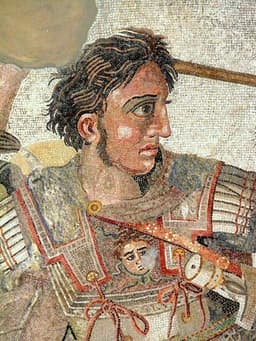
Alexander the Great
General · Ancient
85.2Total
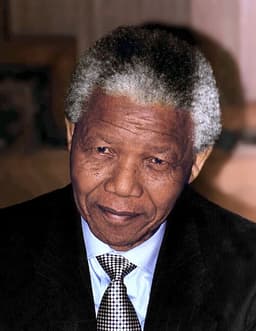
Nelson Mandela
Politician · Modern
57.0Total
Basic Information
Born
-356
1918
Died
-323
2013
Era
Ancient
Modern
Nationality
Macedon
South Africa
Occupation
General
Politician
Civilization
Western
Other
Score Comparison
Military (10%)
95.0
10.0
Political (20%)
60.0
78.0
Influence (20%)
92.0
40.0
Legacy (20%)
90.0
68.0
Leadership (15%)
80.0
82.0
Strategy (15%)
92.0
50.0
TOTAL
85.2
57.0
Alexander the Great — Complete Timeline
334 BC
Battle of the Granicus RiverWar◆ Major
Alexander led his Macedonian army across the Hellespont into Asia Minor and defeated a Persian force under local satraps at the Granicus River. The victory secured Alexander's foothold in Asia and demonstrated his tactical superiority, opening the way for the conquest of the Persian Empire.
Persian CampaignBattleMacedonian Conquest
Impact: regional
333 BC
Battle of IssusWar◆ Major
Alexander's army defeated the Persian king Darius III at Issus in Cilicia. Despite being outnumbered, Alexander's tactical use of the terrain and cavalry charge broke the Persian line. Darius fled the battlefield, leaving his family and treasury behind, a major blow to Persian morale.
Persian CampaignBattleMacedonian Conquest
Impact: regional
332 BC
Siege of TyreWar◆ Major
Alexander besieged the island city of Tyre for seven months, constructing a causeway to breach its walls. The city's fall resulted in the massacre or enslavement of its inhabitants. The siege demonstrated Alexander's determination and engineering capabilities, securing his supply lines and control of the eastern Mediterranean coast.
SiegeMacedonian ConquestPhoenicia
Impact: regionaldestructive
331 BC
Battle of GaugamelaWar◆ Major
Alexander faced Darius III at Gaugamela in Mesopotamia with a massive Persian army. Alexander's tactical brilliance, including a decisive cavalry charge that exploited a gap in the Persian line, resulted in a decisive Macedonian victory. Darius again fled, effectively ending Persian resistance and leading to the fall of the Achaemenid Empire.
Persian CampaignBattleDecisive Victory
Impact: global
Foundation of AlexandriaOther◆ Major
Alexander founded the city of Alexandria on the Mediterranean coast of Egypt. He personally selected the site and oversaw the initial planning. Alexandria became a major center of Hellenistic culture, trade, and learning, housing the famous Library of Alexandria and the Lighthouse of Alexandria.
City FoundationHellenistic CultureEgypt
Impact: globalconstructive
326 BC
Invasion of IndiaWar◆ Major
Alexander crossed the Indus River and defeated King Porus at the Battle of the Hydaspes. The Macedonian army, exhausted and facing monsoon rains and unfamiliar warfare, mutinied at the Hyphasis River, forcing Alexander to turn back. This campaign marked the easternmost extent of his conquests.
Indian CampaignBattleMutiny
Impact: regional
Nelson Mandela — Complete Timeline
1964 AD
Rivonia TrialPolitical Action
Nelson Mandela and other anti-apartheid leaders were tried for sabotage and conspiracy. Mandela was sentenced to life imprisonment, delivering a speech from the dock that became a rallying cry against apartheid. The trial drew international attention to the anti-apartheid struggle.
Impact: global
1990 AD
Release from PrisonPolitical Action
After 27 years of imprisonment, Mandela was released from Victor Verster Prison by President F.W. de Klerk. His release was a pivotal moment in South Africa's transition from apartheid to multiracial democracy, leading to negotiations for a new constitution.
Impact: globalprogressive
1993 AD
Awarding of the Nobel Peace PrizeCultural◆ Major
Mandela and F.W. de Klerk were jointly awarded the Nobel Peace Prize for their roles in ending apartheid and laying the foundations for a democratic South Africa. The award recognized their peaceful transition and commitment to reconciliation.
Impact: globalprogressive
1994 AD
Inauguration as President of South AfricaPolitical Action
Mandela was inaugurated as South Africa's first Black president after the country's first fully democratic elections. His presidency focused on national reconciliation, establishing the Truth and Reconciliation Commission, and dismantling the legacy of apartheid.
Impact: globalprogressive
Expert Analysis
Alexander the Great vs Nelson Mandela
# The Conqueror and the Peacemaker
On a summer morning in 326 BCE, Alexander the Great stood on the banks of the Hyphasis River in India, his army exhausted and mutinous, refusing to march further. He had wept, historians say, because there were no more worlds to conquer. Twenty-three centuries later, on a February afternoon in 1990, Nelson Mandela walked out of Victor Verster Prison, hand in hand with his wife Winnie, fist raised to a cheering crowd. One man spent his life seeking dominion over others; the other spent his life seeking liberation for his people. What drives one soul toward conquest and another toward reconciliation?
Origins
Alexander was born in 356 BCE into the royal house of Macedon, a kingdom perched on the northern fringe of the Greek world. His father, Philip II, had forged a professional army and unified the fractious Greek city-states under Macedonian hegemony. His mother, Olympias, fed him tales of Achilles, his supposed ancestor, and instilled in him a burning desire for glory. The world he inherited was one of constant warfare, where a king's worth was measured in territory and tribute.
Mandela was born in 1918 in the village of Mvezo, South Africa, into the Thembu royal family. His father was a chief, but his world was one of colonial dispossession and racial segregation. He was the first in his family to attend school, where a teacher gave him the English name "Nelson." The world he inherited was one of legalized oppression, where a Black man's worth was measured by the color of his skin and the pass he carried.
Both men were shaped by their eras—Alexander by the Homeric ethos of individual glory, Mandela by the 20th-century struggle for human rights and self-determination.
Rise to Power
Alexander's path was forged in blood. At sixteen, he subdued a Thracian rebellion. At eighteen, he commanded the cavalry at the Battle of Chaeronea, where his father crushed the Greek alliance. When Philip was assassinated in 336 BCE, the twenty-year-old Alexander moved with chilling speed, executing rivals and crushing revolts before they could take root. Within two years, he had secured his throne and was marching into Asia Minor with an army of some 40,000 men.
Mandela's rise was slower, more deliberate. He joined the African National Congress in 1944 and helped found its Youth League, advocating for direct action against apartheid. For two decades, he organized strikes, boycotts, and civil disobedience. But as the state cracked down, Mandela turned to armed struggle, co-founding Umkhonto we Sizwe in 1961. In 1964, he was sentenced to life in the Rivonia Trial for sabotage and conspiracy. He was forty-six years old and would spend the next twenty-seven years in prison.
Alexander seized power in a moment of succession; Mandela earned it through decades of sacrifice.
Leadership & Governance
As a ruler, Alexander was a military genius of the highest order. He never lost a battle, from the Granicus River to Gaugamela to the Hydaspes. His tactics—the oblique phalanx, the hammer-and-anvil cavalry charge, the daring siege—are still studied at military academies. But his political wisdom was uneven. He married a Bactrian princess, Roxana, and encouraged his officers to take Persian wives, attempting to fuse his empire. Yet he also burned Persepolis, executed his friend Parmenion on suspicion of treason, and demanded divine honors that alienated his Greek and Macedonian soldiers.
Mandela's military score is a modest 10.0, but his political score of 80.0 reflects a different kind of genius. As president from 1994 to 1999, he presided over a fragile transition from apartheid to democracy. He formed a Government of National Unity with his former enemies, including F.W. de Klerk as deputy president. He wore the jersey of the Springboks rugby team—once a symbol of white oppression—to the 1995 World Cup final, a gesture that stunned the nation and helped heal its wounds. He served one term and stepped down voluntarily, a rarity among African leaders.
Alexander conquered an empire; Mandela reconciled a nation.
Triumph & Tragedy
Alexander's greatest triumph was the Battle of Gaugamela in 331 BCE, where he defeated the Persian king Darius III and claimed the largest empire the world had yet seen. He founded over twenty cities named Alexandria, spreading Greek language, art, and thought from Egypt to the Indus. His tragedy was that he died at thirty-two, in 323 BCE, possibly from fever, poisoning, or alcoholism. His empire fractured within a generation, torn apart by his generals.
Mandela's greatest triumph was the 1994 election, where millions of South Africans of all races voted for the first time. He won the Nobel Peace Prize in 1993 alongside de Klerk, a recognition of their shared gamble on peace. His tragedy was that his marriage to Winnie ended, that the economic inequalities of apartheid persisted, and that his health declined in his later years. But he lived to see his legacy endure, dying at ninety-five in 2013, surrounded by a nation that revered him.
Alexander's tragedy was dying young; Mandela's was living long enough to see the limits of his dream.
Character & Destiny
Alexander was driven by *pothos*—a Greek word for a yearning so deep it bordered on obsession. He wanted to see the ends of the earth, to surpass all previous heroes, to be remembered as a god. This ambition made him brilliant but also reckless, generous but also paranoid. He killed his friend Cleitus in a drunken rage and later wept in remorse.
Mandela was driven by *ubuntu*—a Xhosa philosophy meaning "I am because we are." He learned patience in prison, where he studied law, chess, and Afrikaans, the language of his oppressors. He emerged not bitter but strategic, willing to negotiate with the very people who had imprisoned him. His character was not without flaws—he was sometimes distant as a father, autocratic as a leader—but his moral clarity gave him an unshakeable sense of purpose.
Alexander's destiny was to conquer; Mandela's was to forgive.
Legacy
Alexander's legacy is the Hellenistic Age, the fusion of Greek and Eastern cultures that shaped the Roman Empire, the Byzantine world, and the spread of Christianity. His military tactics are still studied, his name a byword for ambition. But his legacy is also one of destruction—the burning of Thebes, the slaughter at Tyre, the enslavement of Persepolis.
Mandela's legacy is the peaceful transition to democracy in South Africa, a model for divided societies everywhere. His influence score of 80.0 and legacy score of 78.0 reflect a figure who changed not just a country but the moral vocabulary of the world. He is remembered not as a saint but as a man who chose reconciliation over revenge, dialogue over violence.
Conclusion
Standing on the banks of the Hyphasis, Alexander wept because he could go no further. Standing at the gates of Victor Verster, Mandela walked forward because he had nowhere else to go. One man's life was an arc of conquest, the other's an arc of liberation. Both were shaped by their times, both driven by a vision of greatness—but greatness meant different things in different centuries. Alexander sought to remake the world in his image; Mandela sought to remake his country in the image of justice. Perhaps the most profound difference is this: Alexander's story ends with an empire that crumbled, while Mandela's story ends with a nation that endures.
Rankings
🥇
Alexander the GreatLeader
Mil: 95.0Pol: 60.0Inf: 92.0
85.2
🥈
Nelson Mandela
Mil: 10.0Pol: 78.0Inf: 40.0
57.0
+28.2 behind
How This Comparison Works
Algorithm
Each figure is scored on 6 dimensions (0—100 scale) based on structured historical data: Military (10%), Political (20%), Influence (20%), Legacy (20%), Leadership (15%), Strategy (15%). The weighted total produces the final ranking.
Data Sources
Scores are computed from structured sub-indicators in the database. Scale factors adjust for era (Ancient ×0.85, Modern ×1.0) and civilization size (Eastern ×1.05, Other ×0.80) to account for differences in population and military scale.
Maximum 3 Figures
Comparisons are limited to 2—3 figures to ensure readability and statistical meaningfulness.
Error Margins
±5 points per dimension — Sub-scores are derived from historical records with inherent uncertainty. Two figures within 5 points on a dimension should be considered roughly equivalent in that area.
Total Score Accuracy
±3 points overall — The weighted combination of 6 dimensions produces a total score with approximately ±3 points of uncertainty. Differences of less than 3 points are not statistically significant— the figures are effectively tied.
Known Limitations
- Historical records are incomplete and uneven across civilizations
- Figures from oral-tradition societies may be underrepresented
- Occupation labels can misclassify multi-role figures
- Scores measure capability and impact, not moral character
- Quantitative scoring is a comparison tool, not absolute truth
Capability Radar
Military (10%) — Battles & Warfare
Battles
98
0
Win Rate
99
7
Expansion
99
9
Political (20%) — Governance & Reform
Reform
75
95
Diplomacy
80
95
Economy
70
60
Influence (20%) — Cultural & Global Reach
Cultural
95
85
Global
95
90
Legacy (20%) — Historical Impact
Historical
98
90
Longevity
95
80
Leadership (15%) — Power & Stability
Tenure
60
60
Stability
55
80
Strategy (15%) — Tactics & Innovation
Strategy
98
8
Tactics
99
12
Reform
85
17
Similar Comparisons
Comments & Discussion
数据怀疑派6/16/2026
你们吹嘘亚历山大死了,有人算过他的实际控制区吗?全是沙漠和山区,人口密度低得可怜,马其顿本部连今天希腊的一半都不到。曼德拉领导的南非是工业化国家,有核技术、黄金、钻石,他从监狱出来就拆了种族隔离体系,这难度系数根本不是一个层级。别拿古代部落打架跟现代政治解放比,量化一下,曼德拉的影响力覆盖了真正有现代文明的五千万人。
历史硬核迷6/16/2026
说个冷知识:亚历山大死时才32岁,曼德拉出狱时71岁。亚历山大用13年打穿了当时已知世界的一半,从希腊杀到印度河。曼德拉用了27年坐牢,换来了2010年世界杯在南非举办。一个是燃烧型的烟火,一个是慢炖型的高汤。别争谁更伟大,本质不同——一个创造史诗,一个修复秩序。我选烟火,至少它惊心动魄。
Historian8146/16/2026
Here’s what the comparison ignores: Alexander was obsessed with Homeric virtue. He slept with a copy of the Iliad under his pillow, modeled himself on Achilles. Nelson Mandela read Tolstoy and Gandhi. One was trying to be a demigod, the other was trying to be a human. Alexander wept because he had no more worlds to conquer—that’s tragic hubris. Mandela wept for his people’s suffering. One is a bronze-age epic, the other is a modern morality tale. Apples and oranges.
Chronicler71086/16/2026
Let’s be real: Alexander was not just a conqueror, he was the original globalist. By the Hyphasis, his army was exhausted, sure, but he had already fused Persian and Macedonian cultures, founded 70 cities, and spread Hellenism from Egypt to India. Mandela was a great man, but he worked within a 20th-century framework of morality that Alexander himself helped create. Without Alexander’s ambition, Mandela’s world of transnational solidarity wouldn’t exist. We must admire the raw audacity of wantin
Chronicler45996/16/2026
Spare me the saint narrative. Mandela was a pragmatist who compromised with the apartheid regime’s economic interests; South Africa’s wealth inequality is still catastrophic. Alexander was a brute who burned Persepolis and sold thousands into slavery. Both are overhyped icons whose legacies conveniently skip the bodies. Mandela wasn’t Gandhi, and Alexander wasn’t a philosopher-king. They were flawed men who did big things in bloody contexts. Let’s at least be honest about both.