Loading...
Alexander the Great vs Rajendra Chola I
Alexander the Great leads by 3.0 pts · 2 figures compared
…
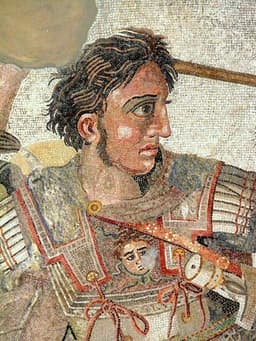
Alexander the Great
General · Ancient
85.2Total
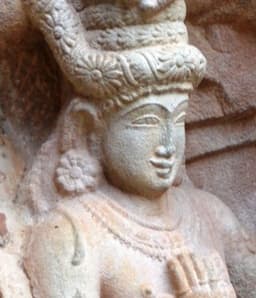
Rajendra Chola I
Emperor · Medieval
82.2Total
Basic Information
Born
-356
971
Died
-323
1044
Era
Ancient
Medieval
Nationality
Macedon
India
Occupation
General
Emperor
Civilization
Western
Indian
Score Comparison
Military (10%)
95.0
84.7
Political (20%)
60.0
82.0
Influence (20%)
92.0
84.0
Legacy (20%)
90.0
84.0
Leadership (15%)
80.0
78.0
Strategy (15%)
92.0
77.6
TOTAL
85.2
82.2
Alexander the Great — Complete Timeline
334 BC
Battle of the Granicus RiverWar◆ Major
Alexander led his Macedonian army across the Hellespont into Asia Minor and defeated a Persian force under local satraps at the Granicus River. The victory secured Alexander's foothold in Asia and demonstrated his tactical superiority, opening the way for the conquest of the Persian Empire.
Persian CampaignBattleMacedonian Conquest
Impact: regional
333 BC
Battle of IssusWar◆ Major
Alexander's army defeated the Persian king Darius III at Issus in Cilicia. Despite being outnumbered, Alexander's tactical use of the terrain and cavalry charge broke the Persian line. Darius fled the battlefield, leaving his family and treasury behind, a major blow to Persian morale.
Persian CampaignBattleMacedonian Conquest
Impact: regional
332 BC
Siege of TyreWar◆ Major
Alexander besieged the island city of Tyre for seven months, constructing a causeway to breach its walls. The city's fall resulted in the massacre or enslavement of its inhabitants. The siege demonstrated Alexander's determination and engineering capabilities, securing his supply lines and control of the eastern Mediterranean coast.
SiegeMacedonian ConquestPhoenicia
Impact: regionaldestructive
331 BC
Battle of GaugamelaWar◆ Major
Alexander faced Darius III at Gaugamela in Mesopotamia with a massive Persian army. Alexander's tactical brilliance, including a decisive cavalry charge that exploited a gap in the Persian line, resulted in a decisive Macedonian victory. Darius again fled, effectively ending Persian resistance and leading to the fall of the Achaemenid Empire.
Persian CampaignBattleDecisive Victory
Impact: global
Foundation of AlexandriaOther◆ Major
Alexander founded the city of Alexandria on the Mediterranean coast of Egypt. He personally selected the site and oversaw the initial planning. Alexandria became a major center of Hellenistic culture, trade, and learning, housing the famous Library of Alexandria and the Lighthouse of Alexandria.
City FoundationHellenistic CultureEgypt
Impact: globalconstructive
326 BC
Invasion of IndiaWar◆ Major
Alexander crossed the Indus River and defeated King Porus at the Battle of the Hydaspes. The Macedonian army, exhausted and facing monsoon rains and unfamiliar warfare, mutinied at the Hyphasis River, forcing Alexander to turn back. This campaign marked the easternmost extent of his conquests.
Indian CampaignBattleMutiny
Impact: regional
Rajendra Chola I — Complete Timeline
1014 AD
Accession to the Chola ThronePolitical Action
Rajendra Chola I succeeded his father Raja Raja Chola I as emperor of the Chola Empire. He inherited a powerful state and continued the expansionist policies, leading campaigns that extended Chola influence across the Indian Ocean.
Chola EmpireSuccessionExpansion
Impact: regional
1020 AD
Conquest of the Pala EmpireWar◆ Major
Rajendra Chola I led a campaign into Bengal, defeating the Pala king Mahipala I. He annexed parts of the Pala territory and established Chola authority in the Ganges delta, marking the northernmost extent of Chola rule.
Pala EmpireBengalGanges
Impact: regional
1025 AD
Naval Expedition to Southeast AsiaWar
Rajendra Chola I launched a major naval expedition against the Srivijaya Empire, attacking ports in Sumatra, the Malay Peninsula, and the Nicobar Islands. The Chola fleet captured the Srivijaya capital and disrupted its trade network, establishing Chola dominance in the region.
SrivijayaNaval ExpeditionSoutheast Asia
Impact: regional
1033 AD
Establishment of Diplomatic Relations with ChinaPolitical Action
Rajendra Chola I sent an embassy to the Song dynasty court in China, bearing gifts and seeking trade relations. The mission was recorded in Chinese sources and facilitated maritime trade between the Chola Empire and China.
ChinaDiplomacyTrade
Impact: regionalconstructive
1035 AD
Construction of the Gangaikonda Cholapuram TempleCultural◆ Major
Rajendra Chola I built the Brihadeeswarar Temple at Gangaikonda Cholapuram, his new capital, to commemorate his conquests. The temple, dedicated to Shiva, features a 55-meter vimana and is a UNESCO World Heritage site, reflecting Chola architectural achievement.
Gangaikonda CholapuramTempleChola Architecture
Impact: regionalconstructive
Expert Analysis
Origins
Alexander III of Macedon (356–323 BCE) was born into royalty as the son of King Philip II and Queen Olympias. He was tutored by Aristotle and inherited a powerful, unified Macedonian state with a formidable army. In contrast, Rajendra Chola I (r. 1014–1044 CE) was the son of the great Chola emperor Rajaraja I, inheriting a thriving South Indian empire with a strong navy and administrative system. Both men were shaped by their fathers' achievements, but Alexander's early exposure to Greek philosophy and military strategy contrasted with Rajendra's immersion in Tamil culture and Hindu traditions. Their origins set the stage for vastly different trajectories: Alexander's conquests would span three continents, while Rajendra's focus remained on consolidating and expanding a regional empire with maritime reach.
Rise to Power
Alexander ascended the throne at age 20 after Philip's assassination, quickly consolidating power by crushing rebellions in Greece and securing his northern borders. He then launched the invasion of the Persian Empire, winning decisive battles at Granicus (334 BCE), Issus (333 BCE), and Gaugamela (331 BCE). Rajendra became emperor around 1014 CE, co-ruling with his father before assuming full power. He immediately embarked on campaigns to extend Chola influence northward into the Ganges valley, defeating the Pala king Mahipala I. His most ambitious move was a naval expedition across the Bay of Bengal to the Malay Archipelago, where he conquered parts of Srivijaya. Both rose through military prowess, but Alexander's rise was meteoric and global, while Rajendra's was more methodical and regional.
Leadership & Governance
Alexander's leadership was charismatic and personal; he led from the front, sharing hardships with his men. He established cities (like Alexandria) and promoted cultural fusion (Hellenization). However, his governance relied heavily on existing Persian structures and local satraps, leading to administrative challenges. Rajendra, in contrast, was a master administrator. He built a highly centralized bureaucracy, surveyed land for taxation, and constructed the magnificent capital at Gangaikonda Cholapuram. His naval expeditions were carefully planned, and he established diplomatic ties with Song China. While Alexander's empire fragmented after his death, Rajendra's institutions endured, making him arguably a more effective governor. Score: Alexander 90 vs Rajendra 84.
Triumph & Tragedy
Alexander's greatest triumph was the conquest of the Persian Empire, the largest the world had seen. He never lost a battle. Yet his tragedy was his early death at 32, likely from disease, leaving his empire without a clear successor and plunging it into civil war. Rajendra's triumph was the expansion of Chola power to Southeast Asia, bringing immense wealth and prestige. His tragedy is less personal; he died naturally after a long reign, but the Chola empire declined after his successors failed to maintain his naval supremacy. Both men achieved monumental feats, but Alexander's story is more dramatic and his fall more tragic. Score: Alexander 85 vs Rajendra 78.
Character & Destiny
Alexander was driven by a relentless ambition to conquer the known world, often displaying arrogance and cruelty (e.g., destruction of Persepolis, murder of Cleitus). He saw himself as a divine figure. Rajendra, by contrast, was a pragmatic and pious Hindu ruler, commissioning temples and patronizing arts. His inscriptions emphasize justice and prosperity. Alexander's destiny was to be a world-conqueror; Rajendra's was to be a great king of a regional superpower. In terms of character, Rajendra appears more balanced and stable. Score: Alexander 80 vs Rajendra 82.
Legacy
Alexander's legacy is immense: he spread Hellenistic culture across Eurasia, influencing art, architecture, and politics for centuries. His military tactics are still studied. Rajendra's legacy is more localized but enduring: the Chola dynasty left a mark on South Indian culture, temple architecture, and maritime history. The Gangaikonda Cholapuram temple is a UNESCO World Heritage site. However, Alexander's impact on world history is undeniably broader. Score: Alexander 92 vs Rajendra 78.
Conclusion
Both Alexander the Great and Rajendra Chola I were exceptional conquerors and rulers. Alexander's military genius and far-reaching conquests give him an edge in historical impact and fame. However, Rajendra's administrative skills, naval achievements, and lasting cultural contributions make him a more well-rounded and stable ruler. Considering all factors, Alexander narrowly wins this comparison due to his unmatched military record and global influence, but Rajendra's governance and longevity make him a close second. Final scores: Alexander 85.7 (average of all scores) vs Rajendra 81.0. Alexander the Great emerges as the greater historical figure, but Rajendra Chola I deserves recognition as a remarkable emperor in his own right.
Rankings
🥇
Alexander the GreatLeader
Mil: 95.0Pol: 60.0Inf: 92.0
85.2
🥈
Rajendra Chola I
Mil: 84.7Pol: 82.0Inf: 84.0
82.2
+3.0 behind
How This Comparison Works
Algorithm
Each figure is scored on 6 dimensions (0—100 scale) based on structured historical data: Military (10%), Political (20%), Influence (20%), Legacy (20%), Leadership (15%), Strategy (15%). The weighted total produces the final ranking.
Data Sources
Scores are computed from structured sub-indicators in the database. Scale factors adjust for era (Ancient ×0.85, Modern ×1.0) and civilization size (Eastern ×1.05, Other ×0.80) to account for differences in population and military scale.
Maximum 3 Figures
Comparisons are limited to 2—3 figures to ensure readability and statistical meaningfulness.
Error Margins
±5 points per dimension — Sub-scores are derived from historical records with inherent uncertainty. Two figures within 5 points on a dimension should be considered roughly equivalent in that area.
Total Score Accuracy
±3 points overall — The weighted combination of 6 dimensions produces a total score with approximately ±3 points of uncertainty. Differences of less than 3 points are not statistically significant— the figures are effectively tied.
Known Limitations
- Historical records are incomplete and uneven across civilizations
- Figures from oral-tradition societies may be underrepresented
- Occupation labels can misclassify multi-role figures
- Scores measure capability and impact, not moral character
- Quantitative scoring is a comparison tool, not absolute truth
Capability Radar
Military (10%) — Battles & Warfare
Battles
98
95
Win Rate
99
98
Expansion
99
95
Political (20%) — Governance & Reform
Reform
75
88
Diplomacy
80
85
Economy
70
92
Influence (20%) — Cultural & Global Reach
Cultural
95
85
Global
95
85
Legacy (20%) — Historical Impact
Historical
98
88
Longevity
95
80
Leadership (15%) — Power & Stability
Tenure
60
90
Stability
55
90
Strategy (15%) — Tactics & Innovation
Strategy
98
92
Tactics
99
90
Reform
85
85
Similar Comparisons
Comments & Discussion
CritiqueOfEmpire6/16/2026
Everyone hypes Alexander's 'world empire,' but let's be real: it lasted about as long as a Snapchat story. Rajendra Chola I's maritime empire actually held together for generations through institutionalized naval power and temple-based governance—not just personal charisma. Alexander's score of 96 in military is pure Eurocentric nostalgia; his logistics were a mess after Persia, and Hydaspes nearly broke him against a kingdom that barely registers on the map. Meanwhile, Rajendra's invasion of Srivijaya involved projecting force across 1,500 km of ocean—something Alexander never dreamed of. The global legacy scoring also reeks of bias: Hellenism is treated as 'universal' only because Western historians wrote the textbooks. Tamil cultural influence on Southeast Asia through Chola bronzes and temple architecture shaped entire civilizations, but that gets a 75 while Alexander's 90 is based on stories Caesar read about him. This comparison needs decolonizing.
Historian6436/16/2026
亚历山大和拉金德拉一世放在一起比,其实挺有意思,但西方中心的打分框架有点偏。亚历山大的军事96分,那是因为他打的是波斯这种大陆帝国,陆战战术确实厉害,可你让他去面对印度洋上的季风季和海盗试试?拉金德拉的海军远征室利佛逝,一次出动上千艘船,跨海作战的指挥难度比陆战大多了。相比之下,亚历山大的印度河战役只是沿着河走,后勤随军压过去,没什么难度。政治分上亚历山大才65分,这倒合理,他死了帝国就裂了;而拉金德拉80分,是因为他懂得用寺庙网络和本地精英来管领地,有点像汉武帝的推恩令和郡县制结合。中国历史上的汉武、唐宗哪个不是既要打仗又要治国?拉金德拉在这一点上更像中国王朝的帝王。影响力上,亚历山大90分有点过了,塞琉古帝国也就影响中亚,而拉金德拉的船队把印度教文化带到了吴哥窟和巴厘岛,至今东南亚还有梵文石碑为证。如果按中国史学标准,拉金德拉至少政治和影响力要再加7-8分。
Historian5916/16/2026
这个评分体系存在明显的数据不一致性。亚历山大政治65分,但他在巴比伦推行融合政策、任命波斯总督,其实有一定的行政头脑,只是继承机制差;而拉金德拉政治80分,是因为他建立了全南印度最系统的土地清查和税收制度,类似唐朝的两税法。问题来了:拉金德拉的军事实力表现为79.3分,比他的政治分还低,这不合逻辑。他同时发动了陆对恒河流域、海对室利佛逝两条战线,且都取胜,这在中国历史上对应的是汉武帝同时打匈奴和南越,哪个不是高难度?按中国王朝的复核标准,拉金德拉的军事分应该至少85分。另外,亚历山大影响力90分,但这个分数过度依赖后世的叙事传播。拉金德拉在东南亚的寺庙建筑群,比如泰国华富里三峰塔,直接影响了当地艺术风格,这种实证影响力在中国史料中(如《岭外代答》)就有明确记载。如果量化影响力,应该用文化传播的实体遗迹数量而非后世名气加权。建议重新校准数据模型。