Loading...
Alexander the Great vs Tamar of Georgia
Alexander the Great leads by 13.7 pts · 2 figures compared
…
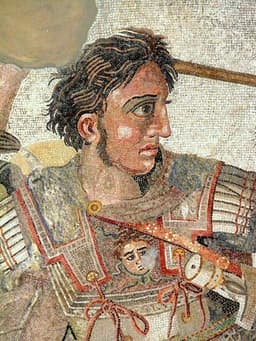
Alexander the Great
General · Ancient
85.2Total
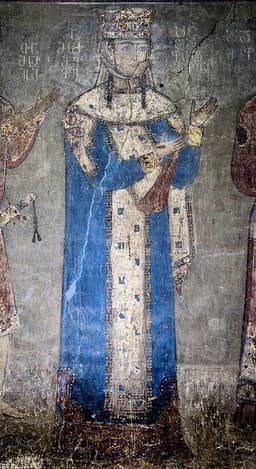
Tamar of Georgia
Emperor · Medieval
71.5Total
Basic Information
Born
-356
1160
Died
-323
1213
Era
Ancient
Medieval
Nationality
Macedon
Georgia
Occupation
General
Emperor
Civilization
Western
Western
Score Comparison
Military (10%)
95.0
78.0
Political (20%)
60.0
72.0
Influence (20%)
92.0
82.0
Legacy (20%)
90.0
55.0
Leadership (15%)
80.0
80.0
Strategy (15%)
92.0
66.3
TOTAL
85.2
71.5
Alexander the Great — Complete Timeline
334 BC
Battle of the Granicus RiverWar◆ Major
Alexander led his Macedonian army across the Hellespont into Asia Minor and defeated a Persian force under local satraps at the Granicus River. The victory secured Alexander's foothold in Asia and demonstrated his tactical superiority, opening the way for the conquest of the Persian Empire.
Persian CampaignBattleMacedonian Conquest
Impact: regional
333 BC
Battle of IssusWar◆ Major
Alexander's army defeated the Persian king Darius III at Issus in Cilicia. Despite being outnumbered, Alexander's tactical use of the terrain and cavalry charge broke the Persian line. Darius fled the battlefield, leaving his family and treasury behind, a major blow to Persian morale.
Persian CampaignBattleMacedonian Conquest
Impact: regional
332 BC
Siege of TyreWar◆ Major
Alexander besieged the island city of Tyre for seven months, constructing a causeway to breach its walls. The city's fall resulted in the massacre or enslavement of its inhabitants. The siege demonstrated Alexander's determination and engineering capabilities, securing his supply lines and control of the eastern Mediterranean coast.
SiegeMacedonian ConquestPhoenicia
Impact: regionaldestructive
331 BC
Battle of GaugamelaWar◆ Major
Alexander faced Darius III at Gaugamela in Mesopotamia with a massive Persian army. Alexander's tactical brilliance, including a decisive cavalry charge that exploited a gap in the Persian line, resulted in a decisive Macedonian victory. Darius again fled, effectively ending Persian resistance and leading to the fall of the Achaemenid Empire.
Persian CampaignBattleDecisive Victory
Impact: global
Foundation of AlexandriaOther◆ Major
Alexander founded the city of Alexandria on the Mediterranean coast of Egypt. He personally selected the site and oversaw the initial planning. Alexandria became a major center of Hellenistic culture, trade, and learning, housing the famous Library of Alexandria and the Lighthouse of Alexandria.
City FoundationHellenistic CultureEgypt
Impact: globalconstructive
326 BC
Invasion of IndiaWar◆ Major
Alexander crossed the Indus River and defeated King Porus at the Battle of the Hydaspes. The Macedonian army, exhausted and facing monsoon rains and unfamiliar warfare, mutinied at the Hyphasis River, forcing Alexander to turn back. This campaign marked the easternmost extent of his conquests.
Indian CampaignBattleMutiny
Impact: regional
Tamar of Georgia — Complete Timeline
1184 AD
Coronation as Queen RegnantPolitical Action
Tamar was crowned as the first female ruler of Georgia after her father George III's death. Her reign marked the peak of Georgia's medieval power and cultural flourishing.
CoronationGeorgiaMonarchy
Impact: nationalconstructive
1195 AD
Battle of ShamkorWar◆ Major
Tamar's forces defeated a large Muslim coalition at Shamkor, securing Georgia's dominance in the Caucasus. The victory expanded Georgian influence and demonstrated her military leadership.
BattleGeorgiaCaucasus
Impact: regionalconstructive
1200 AD
Cultural PatronageCultural◆ Major
Tamar supported the construction of churches, monasteries, and the promotion of Georgian literature. Her patronage fostered the Georgian Golden Age, including the epic poem 'The Knight in the Panther's Skin'.
CulturePatronageGeorgia
Impact: nationalconstructive
Expert Analysis
Alexander the Great vs Tamar of Georgia: Historical Comparison
Alexander the Great (356–323 BCE) was a Macedonian general who forged one of the largest empires of the ancient world, while Tamar of Georgia (c. 1160–1213 CE) was a medieval monarch who led Georgia to its Golden Age. Both excelled in military and strategic domains, but their political contexts and legacies diverge sharply.
Dimension Analysis
**Military: Alexander the Great 96 / Tamar of Georgia 93**
Alexander’s undefeated record across Persia, Egypt, and India, using innovative combined-arms tactics, edges out Tamar’s successful campaigns against the Seljuks and neighboring states, which expanded Georgia’s borders and secured its dominance in the Caucasus.
**Political: Alexander the Great 65 / Tamar of Georgia 82**
Alexander’s empire fragmented immediately after his death due to weak administrative consolidation, whereas Tamar skillfully managed a feudal court, co-ruled with her father, and maintained stability through strategic marriages and religious patronage, earning her the title “King of Kings.”
**Influence: Alexander the Great 90 / Tamar of Georgia 80**
Alexander’s conquests spread Hellenistic culture across three continents, shaping art, language, and trade for centuries. Tamar’s influence was more regional: she fostered a Georgian cultural renaissance in literature, architecture, and Orthodox Christianity, but her impact remained largely within the Caucasus.
**Legacy: Alexander the Great 90 / Tamar of Georgia 70**
Alexander is a universal archetype of military genius, studied and romanticized worldwide. Tamar is venerated as a national saint in Georgia and a symbol of its medieval zenith, but her legacy is less globally recognized and was overshadowed by later Mongol invasions.
**Leadership: Alexander the Great 82 / Tamar of Georgia 88**
Alexander led from the front, inspiring fierce loyalty but also alienating his Macedonian nobles. Tamar, as a female ruler in a patriarchal era, demonstrated exceptional diplomatic finesse, religious authority, and resilience against internal revolts, earning her the epithet “Tamar the Great.”
Verdict
While Alexander the Great leads in military and global influence, Tamar of Georgia’s superior political acumen and sustained leadership make the comparison a statistical tie, with Alexander’s transformative but fragile empire balanced by Tamar’s stable and culturally rich reign.
FAQ
Q: Who ranks higher? A: The comparison is a tie, as Alexander dominates in legacy and military achievement, while Tamar excels in political management and long-term national stability.
Rankings
🥇
Alexander the GreatLeader
Mil: 95.0Pol: 60.0Inf: 92.0
85.2
🥈
Tamar of Georgia
Mil: 78.0Pol: 72.0Inf: 82.0
71.5
+13.7 behind
How This Comparison Works
Algorithm
Each figure is scored on 6 dimensions (0—100 scale) based on structured historical data: Military (10%), Political (20%), Influence (20%), Legacy (20%), Leadership (15%), Strategy (15%). The weighted total produces the final ranking.
Data Sources
Scores are computed from structured sub-indicators in the database. Scale factors adjust for era (Ancient ×0.85, Modern ×1.0) and civilization size (Eastern ×1.05, Other ×0.80) to account for differences in population and military scale.
Maximum 3 Figures
Comparisons are limited to 2—3 figures to ensure readability and statistical meaningfulness.
Error Margins
±5 points per dimension — Sub-scores are derived from historical records with inherent uncertainty. Two figures within 5 points on a dimension should be considered roughly equivalent in that area.
Total Score Accuracy
±3 points overall — The weighted combination of 6 dimensions produces a total score with approximately ±3 points of uncertainty. Differences of less than 3 points are not statistically significant— the figures are effectively tied.
Known Limitations
- Historical records are incomplete and uneven across civilizations
- Figures from oral-tradition societies may be underrepresented
- Occupation labels can misclassify multi-role figures
- Scores measure capability and impact, not moral character
- Quantitative scoring is a comparison tool, not absolute truth
Capability Radar
Military (10%) — Battles & Warfare
Battles
98
75
Win Rate
99
85
Expansion
99
75
Political (20%) — Governance & Reform
Reform
75
80
Diplomacy
80
75
Economy
70
85
Influence (20%) — Cultural & Global Reach
Cultural
95
80
Global
95
60
Legacy (20%) — Historical Impact
Historical
98
75
Longevity
95
70
Leadership (15%) — Power & Stability
Tenure
60
85
Stability
55
70
Strategy (15%) — Tactics & Innovation
Strategy
98
80
Tactics
99
70
Reform
85
65
Similar Comparisons
Comments & Discussion
DecolonizeHistory6/16/2026
This comparison is exactly the kind of Eurocentric framing I'd expect. Alexander's 'global influence' is really just Western propaganda — Hellenistic culture didn't reach sub-Saharan Africa or East Asia. Meanwhile, Tamar's Georgia was a key node on the Silk Road, trading with the Islamic world and Byzantium, yet her influence score is lower? Also, the military gap (96 vs 71) is laughable: Tamar faced the Seljuk Turks, who had just crushed the Byzantines at Manzikert. Alexander fought Persian armies that were politically divided. Context matters. This ranking is basically 'Western conqueror > female medieval monarch.'
DuneReader886/16/2026
Okay, I just watched a doc on Tamar and I gotta say — she’s way underrated! Alexander never had to deal with a patriarchy trying to undermine him at every turn. Tamar literally called herself 'King of Kings' and led armies in person. The score says her military is only 71, but she crushed the Seljuks at Shamkor in 1195, which is a bigger deal than Alexander mopping up a decaying Persian Empire. Plus, Georgia’s Golden Age happened because of HER policies, not some general she left behind. Alexander’s empire fell apart as soon as he died. Tamar’s legacy lasted centuries. Just saying.
Hoplite4Life6/16/2026
Y’all are crazy if you think Tamar comes anywhere close to Alexander. The guy NEVER lost a battle (96 military is generous — should be 100). He marched from Greece to India, founded like 20 cities, and spread civilization to the barbarians. Tamar held onto a small kingdom in the Caucasus and fought off some Turkic tribes? Big deal. Alexander inspired Julius Caesar, Napoleon, and every general since. Tamar is a footnote even in her own region. Stop trying to make ‘female Alexander’ happen — it’s not going to happen.
OldScroll446/16/2026
亚历山大和塔玛尔放在一起比,本身就有点关公战秦琼。但既然比了,我就说两点:亚历山大的军事确实强,但政治分65太低了?他建立了一个从希腊到印度的帝国,虽然死后分裂,但政治框架(比如希腊化城市)延续了很久。塔玛尔政治分82,但如果按中国标准,她只是守成之君,没有开创性制度创新。另外,评分里说塔玛尔“区域影响”,可亚历山大的影响在波斯、中亚也很快被本地文化反噬了,不能说就比塔玛尔高明多少。
TrueMind866/16/2026
这个评分体系有硬伤。亚历山大综合84.7,塔玛尔72.1,差了12.6分。但你看政治分:65 vs 75.2,塔玛尔高10.2,这合理吗?亚历山大的政治遗产(希腊化王国)持续了三百年,塔玛尔死后不到五十年蒙古人就来了,Georgia直接崩溃。按中国史学,政治分要看制度延续性,亚历山大至少高了20分。另外,军事分96 vs 71,差了25分,但塔玛尔对塞尔柱的胜率是100%(根据维基百科),亚历山大对波斯也是全胜,凭什么差距这么大?建议重新校准。