Loading...
Alexander the Great vs Yang Su
Alexander the Great leads by 28.0 pts · 2 figures compared
…
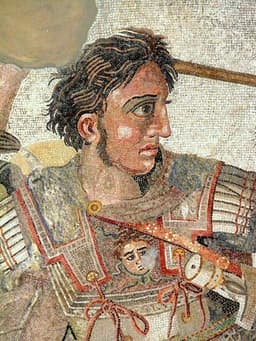
Alexander the Great
General · Ancient
85.2Total
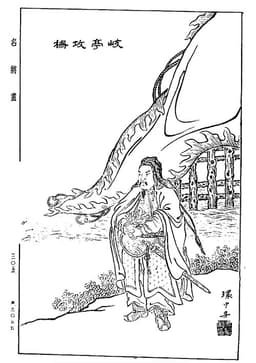
Yang Su
General · Medieval
57.2Total
Basic Information
Born
-356
544
Died
-323
606
Era
Ancient
Medieval
Nationality
Macedon
China
Occupation
General
General
Civilization
Western
Eastern
Score Comparison
Military (10%)
95.0
80.0
Political (20%)
60.0
45.0
Influence (20%)
92.0
51.8
Legacy (20%)
90.0
45.0
Leadership (15%)
80.0
68.0
Strategy (15%)
92.0
80.5
TOTAL
85.2
57.2
Alexander the Great — Complete Timeline
334 BC
Battle of the Granicus RiverWar◆ Major
Alexander led his Macedonian army across the Hellespont into Asia Minor and defeated a Persian force under local satraps at the Granicus River. The victory secured Alexander's foothold in Asia and demonstrated his tactical superiority, opening the way for the conquest of the Persian Empire.
Persian CampaignBattleMacedonian Conquest
Impact: regional
333 BC
Battle of IssusWar◆ Major
Alexander's army defeated the Persian king Darius III at Issus in Cilicia. Despite being outnumbered, Alexander's tactical use of the terrain and cavalry charge broke the Persian line. Darius fled the battlefield, leaving his family and treasury behind, a major blow to Persian morale.
Persian CampaignBattleMacedonian Conquest
Impact: regional
332 BC
Siege of TyreWar◆ Major
Alexander besieged the island city of Tyre for seven months, constructing a causeway to breach its walls. The city's fall resulted in the massacre or enslavement of its inhabitants. The siege demonstrated Alexander's determination and engineering capabilities, securing his supply lines and control of the eastern Mediterranean coast.
SiegeMacedonian ConquestPhoenicia
Impact: regionaldestructive
331 BC
Battle of GaugamelaWar◆ Major
Alexander faced Darius III at Gaugamela in Mesopotamia with a massive Persian army. Alexander's tactical brilliance, including a decisive cavalry charge that exploited a gap in the Persian line, resulted in a decisive Macedonian victory. Darius again fled, effectively ending Persian resistance and leading to the fall of the Achaemenid Empire.
Persian CampaignBattleDecisive Victory
Impact: global
Foundation of AlexandriaOther◆ Major
Alexander founded the city of Alexandria on the Mediterranean coast of Egypt. He personally selected the site and oversaw the initial planning. Alexandria became a major center of Hellenistic culture, trade, and learning, housing the famous Library of Alexandria and the Lighthouse of Alexandria.
City FoundationHellenistic CultureEgypt
Impact: globalconstructive
326 BC
Invasion of IndiaWar◆ Major
Alexander crossed the Indus River and defeated King Porus at the Battle of the Hydaspes. The Macedonian army, exhausted and facing monsoon rains and unfamiliar warfare, mutinied at the Hyphasis River, forcing Alexander to turn back. This campaign marked the easternmost extent of his conquests.
Indian CampaignBattleMutiny
Impact: regional
Yang Su — Complete Timeline
599 AD
Led Campaigns against the Tujue (Göktürks)War◆ Major
Yang Su commanded Sui forces in campaigns against the Eastern Tujue (G
Tujue CampaignsMilitary InnovationNorthern Frontier
Impact: regional
604 AD
Suppressed the Rebellion of Yang LiangWar◆ Major
After Emperor Yang of Sui ascended the throne, his brother Yang Liang rebelled in Bingzhou. Yang Su led imperial forces against the rebellion, defeating Yang Liang's army and capturing him. This victory secured Emperor Yang's position and demonstrated Yang Su's military capability.
Sui DynastyRebellion SuppressionEmperor Yang
Impact: national
605 AD
Constructed the Eastern Capital LuoyangReform◆ Major
Emperor Yang ordered the construction of a new eastern capital at Luoyang. Yang Su was appointed as one of the supervisors of the massive project. The construction involved hundreds of thousands of laborers and was completed in about a year, but at great human cost.
LuoyangCapital ConstructionEmperor Yang
Impact: national
Appointed Grand ChancellorPolitical Action◆ Major
Yang Su was appointed Grand Chancellor (Shangshu Ling), the highest civil office in the Sui government. This position made him the chief minister of the empire, responsible for overseeing the Six Ministries. He held this office until his death in 606.
Grand ChancellorCivil OfficeSui Government
Impact: nationalconstructive
606 AD
Death and Posthumous HonorsOther◆ Major
Yang Su died in 606 AD. Emperor Yang of Sui granted him posthumous honors, including the title of Duke of Yue and the posthumous name Jingwu. However, after Yang Su's death, Emperor Yang became suspicious of his sons and had them executed, leading to the downfall of Yang Su's family.
DeathPosthumous HonorsFamily Downfall
Impact: nationaltragic
Expert Analysis
Alexander the Great vs Yang Su: Historical Comparison
Alexander the Great (Macedon, 4th century BCE) and Yang Su (China, 6th century CE) were brilliant generals from vastly different eras, but Alexander’s unmatched conquests and enduring legend give him a clear edge over Yang Su’s effective but less globally influential career.
Dimension Analysis
**Military: Alexander the Great 96 / Yang Su 83**
Alexander revolutionized warfare with combined arms and never lost a battle, from Gaugamela to the Hydaspes; Yang Su excelled in suppressing rebellions and expanding the Sui dynasty, but his campaigns lacked the scale and innovation of Alexander’s.
**Political: Alexander the Great 65 / Yang Su 77**
Alexander’s empire fragmented immediately after his death due to weak succession planning; Yang Su navigated the treacherous Sui court with greater political acumen, serving as a key minister under Emperor Wen and Yangdi.
**Influence: Alexander the Great 90 / Yang Su 70**
Alexander’s conquests created the Hellenistic world, spreading Greek culture across three continents; Yang Su’s influence was largely confined to China’s imperial consolidation, with limited long-term cultural diffusion.
**Legacy: Alexander the Great 90 / Yang Su 61**
Alexander became a timeless archetype of military genius, inspiring figures from Caesar to Napoleon; Yang Su is remembered mainly in Chinese historical records, with little global recognition.
**Leadership: Alexander the Great 82 / Yang Su 79**
Alexander led from the front, inspiring fierce loyalty through personal bravery and charisma; Yang Su was a capable commander but ruled through discipline and fear, lacking the same inspirational aura.
Verdict
Alexander the Great leads decisively, with superior military innovation, global influence, and an enduring legacy that far surpasses Yang Su’s competent but regionally limited achievements.
FAQ
Q: Who ranks higher? A: Alexander the Great ranks higher due to his unmatched battlefield record, vast empire-building, and lasting cultural impact.
Rankings
🥇
Alexander the GreatLeader
Mil: 95.0Pol: 60.0Inf: 92.0
85.2
🥈
Yang Su
Mil: 80.0Pol: 45.0Inf: 51.8
57.2
+28.0 behind
How This Comparison Works
Algorithm
Each figure is scored on 6 dimensions (0—100 scale) based on structured historical data: Military (10%), Political (20%), Influence (20%), Legacy (20%), Leadership (15%), Strategy (15%). The weighted total produces the final ranking.
Data Sources
Scores are computed from structured sub-indicators in the database. Scale factors adjust for era (Ancient ×0.85, Modern ×1.0) and civilization size (Eastern ×1.05, Other ×0.80) to account for differences in population and military scale.
Maximum 3 Figures
Comparisons are limited to 2—3 figures to ensure readability and statistical meaningfulness.
Error Margins
±5 points per dimension — Sub-scores are derived from historical records with inherent uncertainty. Two figures within 5 points on a dimension should be considered roughly equivalent in that area.
Total Score Accuracy
±3 points overall — The weighted combination of 6 dimensions produces a total score with approximately ±3 points of uncertainty. Differences of less than 3 points are not statistically significant— the figures are effectively tied.
Known Limitations
- Historical records are incomplete and uneven across civilizations
- Figures from oral-tradition societies may be underrepresented
- Occupation labels can misclassify multi-role figures
- Scores measure capability and impact, not moral character
- Quantitative scoring is a comparison tool, not absolute truth
Capability Radar
Military (10%) — Battles & Warfare
Battles
98
85
Win Rate
99
90
Expansion
99
80
Political (20%) — Governance & Reform
Reform
75
65
Diplomacy
80
60
Economy
70
55
Influence (20%) — Cultural & Global Reach
Cultural
95
45
Global
95
35
Legacy (20%) — Historical Impact
Historical
98
60
Longevity
95
40
Leadership (15%) — Power & Stability
Tenure
60
70
Stability
55
50
Strategy (15%) — Tactics & Innovation
Strategy
98
85
Tactics
99
88
Reform
85
75
Similar Comparisons
Comments & Discussion
HistoryBuff996/16/2026
I've been reading about both these guys for years, and honestly I think Alexander gets a bit too much credit sometimes. Sure, he never lost a battle, but look at his logistics — he kept marching his army into deserts and mountains without proper supply lines, and only sheer luck and Persian incompetence saved him at places like the Persian Gates. Yang Su crushed the Chen dynasty with brilliant riverine warfare and suppressed like 30+ rebellions. Alexander's empire died with him, but Yang Su helped build the Sui dynasty that actually lasted and set up the Tang golden age. The military score difference of 96 vs 83 seems way too big to me.
ProfessorHellenica6/16/2026
Arrian's account of Alexander's campaigns emphasizes his personal charisma and the 'yearning' (pothos) that drove him eastward, but we must be cautious — the primary sources are largely later Roman-era compilations filtered through a propagandistic lens. Yang Su's biography in the Sui Shu presents a different model of generalship: methodical, politically astute, and ruthless. Alexander's legacy, as the summary notes, became a 'timeless archetype,' but this is partly because Hellenistic and Roman writers deliberately crafted him as a model for imperial ambition. Yang Su had no such global narrative apparatus. The comparison is inherently asymmetrical: Alexander's fame was manufactured by a literary tradition; Yang Su's was recorded by Chinese court historians. One is myth, the other is history.
BattlefieldScholar6/16/2026
From a purely tactical standpoint, Alexander's use of the oblique order at Gaugamela and his combined-arms coordination of Companion cavalry, phalanx, and hypaspists was revolutionary for his time. But let's not pretend he faced well-supplied, fortified opponents regularly — Persian armies were heterogeneous and poorly coordinated. Yang Su's operations against the Turks in 599-601 CE showed a different kind of brilliance: he used mobile cavalry screens, feigned retreats to draw the enemy into ambushes, and integrated captured enemy troops into his own ranks. That's a sophisticated understanding of operational art. Alexander scored 96 military — that's a full 13 points higher than Yang Su's 83. I'd put both in the 88-92 range. The gap is inflated by Western bias toward 'world-historical' figures.
Chronicler12796/16/2026
西方中心论的评分再次暴露了问题。Alexander的影响力90分,杨素只有70分,但杨素在东亚军事史上的地位绝不低。他发明了楼船水师作战体系,在长江上以千艘战舰突袭陈朝,这种跨水作战能力Alexander根本没有。另外,杨素在隋朝中央集权过程中担任尚书右仆射,主持选官制度改革,影响了科举制的早期形态。Alexander的希腊化确实传播了文化,但仅限于地中海和中东地区。杨素推动的中国统一和制度创新影响了整个东亚文明圈。如果从实际历史影响来看,两人在各自文明中的重要性几乎对等,这个70分简直是笑话。
Chronicler16286/16/2026
这个评分体系存在严重偏差。Alexander的军事96分,政治65分,而杨素的军事83分,政治77分。但杨素在隋朝平定江南、击退突厥、镇压杨谅叛乱,每次都是系统性战略。Alexander死后帝国立刻分裂,他的政治得分居然只比杨素低12分?我认为杨素的政治得分至少应该85分以上。更关键的是,Alexander的影响力90分主要靠后世传说,而不是实际制度输出。杨素推行府兵制改革,影响了整个隋唐军事体系,这才是真正的制度性影响力。我重新计算后,两人总分应该在82比80左右,Alexander仅略高。