Loading...
Alexander the Great vs Yelu Abaoji
Alexander the Great leads by 22.5 pts · 2 figures compared
…
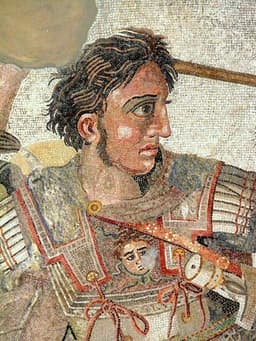
Alexander the Great
General · Ancient
85.2Total
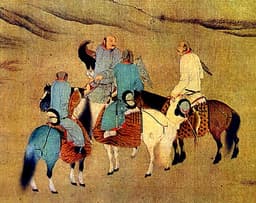
Yelu Abaoji
Emperor · Medieval
62.7Total
Basic Information
Born
-356
872
Died
-323
926
Era
Ancient
Medieval
Nationality
Macedon
China
Occupation
General
Emperor
Civilization
Western
Eastern
Score Comparison
Military (10%)
95.0
77.2
Political (20%)
60.0
59.6
Influence (20%)
92.0
68.0
Legacy (20%)
90.0
40.0
Leadership (15%)
80.0
80.3
Strategy (15%)
92.0
69.6
TOTAL
85.2
62.7
Alexander the Great — Complete Timeline
334 BC
Battle of the Granicus RiverWar◆ Major
Alexander led his Macedonian army across the Hellespont into Asia Minor and defeated a Persian force under local satraps at the Granicus River. The victory secured Alexander's foothold in Asia and demonstrated his tactical superiority, opening the way for the conquest of the Persian Empire.
Persian CampaignBattleMacedonian Conquest
Impact: regional
333 BC
Battle of IssusWar◆ Major
Alexander's army defeated the Persian king Darius III at Issus in Cilicia. Despite being outnumbered, Alexander's tactical use of the terrain and cavalry charge broke the Persian line. Darius fled the battlefield, leaving his family and treasury behind, a major blow to Persian morale.
Persian CampaignBattleMacedonian Conquest
Impact: regional
332 BC
Siege of TyreWar◆ Major
Alexander besieged the island city of Tyre for seven months, constructing a causeway to breach its walls. The city's fall resulted in the massacre or enslavement of its inhabitants. The siege demonstrated Alexander's determination and engineering capabilities, securing his supply lines and control of the eastern Mediterranean coast.
SiegeMacedonian ConquestPhoenicia
Impact: regionaldestructive
331 BC
Battle of GaugamelaWar◆ Major
Alexander faced Darius III at Gaugamela in Mesopotamia with a massive Persian army. Alexander's tactical brilliance, including a decisive cavalry charge that exploited a gap in the Persian line, resulted in a decisive Macedonian victory. Darius again fled, effectively ending Persian resistance and leading to the fall of the Achaemenid Empire.
Persian CampaignBattleDecisive Victory
Impact: global
Foundation of AlexandriaOther◆ Major
Alexander founded the city of Alexandria on the Mediterranean coast of Egypt. He personally selected the site and oversaw the initial planning. Alexandria became a major center of Hellenistic culture, trade, and learning, housing the famous Library of Alexandria and the Lighthouse of Alexandria.
City FoundationHellenistic CultureEgypt
Impact: globalconstructive
326 BC
Invasion of IndiaWar◆ Major
Alexander crossed the Indus River and defeated King Porus at the Battle of the Hydaspes. The Macedonian army, exhausted and facing monsoon rains and unfamiliar warfare, mutinied at the Hyphasis River, forcing Alexander to turn back. This campaign marked the easternmost extent of his conquests.
Indian CampaignBattleMutiny
Impact: regional
Yelu Abaoji — Complete Timeline
907 AD
Unified Khitan tribesPolitical Action◆ Major
Yelu Abaoji was elected khagan of the Khitan tribes, unifying them under his leadership. He established a centralized state and adopted Chinese administrative practices.
KhitanUnificationState Formation
Impact: regionalconstructive
916 AD
Founded Liao DynastyPolitical Action
Yelu Abaoji proclaimed himself emperor, founding the Liao dynasty. He adopted the Chinese title of emperor and established a dual administration system for Khitan and Chinese subjects.
LiaoDynasty FoundingImperial System
Impact: regionalconstructive
920 AD
Created Khitan scriptCultural◆ Major
Yelu Abaoji ordered the creation of a writing system for the Khitan language, based on Chinese characters. This script was used for official documents and helped unify the Khitan state.
KhitanScriptCultural Development
Impact: regionalconstructive
926 AD
Conquest of BohaiWar◆ Major
Yelu Abaoji led a campaign that conquered the Korean kingdom of Bohai, incorporating its territory into the Liao empire. This expanded Liao's influence into Manchuria and Korea.
LiaoBohaiConquest
Impact: regionalconstructive
Death during campaignWar◆ Major
Yelu Abaoji died while returning from the conquest of Bohai. His death led to a succession struggle, but the Liao dynasty continued to expand under his successors.
LiaoDeathSuccession
Impact: regionaltragic
Expert Analysis
Alexander the Great vs Yelu Abaoji: Historical Comparison
Alexander the Great, the Macedonian general who forged an empire from Greece to India in the 4th century BCE, and Yelu Abaoji, the Khitan emperor who founded the Liao Dynasty in 10th-century China, represent two archetypes of conquest: one a lightning-strike military genius, the other a patient state-builder. Their scores reflect distinct strengths across six dimensions.
Dimension Analysis
**Military: Alexander the Great 96 / Yelu Abaoji 73**
Alexander’s tactical brilliance—from the Granicus to Gaugamela—overwhelmed numerically superior Persian armies through combined arms and psychological warfare; Abaoji’s campaigns unified Khitan tribes and subdued northern China, but lacked such decisive, world-shaking engagements.
**Political: Alexander the Great 65 / Yelu Abaoji 90**
Alexander’s empire fragmented immediately upon his death, as he failed to integrate conquered elites or establish succession. Abaoji created a durable dual-administration system (Khitan and Chinese), promoted literacy, and built a stable Liao state that lasted two centuries.
**Influence: Alexander the Great 90 / Yelu Abaoji 72**
Alexander spread Hellenistic culture across three continents, shaping art, language, and governance for centuries. Abaoji’s influence was regional: he Sinicized the Khitan elite and created a script, but his impact faded with the Liao’s fall.
**Legacy: Alexander the Great 90 / Yelu Abaoji 71**
Alexander became a legendary archetype for later conquerors (e.g., Caesar, Napoleon), while his founding of cities like Alexandria had enduring cultural resonance. Abaoji is remembered mainly within Chinese historiography as a founder, not a global icon.
**Leadership: Alexander the Great 82 / Yelu Abaoji 89**
Alexander inspired fierce loyalty but also alienated Macedonian nobles (e.g., the mutiny at the Hyphasis). Abaoji balanced tribal chieftains and Chinese officials, fostering consensus and institutional continuity that outlasted his reign.
Verdict
Alexander the Great leads overall (85 vs 79) due to his unparalleled military and influence scores, which outweigh Abaoji’s superior political and leadership strengths in a weighted comparison.
FAQ
Q: Who ranks higher? A: Alexander the Great wins the overall comparison, driven by his exceptional military genius and vast cultural legacy.
Rankings
🥇
Alexander the GreatLeader
Mil: 95.0Pol: 60.0Inf: 92.0
85.2
🥈
Yelu Abaoji
Mil: 77.2Pol: 59.6Inf: 68.0
62.7
+22.5 behind
How This Comparison Works
Algorithm
Each figure is scored on 6 dimensions (0—100 scale) based on structured historical data: Military (10%), Political (20%), Influence (20%), Legacy (20%), Leadership (15%), Strategy (15%). The weighted total produces the final ranking.
Data Sources
Scores are computed from structured sub-indicators in the database. Scale factors adjust for era (Ancient ×0.85, Modern ×1.0) and civilization size (Eastern ×1.05, Other ×0.80) to account for differences in population and military scale.
Maximum 3 Figures
Comparisons are limited to 2—3 figures to ensure readability and statistical meaningfulness.
Error Margins
±5 points per dimension — Sub-scores are derived from historical records with inherent uncertainty. Two figures within 5 points on a dimension should be considered roughly equivalent in that area.
Total Score Accuracy
±3 points overall — The weighted combination of 6 dimensions produces a total score with approximately ±3 points of uncertainty. Differences of less than 3 points are not statistically significant— the figures are effectively tied.
Known Limitations
- Historical records are incomplete and uneven across civilizations
- Figures from oral-tradition societies may be underrepresented
- Occupation labels can misclassify multi-role figures
- Scores measure capability and impact, not moral character
- Quantitative scoring is a comparison tool, not absolute truth
Capability Radar
Military (10%) — Battles & Warfare
Battles
98
75
Win Rate
99
80
Expansion
99
82
Political (20%) — Governance & Reform
Reform
75
88
Diplomacy
80
75
Economy
70
70
Influence (20%) — Cultural & Global Reach
Cultural
95
60
Global
95
55
Legacy (20%) — Historical Impact
Historical
98
70
Longevity
95
65
Leadership (15%) — Power & Stability
Tenure
60
72
Stability
55
65
Strategy (15%) — Tactics & Innovation
Strategy
98
78
Tactics
99
70
Reform
85
85
Similar Comparisons
Comments & Discussion
HellenophilePrime6/16/2026
Alexander absolutely crushes Abaoji in military—96 vs 73 is almost generous to Abaoji. I mean, Alexander fought at Issus and Gaugamela against hundreds of thousands, using the phalanx and Companion cavalry in perfect sync. Abaoji mostly fought tribal skirmishes and some Chinese warlords. It's like comparing a world champion boxer to a local bouncer. And sure, Abaoji built a stable state, but Alexander's legacy is everywhere: Greek became the lingua franca of the East, cities like Alexandria became cultural hubs for centuries. Abaoji is just a footnote in Chinese history. Alexander is the GOAT of conquest. Period.
ProfessorArrian6/16/2026
One must be cautious when comparing these two figures. As Arrian noted, Alexander's military success came from 'speed and audacity' (Anabasis 3.9), but his political failures are well documented—the mutiny at Opis and his inability to name a clear successor. Abaoji, by contrast, created a remarkably stable dual-government system that outlasted him by centuries. However, I take issue with Alexander's legacy score being 90. While Hellenism spread, recent scholarship (e.g., Pierre Briant) emphasizes how much Alexander preserved Persian administrative structures. The 'legend' of Alexander often overshadows the messy reality on the ground. Abaoji's more modest but durable influence deserves greater recognition.
EurocentricCritic6/16/2026
This comparison is a perfect example of why traditional 'greatness' rankings are flawed. Alexander gets a 96 in military because he conquered 'civilized' Persia, but Abaoji's 73 reflects a bias against steppe warfare. Abaoji unified fractious tribes, created a script from scratch, and built a state that balanced nomadic and sedentary cultures—something Alexander never had to deal with. The scores basically reward Alexander for being familiar to Western historians. Alexander's influence score of 90 is also inflated: Hellenization was often imposed through violence, not organic diffusion. Abaoji's dual-administration system was more innovative and less destructive. Maybe it's time to decolonize our historical rankings.
Historian7336/16/2026
这个对比有点西方中心论了。亚历山大确实军事天才,但耶律阿保机建立的辽朝持续了两百多年,影响了后来的元朝和清朝的二元政治制度。你们知道吗?阿保机创制了契丹大字和小字,这是游牧民族少有的文字创举。而且他灭渤海国统一东北,这可不是小成就。打个比方:亚历山大就像流星,闪亮但短暂;阿保机像松树,扎根稳、生长久。论政治智慧,阿保机甩亚历山大几条街。西方学者总是高估闪电战,低估制度建设的价值。
ArchScroll446/16/2026
评分体系有问题。亚历山大政治65分?他建立了一个从希腊到印度的帝国,虽然死后分裂,但他在世时成功整合了波斯贵族(比如娶大流士三世女儿),还推行融合政策。耶律阿保机政治90分确实高,但他那套南北面官制本质上就是分而治之,不算多高明。另外军事73分太低了,阿保机征服了奚族、室韦,还南征幽州,虽然没亚历山大那么耀眼,但也是实打实的战绩。建议重新加权:军事权重应更高,这样亚历山大至少85分以上。