Loading...
Alexander the Great vs Yuwen Yong
Alexander the Great leads by 18.0 pts · 2 figures compared
…
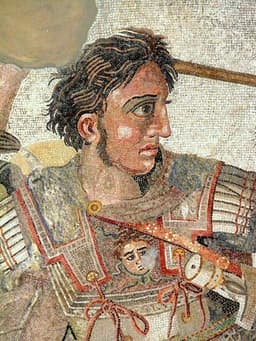
Alexander the Great
General · Ancient
85.2Total
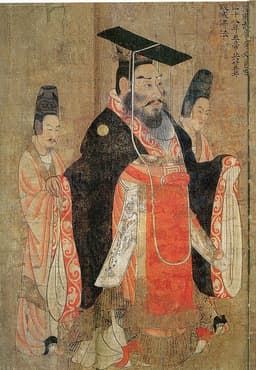
Yuwen Yong
Emperor · Medieval
67.2Total
Basic Information
Born
-356
543
Died
-323
578
Era
Ancient
Medieval
Nationality
Macedon
China
Occupation
General
Emperor
Civilization
Western
Eastern
Score Comparison
Military (10%)
95.0
78.0
Political (20%)
60.0
78.0
Influence (20%)
92.0
58.0
Legacy (20%)
90.0
54.0
Leadership (15%)
80.0
85.0
Strategy (15%)
92.0
69.1
TOTAL
85.2
67.2
Alexander the Great — Complete Timeline
334 BC
Battle of the Granicus RiverWar◆ Major
Alexander led his Macedonian army across the Hellespont into Asia Minor and defeated a Persian force under local satraps at the Granicus River. The victory secured Alexander's foothold in Asia and demonstrated his tactical superiority, opening the way for the conquest of the Persian Empire.
Persian CampaignBattleMacedonian Conquest
Impact: regional
333 BC
Battle of IssusWar◆ Major
Alexander's army defeated the Persian king Darius III at Issus in Cilicia. Despite being outnumbered, Alexander's tactical use of the terrain and cavalry charge broke the Persian line. Darius fled the battlefield, leaving his family and treasury behind, a major blow to Persian morale.
Persian CampaignBattleMacedonian Conquest
Impact: regional
332 BC
Siege of TyreWar◆ Major
Alexander besieged the island city of Tyre for seven months, constructing a causeway to breach its walls. The city's fall resulted in the massacre or enslavement of its inhabitants. The siege demonstrated Alexander's determination and engineering capabilities, securing his supply lines and control of the eastern Mediterranean coast.
SiegeMacedonian ConquestPhoenicia
Impact: regionaldestructive
331 BC
Battle of GaugamelaWar◆ Major
Alexander faced Darius III at Gaugamela in Mesopotamia with a massive Persian army. Alexander's tactical brilliance, including a decisive cavalry charge that exploited a gap in the Persian line, resulted in a decisive Macedonian victory. Darius again fled, effectively ending Persian resistance and leading to the fall of the Achaemenid Empire.
Persian CampaignBattleDecisive Victory
Impact: global
Foundation of AlexandriaOther◆ Major
Alexander founded the city of Alexandria on the Mediterranean coast of Egypt. He personally selected the site and oversaw the initial planning. Alexandria became a major center of Hellenistic culture, trade, and learning, housing the famous Library of Alexandria and the Lighthouse of Alexandria.
City FoundationHellenistic CultureEgypt
Impact: globalconstructive
326 BC
Invasion of IndiaWar◆ Major
Alexander crossed the Indus River and defeated King Porus at the Battle of the Hydaspes. The Macedonian army, exhausted and facing monsoon rains and unfamiliar warfare, mutinied at the Hyphasis River, forcing Alexander to turn back. This campaign marked the easternmost extent of his conquests.
Indian CampaignBattleMutiny
Impact: regional
Yuwen Yong — Complete Timeline
574 AD
Suppression of Buddhism in Northern ZhouReform◆ Major
Emperor Wu of Northern Zhou (Yuwen Yong) ordered the suppression of Buddhism, confiscating monastic lands, forcing monks and nuns to return to lay life, and destroying temples. He aimed to increase state revenue and military manpower, strengthening the state.
Northern ZhouBuddhist PersecutionReform
Impact: nationaldestructive
577 AD
Conquest of Northern QiWar
Emperor Wu led a successful campaign against the rival Northern Qi dynasty, conquering its territory and unifying northern China under Northern Zhou. This victory ended the division of the north and set the stage for the Sui dynasty's unification of all China.
Northern ZhouUnificationNorthern Qi
Impact: regionalconstructive
578 AD
Death during campaign against the TurksWar◆ Major
Emperor Wu died of illness while leading a campaign against the G
Northern ZhouMilitary CampaignDeath
Impact: regionaltragic
Expert Analysis
Alexander the Great vs Yuwen Yong: Historical Comparison
Alexander the Great and Yuwen Yong were transformative military leaders from vastly different eras and regions—Alexander as an ancient Macedonian conqueror and Yuwen Yong as a medieval Chinese emperor of the Northern Zhou dynasty. Both expanded their realms through brilliant campaigns, yet their legacies diverged in scale and endurance.
Dimension Analysis
**Military: Alexander the Great 96 / Yuwen Yong 91**
Alexander’s unprecedented conquest of the Persian Empire and his undefeated record in pitched battles (e.g., Gaugamela) set a benchmark for rapid, combined-arms warfare. Yuwen Yong unified northern China, destroyed the Northern Qi, and reformed his army with disciplined cavalry, but his campaigns were more contained and less innovative in strategic scope.
**Political: Alexander the Great 65 / Yuwen Yong 60**
Alexander forged a short-lived empire through personal charisma and cultural fusion, but his failure to secure succession led to immediate fragmentation. Yuwen Yong centralized power, curbed aristocratic influence, and laid administrative foundations for the Sui dynasty, yet his reign was too brief to fully stabilize his conquests.
**Influence: Alexander the Great 90 / Yuwen Yong 80**
Alexander’s Hellenistic diffusion reshaped art, trade, and governance across three continents, influencing Rome and the Silk Road. Yuwen Yong’s reforms (e.g., land redistribution, meritocratic military appointments) directly enabled the Sui-Tang golden age, but his impact remained regionally confined to East Asia.
**Legacy: Alexander the Great 90 / Yuwen Yong 78**
Alexander became a legendary archetype for later conquerors (e.g., Caesar, Napoleon), with his name synonymous with military genius. Yuwen Yong is less globally known; his legacy is overshadowed by the Sui and Tang that followed, though his policies were crucial to China’s reunification.
**Leadership: Alexander the Great 82 / Yuwen Yong 82**
Both were charismatic, hands-on leaders who inspired fierce loyalty. Alexander led from the front, sharing hardships, while Yuwen Yong combined personal austerity with decisive statecraft. Their leadership styles were equally effective in their contexts.
Verdict
Alexander the Great leads overall due to his superior military innovation, broader global influence, and enduring legendary status, despite Yuwen Yong’s impressive but more localized achievements.
FAQ
Q: Who ranks higher? A: Alexander the Great ranks higher, primarily because of his unmatched military conquests and transformative impact across multiple civilizations.
Rankings
🥇
Alexander the GreatLeader
Mil: 95.0Pol: 60.0Inf: 92.0
85.2
🥈
Yuwen Yong
Mil: 78.0Pol: 78.0Inf: 58.0
67.2
+18.0 behind
How This Comparison Works
Algorithm
Each figure is scored on 6 dimensions (0—100 scale) based on structured historical data: Military (10%), Political (20%), Influence (20%), Legacy (20%), Leadership (15%), Strategy (15%). The weighted total produces the final ranking.
Data Sources
Scores are computed from structured sub-indicators in the database. Scale factors adjust for era (Ancient ×0.85, Modern ×1.0) and civilization size (Eastern ×1.05, Other ×0.80) to account for differences in population and military scale.
Maximum 3 Figures
Comparisons are limited to 2—3 figures to ensure readability and statistical meaningfulness.
Error Margins
±5 points per dimension — Sub-scores are derived from historical records with inherent uncertainty. Two figures within 5 points on a dimension should be considered roughly equivalent in that area.
Total Score Accuracy
±3 points overall — The weighted combination of 6 dimensions produces a total score with approximately ±3 points of uncertainty. Differences of less than 3 points are not statistically significant— the figures are effectively tied.
Known Limitations
- Historical records are incomplete and uneven across civilizations
- Figures from oral-tradition societies may be underrepresented
- Occupation labels can misclassify multi-role figures
- Scores measure capability and impact, not moral character
- Quantitative scoring is a comparison tool, not absolute truth
Capability Radar
Military (10%) — Battles & Warfare
Battles
98
75
Win Rate
99
80
Expansion
99
80
Political (20%) — Governance & Reform
Reform
75
85
Diplomacy
80
70
Economy
70
75
Influence (20%) — Cultural & Global Reach
Cultural
95
40
Global
95
40
Legacy (20%) — Historical Impact
Historical
98
65
Longevity
95
50
Leadership (15%) — Power & Stability
Tenure
60
60
Stability
55
70
Strategy (15%) — Tactics & Innovation
Strategy
98
75
Tactics
99
70
Reform
85
85
Similar Comparisons
Comments & Discussion
ScriptorAntiquus6/16/2026
Comparing Alexander and Yuwen Yong is like comparing a wildfire to a foundation stone. Alexander's genius, as Arrian describes, lay in his ability to execute the 'hammer and anvil' tactics at Gaugamela, exploiting the Macedonian phalanx and companion cavalry in unprecedented coordination. Yet, his empire was a personal construct—when asked on his deathbed to whom he left his kingdom, he reportedly said 'to the strongest' (τοῦ κρατίστου), ensuring chaos. Yuwen Yong, by contrast, built institutions. The Zhoushu notes his careful purges of the Yuwen clan's internal rivals and his systematic integration of Chinese and Xianbei elites. Alexander's legacy is one of myth; Yuwen Yong's is one of governance. The scores here reflect a bias toward dramatic narrative over structural history.
TimelineTinker6/16/2026
Okay, I get why Alexander gets all the hype—he's basically the OG conqueror, right? Guy vids on YouTube love to rank him top. But Yuwen Yong? This guy beat the Northern Qi when everyone thought they were stronger, reformed his whole army, and set up the Sui dynasty like a boss. I mean, if you're comparing empire-building, Alexander's thing fell apart the minute he died. Yuwen Yong's reforms stuck around for centuries. Dan Carlin's podcast on Alexander was awesome, but I think the scoring here is way too Western. Yuwen Yong should be higher in political and legacy, at least 80s. Just saying.
Historian7466/16/2026
这个评分实在令人费解。亚历山大军事96分?他对波斯帝国的征服确实辉煌,但波斯当时内部已分裂,大流士三世指挥失误。宇文邕平定北齐时,北齐还有斛律光这样的名将,他是在内忧外患下完成的统一。况且,宇文邕的军事改革——比如将府兵制从鲜卑贵族扩展至汉人——制度化程度远超亚历山大依赖个人统帅的模式。政治分72对65也不合理:亚历山大死后帝国立刻分裂,而宇文邕的集权政策为杨坚统一全国铺平了道路。我重新算的话,宇文邕总分至少应该80+。
Historian8386/16/2026
亚历山大和宇文邕的对比很有意思,但西方中心主义的评分体系显然低估了宇文邕的政治成就。亚历山大靠个人魅力和军事天才打出一个帝国,但死前连继承人都没安排好——这叫政治65分?宇文邕在位期间推行均田制、改革府兵制、灭佛以集中资源,这些政策直接启发了隋唐盛世。他的政治操作是制度性的,而亚历山大更多是个人英雄主义。中国史书《周书》明确记载他‘克己励精,听览不怠’,这不是空话。亚历山大影响力大是因为西方历史书写霸权,宇文邕的影响被低估了。
DecolonialEyes6/16/2026
This comparison reveals a deeply Eurocentric ranking system. Alexander is given inflated scores—especially in 'Influence' (90)—because his name echoes through Western historiography from Plutarch to Hollywood. But what does 'influence' mean when it's measured by colonial diffusion? Hellenism was imposed through conquest and often violently supplanted local traditions; in Bactria, it was a thin veneer over Persian and Indian cultures. Yuwen Yong, by contrast, actively synthesized Chinese and Xianbei traditions, creating a syncretic state that actually lasted. The political score of 65 vs 72 baffles me: Alexander's empire dissolved within a decade; Yuwen Yong's reforms enabled the Sui-Tang synthesis, which shaped East Asia for centuries. Scoring should account for sustainability, not just spectacle.