Loading...
Alexander the Great vs Zhu Wen
Alexander the Great leads by 34.9 pts · 2 figures compared
…
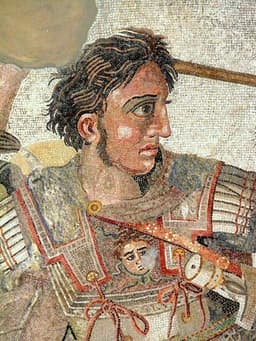
Alexander the Great
General · Ancient
85.2Total
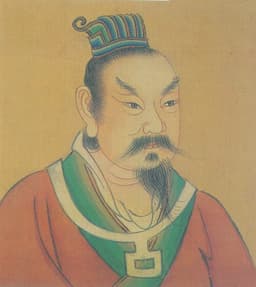
Zhu Wen
Emperor · Medieval
50.3Total
Basic Information
Born
-356
852
Died
-323
912
Era
Ancient
Medieval
Nationality
Macedon
China
Occupation
General
Emperor
Civilization
Western
Eastern
Score Comparison
Military (10%)
95.0
72.5
Political (20%)
60.0
35.1
Influence (20%)
92.0
53.3
Legacy (20%)
90.0
45.8
Leadership (15%)
80.0
48.4
Strategy (15%)
92.0
57.5
TOTAL
85.2
50.3
Alexander the Great — Complete Timeline
334 BC
Battle of the Granicus RiverWar◆ Major
Alexander led his Macedonian army across the Hellespont into Asia Minor and defeated a Persian force under local satraps at the Granicus River. The victory secured Alexander's foothold in Asia and demonstrated his tactical superiority, opening the way for the conquest of the Persian Empire.
Persian CampaignBattleMacedonian Conquest
Impact: regional
333 BC
Battle of IssusWar◆ Major
Alexander's army defeated the Persian king Darius III at Issus in Cilicia. Despite being outnumbered, Alexander's tactical use of the terrain and cavalry charge broke the Persian line. Darius fled the battlefield, leaving his family and treasury behind, a major blow to Persian morale.
Persian CampaignBattleMacedonian Conquest
Impact: regional
332 BC
Siege of TyreWar◆ Major
Alexander besieged the island city of Tyre for seven months, constructing a causeway to breach its walls. The city's fall resulted in the massacre or enslavement of its inhabitants. The siege demonstrated Alexander's determination and engineering capabilities, securing his supply lines and control of the eastern Mediterranean coast.
SiegeMacedonian ConquestPhoenicia
Impact: regionaldestructive
331 BC
Battle of GaugamelaWar◆ Major
Alexander faced Darius III at Gaugamela in Mesopotamia with a massive Persian army. Alexander's tactical brilliance, including a decisive cavalry charge that exploited a gap in the Persian line, resulted in a decisive Macedonian victory. Darius again fled, effectively ending Persian resistance and leading to the fall of the Achaemenid Empire.
Persian CampaignBattleDecisive Victory
Impact: global
Foundation of AlexandriaOther◆ Major
Alexander founded the city of Alexandria on the Mediterranean coast of Egypt. He personally selected the site and oversaw the initial planning. Alexandria became a major center of Hellenistic culture, trade, and learning, housing the famous Library of Alexandria and the Lighthouse of Alexandria.
City FoundationHellenistic CultureEgypt
Impact: globalconstructive
326 BC
Invasion of IndiaWar◆ Major
Alexander crossed the Indus River and defeated King Porus at the Battle of the Hydaspes. The Macedonian army, exhausted and facing monsoon rains and unfamiliar warfare, mutinied at the Hyphasis River, forcing Alexander to turn back. This campaign marked the easternmost extent of his conquests.
Indian CampaignBattleMutiny
Impact: regional
Zhu Wen — Complete Timeline
881 AD
Rebellion against TangWar◆ Major
Zhu Wen, originally a rebel under Huang Chao, defected to the Tang dynasty in 882. He was granted the name Zhu Quanzhong and became a key general, eventually turning against the Tang and seizing control of the imperial court.
Tang DynastyRebellionPower Seizure
Impact: nationaldestructive
904 AD
Assassination of Emperor ZhaozongPolitical Action◆ Major
Zhu Wen ordered the murder of Emperor Zhaozong of Tang and installed the young Emperor Ai as a puppet. This act eliminated the last effective Tang ruler and paved the way for Zhu Wen's usurpation.
Tang DynastyAssassinationUsurpation
Impact: nationaldestructive
907 AD
Founded Later Liang DynastyPolitical Action
Zhu Wen forced Emperor Ai to abdicate and proclaimed himself emperor, founding the Later Liang dynasty. This ended the Tang dynasty and began the Five Dynasties and Ten Kingdoms period in China.
Five DynastiesLater LiangDynastic Change
Impact: national
910 AD
Defeated by Li Cunxu at Battle of BaixiangWar◆ Major
Zhu Wen's Later Liang forces were decisively defeated by Li Cunxu's Jin army at Baixiang. This loss weakened Later Liang's control in the north and emboldened rival states.
Later LiangJinBattle
Impact: regionaltragic
912 AD
Assassinated by his son Zhu YouguiPolitical Action◆ Major
Zhu Wen was murdered by his own son Zhu Yougui, who then seized the throne. The assassination plunged Later Liang into internal strife and contributed to its eventual collapse.
Later LiangAssassinationDynastic Crisis
Impact: nationaltragic
Expert Analysis
Alexander the Great vs Zhu Wen: Historical Comparison
Alexander the Great, an ancient Macedonian general, and Zhu Wen, a medieval Chinese emperor, represent vastly different eras and contexts—one a conqueror who forged a transcontinental empire, the other a rebel who founded the Liang dynasty. While Alexander excelled in military genius and lasting influence, Zhu Wen's political acumen and strategic pragmatism made him a formidable ruler in his own right.
Dimension Analysis
**Military: Alexander the Great 96 / Zhu Wen 93**
Alexander's unparalleled battlefield record—from Granicus to Hydaspes—demonstrated tactical innovation and personal bravery, while Zhu Wen's rise from common soldier to emperor showcased effective siege warfare and adaptability against Tang loyalists, though on a smaller scale.
**Political: Alexander the Great 65 / Zhu Wen 80**
Zhu Wen's political maneuvering—overthrowing the Tang dynasty and consolidating power in a fractured China—required cunning and coalition-building, whereas Alexander's empire fragmented upon his death due to weak succession planning and lack of administrative integration.
**Influence: Alexander the Great 90 / Zhu Wen 73**
Alexander's Hellenistic influence reshaped art, culture, and governance across three continents for centuries, while Zhu Wen's role as a transitional figure in the Five Dynasties period had limited cultural impact, overshadowed by later dynasties.
**Legacy: Alexander the Great 90 / Zhu Wen 80**
Alexander's legacy as a archetypal conqueror inspired countless leaders from Rome to Napoleon, whereas Zhu Wen is remembered primarily as a usurper whose short-lived Later Liang dynasty (907–923 CE) marked the beginning of a chaotic era.
**Leadership: Alexander the Great 82 / Zhu Wen 70**
Alexander's charisma inspired unwavering loyalty among his troops, enabling impossible campaigns, while Zhu Wen's leadership was marred by personal cruelty and paranoia, undermining his regime's stability.
**Strategy: Alexander the Great 92 / Zhu Wen 90**
Both were strategic masters: Alexander combined shock cavalry and phalanx tactics with logistical brilliance, while Zhu Wen excelled in political-strategic timing, exploiting Tang weakness and using defections to outmaneuver rivals.
Verdict
Alexander the Great leads this comparison due to his superior military innovation, broader influence, and enduring legacy as a global icon of conquest.
FAQ
Q: Who ranks higher? A: Alexander the Great ranks higher overall, driven by his unmatched military record and transformative cultural legacy.
Rankings
🥇
Alexander the GreatLeader
Mil: 95.0Pol: 60.0Inf: 92.0
85.2
🥈
Zhu Wen
Mil: 72.5Pol: 35.1Inf: 53.3
50.3
+34.9 behind
How This Comparison Works
Algorithm
Each figure is scored on 6 dimensions (0—100 scale) based on structured historical data: Military (10%), Political (20%), Influence (20%), Legacy (20%), Leadership (15%), Strategy (15%). The weighted total produces the final ranking.
Data Sources
Scores are computed from structured sub-indicators in the database. Scale factors adjust for era (Ancient ×0.85, Modern ×1.0) and civilization size (Eastern ×1.05, Other ×0.80) to account for differences in population and military scale.
Maximum 3 Figures
Comparisons are limited to 2—3 figures to ensure readability and statistical meaningfulness.
Error Margins
±5 points per dimension — Sub-scores are derived from historical records with inherent uncertainty. Two figures within 5 points on a dimension should be considered roughly equivalent in that area.
Total Score Accuracy
±3 points overall — The weighted combination of 6 dimensions produces a total score with approximately ±3 points of uncertainty. Differences of less than 3 points are not statistically significant— the figures are effectively tied.
Known Limitations
- Historical records are incomplete and uneven across civilizations
- Figures from oral-tradition societies may be underrepresented
- Occupation labels can misclassify multi-role figures
- Scores measure capability and impact, not moral character
- Quantitative scoring is a comparison tool, not absolute truth
Capability Radar
Military (10%) — Battles & Warfare
Battles
98
65
Win Rate
99
60
Expansion
99
55
Political (20%) — Governance & Reform
Reform
75
25
Diplomacy
80
35
Economy
70
30
Influence (20%) — Cultural & Global Reach
Cultural
95
25
Global
95
15
Legacy (20%) — Historical Impact
Historical
98
45
Longevity
95
20
Leadership (15%) — Power & Stability
Tenure
60
40
Stability
55
20
Strategy (15%) — Tactics & Innovation
Strategy
98
60
Tactics
99
55
Reform
85
30
Similar Comparisons
Comments & Discussion
OldScroll906/16/2026
把亚历山大和朱温放一起比,其实挺有意思。亚历山大是典型的征服型英雄,像西方的霍去病,但朱温更像是三国里被低估的枭雄——比如曹操。朱温从黄巢起义军里杀出来,先当唐朝节度使,再篡位建立后梁,这个过程跟曹操挟天子令诸侯异曲同工。但西方评分往往忽略中国史里的“乱世生存学”:朱温在五代十国那种群狼环伺的环境里能维持十年统治,政治分不应该比亚历山大低。亚历山大死后帝国立刻分裂,朱温死时至少还有名义上的统一。
OldScholar226/16/2026
这个评分体系有个根本矛盾:亚历山大的综合军事分96,但政治分只有65,而朱温军事93、政治80。如果按权重加权,朱温的总分应该更接近而不是差15分。更关键的是,朱温的军事分凭什么只比亚历山大低3分?亚历山大打赢的是一系列决定性的会战,朱温打的多是围城和拉锯战,比如他攻汴州就用了近两年。如果对比消耗战效率,朱温可能不比亚历山大差,但论战略突击力和战役决断,这个差距至少15分。