Loading...
This comparison has not been analyzed yet.
One-time AI generation (~1 minute). Scores and timeline are already available below.
Alfonso III of Asturias vs Alfonso VII of Leon
Alfonso VII of Leon leads by 1.2 pts · 2 figures compared
…
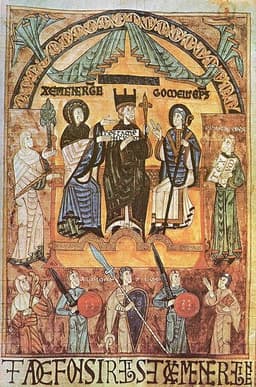
Alfonso III of Asturias
Emperor · Medieval
54.6Total
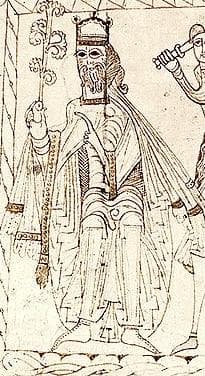
Alfonso VII of Leon
Emperor · Medieval
55.8Total
Basic Information
Born
852
1105
Died
910
1157
Era
Medieval
Medieval
Nationality
Asturias
Leon
Occupation
Emperor
Emperor
Civilization
Western
Western
Score Comparison
Military (10%)
70.0
72.5
Political (20%)
48.0
68.0
Influence (20%)
54.9
58.0
Legacy (20%)
47.5
48.3
Leadership (15%)
64.0
40.0
Strategy (15%)
52.5
57.5
TOTAL
54.6
55.8
Alfonso III of Asturias — Complete Timeline
868 AD
Expansion to the Duero RiverWar◆ Major
Alfonso III led military campaigns that pushed the Asturian frontier south to the Duero River, capturing key fortresses such as Zamora and Toro. This expansion doubled the size of the kingdom and established a defensible border against the Emirate of Cordoba.
ReconquistaTerritorial ExpansionDuero
Impact: regionalconstructive
870 AD
Repopulation of Braga and PortoReform◆ Major
Alfonso III ordered the repopulation of the abandoned cities of Braga and Porto in northern Portugal, granting land and privileges to settlers from Galicia and Asturias. This initiative strengthened Christian control over the region and laid the groundwork for the future Kingdom of Portugal.
RepopulationPortugalSettlement
Impact: regionalconstructive
883 AD
Chronicle of Alfonso IIICultural◆ Major
Alfonso III commissioned the Chronicle of Alfonso III, a historical work that chronicled the kings of Asturias from Pelagius to his own reign. The chronicle served as a foundational text for Asturian and Leonese historiography, shaping the narrative of the Reconquista.
ChronicleHistoriographyReconquista
Impact: regionalconstructive
910 AD
Deposition by SonsPolitical Action◆ Major
Alfonso III was deposed by his three sons, Garcia, Ordo
DepositionDivision of KingdomSuccession Crisis
Impact: nationaltragic
Alfonso VII of Leon — Complete Timeline
1135 AD
Coronation as Emperor of All SpainPolitical Action◆ Major
Alfonso VII was crowned Emperor of All Spain in the Cathedral of Leon, claiming imperial authority over all Christian and Muslim rulers in the Iberian Peninsula. This coronation asserted Leon's supremacy over Castile, Aragon, and Navarre.
CoronationImperial TitleLeon
Impact: regionalconstructive
1147 AD
Conquest of AlmeriaWar◆ Major
Alfonso VII led a coalition of Leon, Castile, Genoese, and Pisan forces to capture the wealthy Moorish port city of Almeria. The conquest opened the Mediterranean to Christian trade and was a major victory in the Reconquista.
ReconquistaConquestAlmeria
Impact: regionalconstructive
1151 AD
Treaty of TudejénPolitical Action
Alfonso VII signed the Treaty of Tudej
TreatyReconquistaPartition
Impact: regionalconstructive
1157 AD
Death and Division of the KingdomPolitical Action◆ Major
Alfonso VII died, dividing his kingdom between his sons: Sancho III received Castile and Ferdinand II received Leon. This division reversed the union achieved by his father and weakened Christian power in Iberia.
SuccessionDivisionLeonCastile
Impact: regionaldestructive
This comparison has not been analyzed yet.
One-time AI generation (~1 minute). Scores and timeline are already available below.
Rankings
🥇
Alfonso VII of LeonLeader
Mil: 72.5Pol: 68.0Inf: 58.0
55.8
🥈
Alfonso III of Asturias
Mil: 70.0Pol: 48.0Inf: 54.9
54.6
+1.2 behind
How This Comparison Works
Algorithm
Each figure is scored on 6 dimensions (0—100 scale) based on structured historical data: Military (10%), Political (20%), Influence (20%), Legacy (20%), Leadership (15%), Strategy (15%). The weighted total produces the final ranking.
Data Sources
Scores are computed from structured sub-indicators in the database. Scale factors adjust for era (Ancient ×0.85, Modern ×1.0) and civilization size (Eastern ×1.05, Other ×0.80) to account for differences in population and military scale.
Maximum 3 Figures
Comparisons are limited to 2—3 figures to ensure readability and statistical meaningfulness.
Error Margins
±5 points per dimension — Sub-scores are derived from historical records with inherent uncertainty. Two figures within 5 points on a dimension should be considered roughly equivalent in that area.
Total Score Accuracy
±3 points overall — The weighted combination of 6 dimensions produces a total score with approximately ±3 points of uncertainty. Differences of less than 3 points are not statistically significant— the figures are effectively tied.
Known Limitations
- Historical records are incomplete and uneven across civilizations
- Figures from oral-tradition societies may be underrepresented
- Occupation labels can misclassify multi-role figures
- Scores measure capability and impact, not moral character
- Quantitative scoring is a comparison tool, not absolute truth
Capability Radar
Military (10%) — Battles & Warfare
Battles
55
55
Win Rate
60
60
Expansion
70
65
Political (20%) — Governance & Reform
Reform
45
50
Diplomacy
50
60
Economy
40
45
Influence (20%) — Cultural & Global Reach
Cultural
40
45
Global
30
35
Legacy (20%) — Historical Impact
Historical
50
50
Longevity
35
40
Leadership (15%) — Power & Stability
Tenure
65
65
Stability
30
50
Strategy (15%) — Tactics & Innovation
Strategy
65
55
Tactics
50
50
Reform
40
40
Similar Comparisons
Comments & Discussion
No comments yet. Be the first to share your thoughts!