Loading...
This comparison has not been analyzed yet.
One-time AI generation (~1 minute). Scores and timeline are already available below.
Alfonso VI of Leon vs Qutuz
Qutuz leads by 2.2 pts · 2 figures compared
…
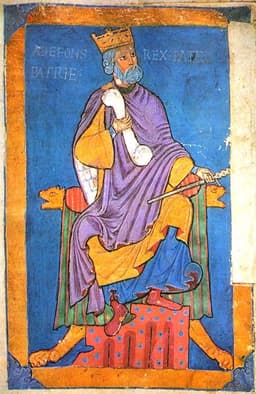
Alfonso VI of Leon
Emperor · Medieval
60.2Total
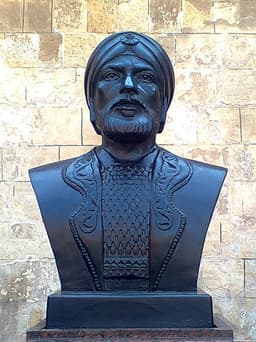
Qutuz
Emperor · Medieval
62.4Total
Basic Information
Born
1040
1220
Died
1109
1260
Era
Medieval
Medieval
Nationality
Leon
Egypt
Occupation
Emperor
Emperor
Civilization
Western
Middle Eastern
Score Comparison
Military (10%)
65.0
82.0
Political (20%)
45.0
68.0
Influence (20%)
62.0
55.0
Legacy (20%)
56.0
55.0
Leadership (15%)
72.0
64.0
Strategy (15%)
66.3
68.5
TOTAL
60.2
62.4
Alfonso VI of Leon — Complete Timeline
1077 AD
Title of 'Emperor of Spain'Political Action◆ Major
Alfonso VI claimed the title 'Imperator totius Hispaniae' (Emperor of all Spain) in 1077, asserting his supremacy over other Christian rulers. This title was used in diplomatic correspondence and reflected his ambition to unify Iberia.
Medieval IberiaImperial TitleHegemony
Impact: regional
1085 AD
Capture of ToledoWar◆ Major
Alfonso VI captured the city of Toledo from the Taifa of Toledo in May 1085. This was a major victory in the Reconquista, as Toledo was a historic capital of the Visigothic kingdom and a cultural center of Islamic Iberia.
ReconquistaToledoConquest
Impact: regionalconstructive
1086 AD
Battle of SagrajasWar◆ Major
Alfonso VI was defeated by the Almoravid army under Yusuf ibn Tashfin at the Battle of Sagrajas (Zallaqa). This defeat halted Christian expansion and forced Alfonso to seek help from other Christian kingdoms, marking a turning point in the Reconquista.
ReconquistaBattleAlmoravid
Impact: regionaltragic
1091 AD
Marriage to ZaidaPolitical Action
Alfonso VI married Zaida, a Muslim princess from Seville, who converted to Christianity and took the name Isabel. This marriage was a political alliance to secure peace with the Taifa of Seville and strengthen his position against the Almoravids.
Medieval IberiaMarriage AllianceDiplomacy
Impact: regional
Qutuz — Complete Timeline
1257 AD
Regency for Al-Mansur Ali (1257-1259)Political Action◆ Major
After Aybak's murder, Qutuz became regent for Aybak's young son Al-Mansur Ali. He effectively ruled Egypt as the power behind the throne. This period saw the consolidation of Mamluk power and preparation for the Mongol threat.
RegencyMamluk SultanatePower Consolidation
Impact: regional
1259 AD
Accession as Sultan (1259)Political Action◆ Major
Qutuz deposed Al-Mansur Ali and proclaimed himself Sultan of Egypt. He justified this by the need for strong leadership against the impending Mongol invasion. His accession was accepted by the Mamluk commanders, uniting Egypt under his rule.
SuccessionMamluk SultanateMongol Threat
Impact: regional
1260 AD
Battle of Ain Jalut (1260)War
Qutuz led the Mamluk army to victory against the Mongols at Ain Jalut in Palestine. This was the first major defeat of the Mongol Empire. The battle halted Mongol expansion into the Middle East and secured Mamluk control over Syria.
Mongol InvasionBattleMamluk Victory
Impact: globalconstructive
Assassination of Qutuz (1260)Other◆ Major
Shortly after the victory at Ain Jalut, Qutuz was assassinated by Baybars and other Mamluk commanders during a hunting expedition. Baybars then seized the sultanate. Qutuz's death ended his brief but decisive reign and elevated Baybars to power.
AssassinationSuccessionMamluk Sultanate
Impact: regionaltragic
This comparison has not been analyzed yet.
One-time AI generation (~1 minute). Scores and timeline are already available below.
Rankings
🥇
QutuzLeader
Mil: 82.0Pol: 68.0Inf: 55.0
62.4
🥈
Alfonso VI of Leon
Mil: 65.0Pol: 45.0Inf: 62.0
60.2
+2.2 behind
How This Comparison Works
Algorithm
Each figure is scored on 6 dimensions (0—100 scale) based on structured historical data: Military (10%), Political (20%), Influence (20%), Legacy (20%), Leadership (15%), Strategy (15%). The weighted total produces the final ranking.
Data Sources
Scores are computed from structured sub-indicators in the database. Scale factors adjust for era (Ancient ×0.85, Modern ×1.0) and civilization size (Eastern ×1.05, Other ×0.80) to account for differences in population and military scale.
Maximum 3 Figures
Comparisons are limited to 2—3 figures to ensure readability and statistical meaningfulness.
Error Margins
±5 points per dimension — Sub-scores are derived from historical records with inherent uncertainty. Two figures within 5 points on a dimension should be considered roughly equivalent in that area.
Total Score Accuracy
±3 points overall — The weighted combination of 6 dimensions produces a total score with approximately ±3 points of uncertainty. Differences of less than 3 points are not statistically significant— the figures are effectively tied.
Known Limitations
- Historical records are incomplete and uneven across civilizations
- Figures from oral-tradition societies may be underrepresented
- Occupation labels can misclassify multi-role figures
- Scores measure capability and impact, not moral character
- Quantitative scoring is a comparison tool, not absolute truth
Capability Radar
Military (10%) — Battles & Warfare
Battles
65
75
Win Rate
60
80
Expansion
70
70
Political (20%) — Governance & Reform
Reform
65
50
Diplomacy
70
70
Economy
60
55
Influence (20%) — Cultural & Global Reach
Cultural
60
60
Global
50
70
Legacy (20%) — Historical Impact
Historical
65
75
Longevity
55
65
Leadership (15%) — Power & Stability
Tenure
75
45
Stability
55
50
Strategy (15%) — Tactics & Innovation
Strategy
70
82
Tactics
55
85
Reform
50
60
Similar Comparisons
Comments & Discussion
No comments yet. Be the first to share your thoughts!