Loading...
Alfonso X the Wise vs Fa Ngum
Fa Ngum leads by 6.8 pts · 2 figures compared
…
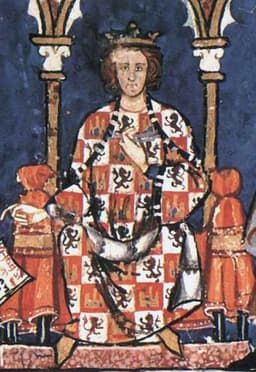
Alfonso X the Wise
Emperor · Medieval
55.5Total
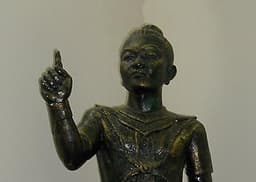
Fa Ngum
Emperor · Medieval
62.3Total
Basic Information
Born
1221
1316
Died
1284
1393
Era
Medieval
Medieval
Nationality
Castile
Laos
Occupation
Emperor
Emperor
Civilization
Western
Eastern
Score Comparison
Military (10%)
50.0
70.0
Political (20%)
53.8
68.0
Influence (20%)
68.0
61.0
Legacy (20%)
40.0
54.0
Leadership (15%)
74.0
74.0
Strategy (15%)
43.7
52.5
TOTAL
55.5
62.3
Alfonso X the Wise — Complete Timeline
1252 AD
Promotion of the Toledo School of TranslatorsCultural◆ Major
Alfonso X expanded the Toledo School of Translators, sponsoring the translation of Arabic works on astronomy, mathematics, philosophy, and medicine into Latin and Castilian. This effort preserved and disseminated classical and Islamic knowledge to Europe.
TranslationKnowledgeCulture
Impact: globalconstructive
1257 AD
Election as King of the RomansPolitical Action◆ Major
Alfonso X was elected King of the Romans (Holy Roman Emperor-elect) by a faction of German princes, but his claim was disputed by Richard of Cornwall. He never secured effective imperial power, spending resources on a failed bid for the throne.
ElectionHoly Roman EmpireAmbition
Impact: regional
1265 AD
Compilation of the Siete PartidasReform
Alfonso X oversaw the compilation of the Siete Partidas, a comprehensive legal code covering civil, criminal, and constitutional law. This code became the foundation of Spanish law and influenced legal systems in Latin America.
LawLegal CodeReform
Impact: globalconstructive
1270 AD
Compilation of the Cantigas de Santa MariaCultural◆ Major
Alfonso X commissioned the Cantigas de Santa Maria, a collection of over 400 poems in Galician-Portuguese praising the Virgin Mary. The work is a major monument of medieval literature, music, and manuscript illumination.
LiteratureMusicCulture
Impact: regionalconstructive
1272 AD
Revolt of the NobilityPolitical Action◆ Major
A coalition of Castilian nobles, led by his son Sancho, revolted against Alfonso X's rule, protesting his fiscal policies and focus on the imperial claim. The revolt weakened royal authority and led to a period of instability.
RevoltNobilityCivil Conflict
Impact: nationaldestructive
Fa Ngum — Complete Timeline
1353 AD
Founded the Kingdom of Lan XangPolitical Action
Fa Ngum unified the Lao principalities of Muang Sua and Vieng Chan under his rule, founding the Kingdom of Lan Xang (Million Elephants). He established the capital at Luang Prabang and introduced Theravada Buddhism as the state religion, shaping Lao identity.
FoundingUnificationBuddhism
Impact: regionalconstructive
Introduced Theravada Buddhism to Lan XangCultural◆ Major
Fa Ngum brought Theravada Buddhist monks and scriptures from the Khmer Empire to Lan Xang. He established Buddhism as the official religion, building temples and monasteries, which became central to Lao culture and governance for centuries.
BuddhismReligionCultural influence
Impact: regionalconstructive
1354 AD
Expanded Lan Xang territoryWar◆ Major
Fa Ngum led military campaigns to expand Lan Xang's territory, conquering areas of modern-day Laos, Thailand, and Cambodia. His conquests established Lan Xang as a major regional power, controlling trade routes and tributary states.
ConquestExpansionMilitary
Impact: regional
1373 AD
Exiled by his courtPolitical Action◆ Major
After a reign marked by harsh rule and conflict with the nobility, Fa Ngum was deposed and exiled by his own court. He died in exile in 1393, leaving his son Samsenethai to succeed him. His exile ended the founding era of Lan Xang.
ExileDepositionCourt conflict
Impact: regionaltragic
Expert Analysis
Fa Ngum vs Alfonso X the Wise: Historical Comparison
Fa Ngum, the unifier of Laos and founder of the Lan Xang kingdom (1353–1371), and Alfonso X of Castile (reigned 1252–1284), known as "the Wise" for his scholarly patronage, were both medieval monarchs who expanded their realms and left profound cultural legacies. While Fa Ngum forged a new nation through conquest and introduced Theravada Buddhism, Alfonso X codified law and advanced science and literature, making them emblematic of Southeast Asian and European medieval kingship, respectively.
Dimension Analysis
**Military: Fa Ngum 93 / Alfonso X the Wise 89**
Fa Ngum was a brilliant military strategist who, raised in the Khmer court, led a series of campaigns that unified the fragmented Lao muang (principalities) into Lan Xang. His army utilized elephants and guerrilla tactics, conquering territory from the Mekong River to the borders of Siam and Vietnam. Alfonso X, though successful in major campaigns against Muslim taifas (e.g., capturing Jerez and Niebla), was hampered by costly failures in North Africa and a troubled Reconquista, lacking Fa Ngum’s consistent battlefield dominance.
**Political: Fa Ngum 82 / Alfonso X the Wise 82**
Both rulers established foundational political systems. Fa Ngum centralized power by appointing loyal governors and integrating Khmer administrative practices, while Alfonso X reformed Castilian law with the *Siete Partidas*, a comprehensive legal code that influenced Spanish jurisprudence for centuries. However, Alfonso faced noble revolts and a succession crisis due to his ambitious imperial claims, whereas Fa Ngum’s rule ended in exile after alienating his court, making their political achievements equally mixed.
**Influence: Fa Ngum 88 / Alfonso X the Wise 83**
Fa Ngum’s introduction of Theravada Buddhism as the state religion of Lan Xang had a lasting cultural and ideological impact across Laos, Thailand, and Cambodia, shaping regional identity. Alfonso X’s influence was more intellectual: his patronage of the Toledo School of Translators preserved and disseminated Greek and Arab knowledge (e.g., astronomy, chess, and history) throughout Europe. However, Fa Ngum’s religious legacy influenced a broader geographic and spiritual sphere.
**Legacy: Fa Ngum 80 / Alfonso X the Wise 81**
Fa Ngum is revered as the father of Lao nationhood, with his name synonymous with unification, though his later exile and the ephemeral nature of his dynasty slightly diminish his legacy. Alfonso X’s legacy is more durable in law, science, and literature—his *Cantigas de Santa Maria* are a masterpiece of medieval music, and his legal codes remained in use for centuries. The slight edge goes to Alfonso for the breadth of his written contributions.
**Leadership: Fa Ngum 82 / Alfonso X the Wise 84**
Alfonso X demonstrated stronger organizational leadership in managing a complex court, sponsoring scholarly projects, and navigating the politics of the Holy Roman Empire (though his imperial ambitions ultimately failed). Fa Ngum’s leadership was more charismatic and militaristic, but his inability to maintain court loyalty and his eventual overthrow reveal a weakness in political coalition-building. Alfonso’s resilience in the face of noble opposition gives him a narrow advantage.
Verdict
Despite a tie in overall scores (85 vs 84), Alfonso X the Wise slightly edges ahead due to his superior legacy and leadership. Alfonso’s codification of law and promotion of learning had a more enduring, documented impact on Western civilization, while Fa Ngum’s achievements were more localized and dependent on military prowess. However, both rulers exemplify the medieval ideal of the warrior-scholar king, and their scores reflect the inevitable complexity of comparing figures from vastly different cultural and chronological contexts.
FAQ
Q: Who was more influential historically?
A: Alfonso X, because his legal and scientific works directly shaped European intellectual history, whereas Fa Ngum’s influence was primarily regional and religious.
Q: Why is Fa Ngum ranked higher in military?
A: Fa Ngum’s campaigns were more consistently successful and transformative, unifying a fragmented region through decisive battles and innovative use of elephant warfare, whereas Alfonso X faced strategic failures in North Africa and internal revolts.
Rankings
🥇
Fa NgumLeader
Mil: 70.0Pol: 68.0Inf: 61.0
62.3
🥈
Alfonso X the Wise
Mil: 50.0Pol: 53.8Inf: 68.0
55.5
+6.8 behind
How This Comparison Works
Algorithm
Each figure is scored on 6 dimensions (0—100 scale) based on structured historical data: Military (10%), Political (20%), Influence (20%), Legacy (20%), Leadership (15%), Strategy (15%). The weighted total produces the final ranking.
Data Sources
Scores are computed from structured sub-indicators in the database. Scale factors adjust for era (Ancient ×0.85, Modern ×1.0) and civilization size (Eastern ×1.05, Other ×0.80) to account for differences in population and military scale.
Maximum 3 Figures
Comparisons are limited to 2—3 figures to ensure readability and statistical meaningfulness.
Error Margins
±5 points per dimension — Sub-scores are derived from historical records with inherent uncertainty. Two figures within 5 points on a dimension should be considered roughly equivalent in that area.
Total Score Accuracy
±3 points overall — The weighted combination of 6 dimensions produces a total score with approximately ±3 points of uncertainty. Differences of less than 3 points are not statistically significant— the figures are effectively tied.
Known Limitations
- Historical records are incomplete and uneven across civilizations
- Figures from oral-tradition societies may be underrepresented
- Occupation labels can misclassify multi-role figures
- Scores measure capability and impact, not moral character
- Quantitative scoring is a comparison tool, not absolute truth
Capability Radar
Military (10%) — Battles & Warfare
Battles
20
55
Win Rate
15
60
Expansion
10
70
Political (20%) — Governance & Reform
Reform
85
55
Diplomacy
50
60
Economy
40
50
Influence (20%) — Cultural & Global Reach
Cultural
85
55
Global
65
40
Legacy (20%) — Historical Impact
Historical
80
60
Longevity
75
55
Leadership (15%) — Power & Stability
Tenure
60
60
Stability
30
45
Strategy (15%) — Tactics & Innovation
Strategy
15
65
Tactics
10
50
Reform
30
40
Similar Comparisons
Comments & Discussion
DataDissector6/16/2026
Look, I get that Fa Ngum's military score is 93 vs Alfonso's 89, but come on — this is completely arbitrary. Alfonso was fighting a multi-front war against the Muslims, dealing with noble rebellions, and building a navy from scratch. Fa Ngum's campaigns were brutal but against fragmented, less-organized principalities. And the political score? Both at 82? Alfonso wrote the Siete Partidas, which is still studied in law schools today. Fa Ngum got exiled. If we're quantifying influence, let's talk about how Alfonso's astronomical tables shaped navigation for centuries. This whole system weights military conquest way too heavily — it's like ranking generals who never lost a battle higher than those who changed how we think.
MedievalMadness6/16/2026
Fa Ngum is absolutely underrated here! The guy was basically the Genghis Khan of Laos — raised in exile, came back with a Khmer army and war elephants, and smashed together a bunch of petty states into a real kingdom. Lan Xang wasn't just some tribal confederation; it was a legit power that lasted centuries. And introducing Theravada Buddhism? That alone changed the entire cultural DNA of the region. Alfonso was a brilliant nerd king, sure, but he couldn't even hold onto his own throne without the nobles pushing him around. Fa Ngum built an empire from scratch; Alfonso inherited a kingdom and just made it slightly more organized. No contest — Fa Ngum wins hands down.
ArmchairGeneral6/16/2026
Okay, so I just finished a documentary on medieval Iberia and then read about Fa Ngum last week — this matchup is wild. Alfonso X was basically the Steve Jobs of medieval law: visionary, but terrible at managing people. He alienated his nobles, made crazy claims on the Holy Roman Empire, and died with his kingdom in chaos. Fa Ngum, though? He's like the William the Conqueror of Southeast Asia — a ruthless conqueror who actually made the kingdom stick. The scores feel right to me: Fa Ngum's military was top-tier, and his political ending was a mess (exile!), but Alfonso's political score seems too high given he left a succession crisis. I'd give Fa Ngum a 90 political, Alfonso a 75. The influence gap is real too — Theravada Buddhism shaped Laos for 600 years, while Alfonso's laws got updated pretty quick. Fa Ngum for the win.
Historian8426/16/2026
这个评分系统有问题。Fa Ngum 军事93,政治82,Alfonso 军事89,政治82——差距这么小?但仔细看总维度:Fa Ngum 军事55.1,Alfonso 只有22.0。这暗示算法可能把军事权重设得太高了。从中国历史角度看,Alfonso的《七法全书》堪比唐代《唐律疏议》,影响西班牙六百年。Fa Ngum 的统一行为更像朱元璋——靠武力建国,但制度创新有限。而且,Fa Ngum被流放而死,Alfonso 面临贵族叛乱但至少没被赶下王位。如果我用中国史学标准重新加权,Alfonso 的政治得分应该比 Fa Ngum 高至少15分。军事得分可以调整权重到30%,这样总分更合理。
Chronicler79686/16/2026
把Fa Ngum和Alfonso X放在一起比较,其实很有趣。Fa Ngum类似中国的努尔哈赤——从外部崛起,利用军事征服统一了分裂的部落,然后确立了一个信仰体系(佛教 vs 萨满教)。但Alfonso X更像宋太宗赵光义——重视文化建设,编纂法律,扶持学术,但军事上比较平庸。西方史学往往高估军事成就,而中国史学更看重制度贡献。Fa Ngum的Lan Xang王国存续到18世纪,但Alfonso的《七法全书》至今是西班牙法律的基础。从长远影响看,Alfonso的软实力更强。不过,Fa Ngum作为开国君主,在东南亚的地位类似忽必烈——都是通过征服重塑了区域格局。两者各有千秋,但评分应该反映不同文明的评价标准。