Loading...
Arnulf of Carinthia vs Samuel of Bulgaria
Samuel of Bulgaria leads by 7.6 pts · 2 figures compared
…
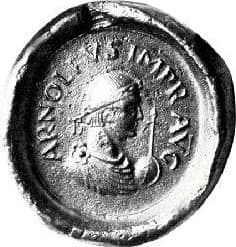
Arnulf of Carinthia
Emperor · Medieval
51.1Total
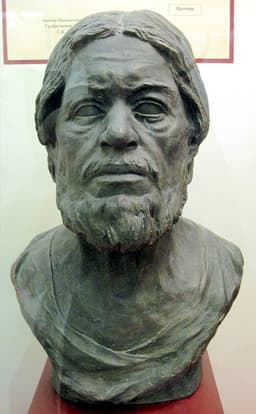
Samuel of Bulgaria
Emperor · Medieval
58.7Total
Basic Information
Born
850
958
Died
899
1014
Era
Medieval
Medieval
Nationality
East Francia
Bulgaria
Occupation
Emperor
Emperor
Civilization
Western
Western
Score Comparison
Military (10%)
20.0
74.7
Political (20%)
46.6
45.0
Influence (20%)
53.3
58.3
Legacy (20%)
46.7
52.0
Leadership (15%)
74.0
66.0
Strategy (15%)
60.0
70.0
TOTAL
51.1
58.7
Arnulf of Carinthia — Complete Timeline
887 AD
Deposition of Charles the FatPolitical Action
Arnulf played a key role in the deposition of his uncle, Charles the Fat, in 887. As the illegitimate son of Carloman, Arnulf was elected King of East Francia by the nobles, ending the unified Carolingian rule and establishing his own dynasty.
DepositionAccessionEast Francia
Impact: regional
891 AD
Battle of the Dyle (891)War◆ Major
Arnulf of Carinthia led an East Frankish army to victory against Viking raiders at the Battle of the Dyle in present-day Belgium. This victory halted Viking incursions into East Francia and demonstrated Arnulf's military capability, boosting his prestige.
BattleVikingsVictory
Impact: regionalconstructive
892 AD
Campaign against the MagyarsWar◆ Major
Arnulf allied with the Magyars (Hungarians) against the Moravian Empire, inviting them into Central Europe. This decision backfired, as the Magyars later turned on East Francia, launching devastating raids. Arnulf's short-term strategy had long-term negative consequences.
AllianceMagyarsRaids
Impact: regionaldestructive
896 AD
Imperial Coronation (896)Cultural◆ Major
Arnulf was crowned Holy Roman Emperor by Pope Formosus on February 22, 896, in Rome. He had marched into Italy to support the pope against rival factions. His coronation was brief, as he suffered a stroke soon after and returned to East Francia.
CoronationEmperorItaly
Impact: regional
899 AD
Death of Arnulf of CarinthiaOther
Arnulf died on December 8, 899, likely from a stroke. He was succeeded by his young son, Louis the Child, whose weak rule led to further fragmentation and vulnerability to Magyar attacks. Arnulf's reign was marked by military successes but also strategic errors.
DeathSuccessionDecline
Impact: regionaltragic
Samuel of Bulgaria — Complete Timeline
986 AD
Battle of the Gates of TrajanWar
Samuel's forces ambushed and defeated a Byzantine army under Emperor Basil II at the Trajan's Gate pass. The victory halted Byzantine expansion into Bulgaria and established Samuel as the dominant power in the Balkans.
Byzantine-Bulgarian WarsBattleAmbush
Impact: regional
997 AD
Coronation as TsarPolitical Action◆ Major
Samuel was crowned Tsar of Bulgaria after the death of his predecessor Roman. He established his capital at Ohrid and ruled over a large territory, continuing resistance against Byzantine conquest.
CoronationOhridBulgarian Empire
Impact: regionalconstructive
1014 AD
Battle of KleidionWar
Emperor Basil II defeated Samuel's army at Kleidion. After the battle, Basil blinded 14,000 Bulgarian prisoners, leaving one in every hundred with one eye to lead them home. Samuel died of shock upon seeing them.
Byzantine-Bulgarian WarsBattleMass Blinding
Impact: regionaltragic
Death after KleidionOther◆ Major
Samuel died of a heart attack reportedly caused by the sight of his blinded soldiers returning from Kleidion. His death marked the end of effective Bulgarian resistance, leading to Byzantine conquest by 1018.
DeathByzantine ConquestEnd of Empire
Impact: regionaltragic
Expert Analysis
Origins
Arnulf of Carinthia was born around 850, the illegitimate son of Carloman, King of Bavaria. His illegitimacy shaped his early life, as he was initially excluded from succession. He grew up in Carinthia (modern Austria/Slovenia), a frontier region exposed to Slavic and Magyar influences. His education was likely practical, focused on military and administrative skills needed to secure his position.
Samuel of Bulgaria was born around 958 into the Cometopuli dynasty, a noble family from the Macedonian region. He was the fourth son of a powerful provincial governor. The First Bulgarian Empire was in decline, having lost much territory to the Byzantine Empire under John I Tzimiskes. Samuel's early life was marked by the Byzantine occupation of Bulgaria's eastern lands, fueling his lifelong resistance.
Rise to Power
Arnulf's rise began in 887 when he led a rebellion against his uncle, Emperor Charles the Fat, who was deposed for incompetence. Arnulf was elected King of East Francia by the nobles, a testament to his political acumen. He consolidated power by defeating rival claimants and securing borders. In 891, he won the Battle of the Dyle against Vikings, enhancing his military reputation. His coronation as Holy Roman Emperor in 896 by Pope Formosus marked his peak, but his authority remained limited to East Francia.
Samuel rose after the death of Emperor John I Tzimiskes in 976. He and his brothers led a revolt against Byzantine rule. Samuel emerged as the sole leader after his brothers died. He crowned himself Tsar in 997 after the death of his predecessor Roman. His capital at Ohrid became the center of a revived Bulgarian state. The Battle of the Gates of Trajan in 986 was his turning point: he ambushed Emperor Basil II's army, using the narrow pass to neutralize Byzantine numerical superiority. This victory solidified his control over the western Balkans.
Leadership & Governance
Arnulf's leadership score of 74.0 reflects his ability to manage a decentralized realm. He relied on alliances with powerful dukes and the Church. He granted lands to supporters and used marriage alliances. However, his invitation of the Magyars as allies against Great Moravia in 892 was a strategic error: the Magyars later ravaged East Francia, leading to instability. His governance was reactive, focused on immediate threats rather than long-term consolidation.
Samuel's leadership score of 66.0 is slightly lower but his strategy score of 70.0 shows more foresight. He centralized the Bulgarian state, building a strong administrative system with Ohrid as a cultural and religious center. He minted coins and promoted the Slavic liturgy. He maintained a mobile army that used terrain to counter Byzantine superiority. However, his governance was undermined by internal rivalries, as the Cometopuli dynasty faced opposition from traditional Bulgarian nobility.
Triumph & Tragedy
Arnulf's greatest success was the Battle of the Dyle in 891, where he crushed Viking raiders, ending their threat to East Francia. He also secured the imperial crown, a symbolic achievement. His greatest failure was the Magyar alliance: the Magyars became a persistent menace after his death. His political score of 46.6 reflects his inability to secure a stable succession; his son Louis the Child was a minor, leading to fragmentation of East Francia.
Samuel's triumph was the Battle of the Gates of Trajan (986), which preserved Bulgarian independence for two decades. He expanded his realm to include much of the Balkans. His tragedy was the Battle of Kleidion in 1014, where Basil II blinded 14,000 prisoners. Samuel died of a heart attack upon seeing them, and his empire collapsed soon after. His military score of 74.7 and strategy score of 70.0 were high, but his political score of 45.0 shows he failed to build lasting institutions.
Character & Destiny
Arnulf was pragmatic and opportunistic, as seen in his rebellion against his uncle and his alliance with the Magyars. He was a capable military commander but lacked strategic vision. His illegitimacy drove him to seek legitimacy through imperial coronation, but his reign was too short to establish a dynasty. He died at age 49, likely from a stroke, leaving a weak successor.
Samuel was resilient and determined, fighting for decades against a superior Byzantine Empire. His decision to blind prisoners after victories, like at the Gates of Trajan, hardened Byzantine resistance. His character was shaped by the loss of his family in the Byzantine wars. His death after Kleidion was a dramatic end, symbolizing the fall of his empire. Historical assessments note his military skill but criticize his inability to adapt to Byzantine siege warfare.
Legacy
Arnulf's legacy is mixed. He is remembered for defeating the Vikings and for the unintended consequences of inviting the Magyars, who shaped Central Europe. His political score of 46.7 reflects his limited impact; East Francia fragmented after his death. He is often overshadowed by his Carolingian predecessors. His influence score of 53.3 is moderate, as his actions contributed to the rise of the Magyars as a European power.
Samuel's legacy is more enduring. He is celebrated as a national hero in Bulgaria and North Macedonia. His capital Ohrid became a cultural center, and the Slavic liturgy he promoted influenced Eastern Orthodox Christianity. His influence score of 58.3 and legacy score of 52.0 are higher than Arnulf's. However, his empire fell, and Byzantine rule was restored for 170 years. His military resistance delayed but did not prevent Byzantine dominance.
Conclusion
Samuel of Bulgaria had a greater impact than Arnulf of Carinthia. His total score of 58.7 vs Arnulf's 51.1 reflects this. Samuel's military and strategy scores were significantly higher (74.7 vs 20.0 and 70.0 vs 60.0). While Arnulf's political score is slightly higher (46.6 vs 45.0), his legacy is overshadowed by his catastrophic Magyar alliance. Samuel's defense of Bulgaria against a stronger enemy for decades and his cultural contributions are more significant. He delayed Byzantine expansion, while Arnulf inadvertently opened Europe to Magyar invasions. Thus, Samuel's impact was more positive and enduring.
Rankings
🥇
Samuel of BulgariaLeader
Mil: 74.7Pol: 45.0Inf: 58.3
58.7
🥈
Arnulf of Carinthia
Mil: 20.0Pol: 46.6Inf: 53.3
51.1
+7.6 behind
How This Comparison Works
Algorithm
Each figure is scored on 6 dimensions (0—100 scale) based on structured historical data: Military (10%), Political (20%), Influence (20%), Legacy (20%), Leadership (15%), Strategy (15%). The weighted total produces the final ranking.
Data Sources
Scores are computed from structured sub-indicators in the database. Scale factors adjust for era (Ancient ×0.85, Modern ×1.0) and civilization size (Eastern ×1.05, Other ×0.80) to account for differences in population and military scale.
Maximum 3 Figures
Comparisons are limited to 2—3 figures to ensure readability and statistical meaningfulness.
Error Margins
±5 points per dimension — Sub-scores are derived from historical records with inherent uncertainty. Two figures within 5 points on a dimension should be considered roughly equivalent in that area.
Total Score Accuracy
±3 points overall — The weighted combination of 6 dimensions produces a total score with approximately ±3 points of uncertainty. Differences of less than 3 points are not statistically significant— the figures are effectively tied.
Known Limitations
- Historical records are incomplete and uneven across civilizations
- Figures from oral-tradition societies may be underrepresented
- Occupation labels can misclassify multi-role figures
- Scores measure capability and impact, not moral character
- Quantitative scoring is a comparison tool, not absolute truth
Capability Radar
Military (10%) — Battles & Warfare
Battles
45
75
Win Rate
40
70
Expansion
40
75
Political (20%) — Governance & Reform
Reform
35
65
Diplomacy
55
70
Economy
40
60
Influence (20%) — Cultural & Global Reach
Cultural
30
65
Global
30
55
Legacy (20%) — Historical Impact
Historical
45
70
Longevity
35
60
Leadership (15%) — Power & Stability
Tenure
60
80
Stability
45
55
Strategy (15%) — Tactics & Innovation
Strategy
55
85
Tactics
50
80
Reform
30
70
Similar Comparisons
Comments & Discussion
No comments yet. Be the first to share your thoughts!