Loading...
Arnulf of Carinthia vs Wanyan Liang
Arnulf of Carinthia leads by 2.0 pts · 2 figures compared
…
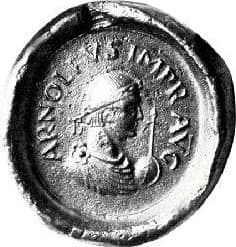
Arnulf of Carinthia
Emperor · Medieval
51.1Total
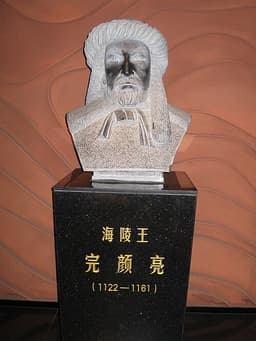
Wanyan Liang
Emperor · Medieval
49.1Total
Basic Information
Born
850
1122
Died
899
1161
Era
Medieval
Medieval
Nationality
East Francia
Jin dynasty
Occupation
Emperor
Emperor
Civilization
Western
Eastern
Score Comparison
Military (10%)
20.0
67.5
Political (20%)
46.6
40.8
Influence (20%)
53.3
51.8
Legacy (20%)
46.7
44.2
Leadership (15%)
74.0
48.4
Strategy (15%)
60.0
50.0
TOTAL
51.1
49.1
Arnulf of Carinthia — Complete Timeline
887 AD
Deposition of Charles the FatPolitical Action
Arnulf played a key role in the deposition of his uncle, Charles the Fat, in 887. As the illegitimate son of Carloman, Arnulf was elected King of East Francia by the nobles, ending the unified Carolingian rule and establishing his own dynasty.
DepositionAccessionEast Francia
Impact: regional
891 AD
Battle of the Dyle (891)War◆ Major
Arnulf of Carinthia led an East Frankish army to victory against Viking raiders at the Battle of the Dyle in present-day Belgium. This victory halted Viking incursions into East Francia and demonstrated Arnulf's military capability, boosting his prestige.
BattleVikingsVictory
Impact: regionalconstructive
892 AD
Campaign against the MagyarsWar◆ Major
Arnulf allied with the Magyars (Hungarians) against the Moravian Empire, inviting them into Central Europe. This decision backfired, as the Magyars later turned on East Francia, launching devastating raids. Arnulf's short-term strategy had long-term negative consequences.
AllianceMagyarsRaids
Impact: regionaldestructive
896 AD
Imperial Coronation (896)Cultural◆ Major
Arnulf was crowned Holy Roman Emperor by Pope Formosus on February 22, 896, in Rome. He had marched into Italy to support the pope against rival factions. His coronation was brief, as he suffered a stroke soon after and returned to East Francia.
CoronationEmperorItaly
Impact: regional
899 AD
Death of Arnulf of CarinthiaOther
Arnulf died on December 8, 899, likely from a stroke. He was succeeded by his young son, Louis the Child, whose weak rule led to further fragmentation and vulnerability to Magyar attacks. Arnulf's reign was marked by military successes but also strategic errors.
DeathSuccessionDecline
Impact: regionaltragic
Wanyan Liang — Complete Timeline
1150 AD
Usurped the thronePolitical Action◆ Major
Wanyan Liang assassinated his cousin Emperor Wanyan Dan and declared himself emperor. He purged many members of the imperial clan and their supporters to consolidate his rule, establishing a reign of terror.
UsurpationAssassinationPurge
Impact: nationaldestructive
1153 AD
Moved the capital to ZhongduPolitical Action◆ Major
Wanyan Liang ordered the relocation of the Jin capital from Shangjing (Harbin) to Zhongdu (Beijing). He constructed a new palace complex and moved the imperial court south to better control the conquered Chinese territories.
Capital moveZhongduBeijing
Impact: nationalconstructive
1161 AD
Invasion of the Southern SongWar◆ Major
Wanyan Liang launched a massive invasion of the Southern Song dynasty with a large army and navy. The campaign failed after the Jin fleet was defeated at the Battle of Caishi on the Yangtze River.
InvasionSong-Jin warBattle of Caishi
Impact: regionaldestructive
Killed by his own officersWar◆ Major
After the failure of the Southern Song invasion, Wanyan Liang's own generals mutinied and assassinated him at his camp. His death ended the war and led to a reversal of his policies by his successor Wanyan Yong.
AssassinationMutinyEnd of reign
Impact: nationaltragic
Expert Analysis
Origins
Arnulf of Carinthia was born around 850, the illegitimate son of Carloman, King of East Francia. His birth status limited his early prospects, but he was raised in the Carolingian court and learned military and political skills. Carinthia, a march in the southeast, provided his power base.
Wanyan Liang was born in 1122, a prince of the Jin dynasty, descended from the Jurchen chieftain Wanyan Aguda. He was well-educated in Chinese classics and military strategy, but his path to power was blocked by his cousin, Emperor Wanyan Dan.
Rise to Power
Arnulf's rise began in 887 when he led a rebellion against his uncle, Emperor Charles the Fat, who had failed to defend against Viking raids. Arnulf was elected King of East Francia by the nobles, deposing Charles. He consolidated control over the eastern kingdom, facing challenges from other Carolingian claimants.
Wanyan Liang rose by assassination. In 1150, he killed his cousin Emperor Wanyan Dan and usurped the throne. He then purged thousands of imperial clan members and officials to secure his rule. He moved the capital from Shangjing to Zhongdu (Beijing) in 1153, centralizing power and Sinicizing the Jurchen elite.
Leadership & Governance
Arnulf's leadership was pragmatic and defensive. He focused on protecting East Francia from external threats. He won the Battle of the Dyle (891) against Vikings, using a well-organized cavalry. However, he allied with the Magyars against the Moravian Empire, inviting them into Central Europe, a decision that led to devastating raids after his death. His governance relied on noble support, and he was crowned Emperor by Pope Formosus in 896, but his rule was limited to Italy and Germany.
Wanyan Liang was an ambitious centralizer. He moved the capital to Beijing, built a new palace, and promoted Chinese administrative practices. He forced Jurchen nobles to relocate and adopt Chinese customs, weakening tribal identities. His military score of 67.5 reflects his aggressive strategy, but his political score of 40.8 shows his failure to secure loyalty. His invasion of the Southern Song in 1161 was a massive logistical effort, but poor planning and a naval defeat at the Battle of Caishi led to disaster.
Triumph & Tragedy
Arnulf's greatest success was the Battle of the Dyle (891), where he defeated Viking raiders, securing his reputation as a defender of Christendom. He also achieved the Imperial Coronation in 896. His greatest failure was inviting the Magyars, who after his death ravaged East Francia, leading to the collapse of Carolingian power in the east. His son Louis the Child was too young to rule effectively.
Wanyan Liang's triumph was the relocation of the capital, which transformed Beijing into a major political center. His tragedy was the failed Southern Song invasion, where his army mutinied and killed him. His ambitions overreached, and his death led to a reversal of his policies, with the Jin reverting to a more defensive posture.
Character & Destiny
Arnulf was a capable military leader but short-sighted in diplomacy. His decision to ally with the Magyars showed a focus on immediate gains over long-term stability. He was pragmatic but not visionary. Historical assessments note his role in ending the Carolingian unity but also his failure to secure a stable succession.
Wanyan Liang was ruthless and ambitious, but his paranoia and brutality alienated his supporters. He scored 48.4 in leadership, indicating his inability to command loyalty. His character—driven by a desire for glory and Sinicization—led to his downfall. He is often compared to the First Emperor of Qin for his centralized reforms but criticized for his cruelty.
Legacy
Arnulf's legacy is mixed: he defended East Francia but inadvertently caused the Magyar invasions. His reign marked the transition from Carolingian to Ottonian rule. He is remembered as a king who fought Vikings but failed against the Magyars. His total score of 51.1 reflects this balance.
Wanyan Liang's legacy is more controversial. He moved the capital to Beijing, a decision with lasting impact, but his invasion failure and assassination weakened the Jin. His Sinicization policies were reversed by his successor. He scored 49.1 total, lower due to political instability. His influence score of 51.8 is similar to Arnulf's 53.3, but his legacy score of 44.2 is lower.
Conclusion
Arnulf of Carinthia had a greater impact than Wanyan Liang. Despite a lower military score (20.0 vs 67.5), Arnulf's political and leadership scores (46.6, 74.0) outshine Wanyan Liang's (40.8, 48.4). Arnulf's defense against Vikings and his role in the Carolingian succession shaped medieval Europe, while Wanyan Liang's failures undermined his own achievements. The total score gap of 2.0 points, while small, reflects Arnulf's more enduring, albeit flawed, legacy. Wanyan Liang's ambition led to collapse, while Arnulf's pragmatism, though short-sighted, preserved East Francia for a generation. Thus, Arnulf's influence on European history surpasses Wanyan Liang's on East Asian history.
Rankings
🥇
Arnulf of CarinthiaLeader
Mil: 20.0Pol: 46.6Inf: 53.3
51.1
🥈
Wanyan Liang
Mil: 67.5Pol: 40.8Inf: 51.8
49.1
+2.0 behind
How This Comparison Works
Algorithm
Each figure is scored on 6 dimensions (0—100 scale) based on structured historical data: Military (10%), Political (20%), Influence (20%), Legacy (20%), Leadership (15%), Strategy (15%). The weighted total produces the final ranking.
Data Sources
Scores are computed from structured sub-indicators in the database. Scale factors adjust for era (Ancient ×0.85, Modern ×1.0) and civilization size (Eastern ×1.05, Other ×0.80) to account for differences in population and military scale.
Maximum 3 Figures
Comparisons are limited to 2—3 figures to ensure readability and statistical meaningfulness.
Error Margins
±5 points per dimension — Sub-scores are derived from historical records with inherent uncertainty. Two figures within 5 points on a dimension should be considered roughly equivalent in that area.
Total Score Accuracy
±3 points overall — The weighted combination of 6 dimensions produces a total score with approximately ±3 points of uncertainty. Differences of less than 3 points are not statistically significant— the figures are effectively tied.
Known Limitations
- Historical records are incomplete and uneven across civilizations
- Figures from oral-tradition societies may be underrepresented
- Occupation labels can misclassify multi-role figures
- Scores measure capability and impact, not moral character
- Quantitative scoring is a comparison tool, not absolute truth
Capability Radar
Military (10%) — Battles & Warfare
Battles
45
65
Win Rate
40
55
Expansion
40
70
Political (20%) — Governance & Reform
Reform
35
45
Diplomacy
55
30
Economy
40
35
Influence (20%) — Cultural & Global Reach
Cultural
30
30
Global
30
20
Legacy (20%) — Historical Impact
Historical
45
40
Longevity
35
25
Leadership (15%) — Power & Stability
Tenure
60
40
Stability
45
20
Strategy (15%) — Tactics & Innovation
Strategy
55
55
Tactics
50
60
Reform
30
50
Similar Comparisons
Comments & Discussion
No comments yet. Be the first to share your thoughts!