Loading...
This comparison has not been analyzed yet.
One-time AI generation (~1 minute). Scores and timeline are already available below.
Asparukh of Bulgaria vs Nikephoros I
Asparukh of Bulgaria leads by 0.7 pts · 2 figures compared
…
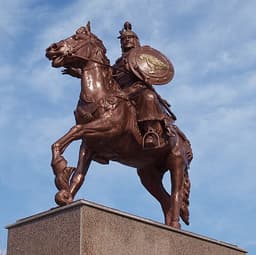
Asparukh of Bulgaria
Emperor · Medieval
55.2Total
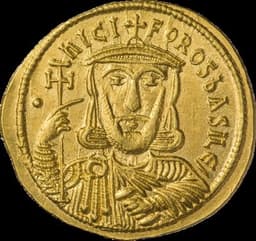
Nikephoros I
Emperor · Medieval
54.5Total
Basic Information
Born
640
750
Died
701
811
Era
Medieval
Medieval
Nationality
Bulgaria
Byzantine Empire
Occupation
Emperor
Emperor
Civilization
Western
Western
Score Comparison
Military (10%)
61.7
45.0
Political (20%)
53.8
62.7
Influence (20%)
55.0
51.8
Legacy (20%)
55.0
45.0
Leadership (15%)
53.2
74.0
Strategy (15%)
55.0
52.5
TOTAL
55.2
54.5
Asparukh of Bulgaria — Complete Timeline
680 AD
Battle of OngalWar◆ Major
Asparukh's Bulgar forces defeated the Byzantine army of Emperor Constantine IV at the Battle of Ongal in the Danube delta. This victory allowed the Bulgars to settle permanently south of the Danube and establish their state.
BattleByzantine-Bulgar WarsFounding
Impact: regional
681 AD
Founding of the First Bulgarian EmpirePolitical Action
Asparukh led the Bulgar tribes across the Danube River and established the First Bulgarian Empire in the territory of modern-day Bulgaria. He defeated Byzantine forces and secured recognition of the new state through a treaty with Emperor Constantine IV.
FoundingBulgarian EmpireMigration
Impact: regionalconstructive
Treaty with the Byzantine Empire (681)Political Action◆ Major
Asparukh negotiated a peace treaty with the Byzantine Empire that recognized the First Bulgarian Empire as an independent state. The treaty also established a tribute payment from Byzantium to Bulgaria.
TreatyByzantine-Bulgar RelationsFounding
Impact: regionalconstructive
Nikephoros I — Complete Timeline
802 AD
Financial Reforms (802-811)Reform◆ Major
Nikephoros I implemented fiscal reforms to replenish the treasury depleted by Irene. He increased taxes, reorganized the tax system, and imposed new levies on the church and monasteries. These measures strengthened the state finances but caused resentment.
TaxationFiscal PolicyAdministration
Impact: regional
Accession as Emperor (802)Political Action◆ Major
Nikephoros I overthrew Empress Irene in a palace coup. As a former logothete (finance minister), he was experienced in administration. His accession marked a shift from the iconoclast policies of previous emperors.
CoupAccession
Impact: regional
811 AD
Campaign against the Bulgars (811)War◆ Major
Nikephoros I led a large expedition against the Bulgarian Khan Krum. Initially successful, he captured the Bulgarian capital Pliska and plundered it. However, the campaign ended in disaster when the Byzantine army was ambushed in a mountain pass.
Byzantine-Bulgarian WarsMilitary Campaign
Impact: regionaltragic
Death at the Battle of Pliska (811)War
Nikephoros I was killed in the Battle of Pliska, where the Byzantine army was annihilated by the Bulgars. His skull was reportedly made into a drinking cup by Khan Krum. This was one of the worst Byzantine military defeats.
BattleDeathDefeat
Impact: regionaltragic
This comparison has not been analyzed yet.
One-time AI generation (~1 minute). Scores and timeline are already available below.
Rankings
🥇
Asparukh of BulgariaLeader
Mil: 61.7Pol: 53.8Inf: 55.0
55.2
🥈
Nikephoros I
Mil: 45.0Pol: 62.7Inf: 51.8
54.5
+0.7 behind
How This Comparison Works
Algorithm
Each figure is scored on 6 dimensions (0—100 scale) based on structured historical data: Military (10%), Political (20%), Influence (20%), Legacy (20%), Leadership (15%), Strategy (15%). The weighted total produces the final ranking.
Data Sources
Scores are computed from structured sub-indicators in the database. Scale factors adjust for era (Ancient ×0.85, Modern ×1.0) and civilization size (Eastern ×1.05, Other ×0.80) to account for differences in population and military scale.
Maximum 3 Figures
Comparisons are limited to 2—3 figures to ensure readability and statistical meaningfulness.
Error Margins
±5 points per dimension — Sub-scores are derived from historical records with inherent uncertainty. Two figures within 5 points on a dimension should be considered roughly equivalent in that area.
Total Score Accuracy
±3 points overall — The weighted combination of 6 dimensions produces a total score with approximately ±3 points of uncertainty. Differences of less than 3 points are not statistically significant— the figures are effectively tied.
Known Limitations
- Historical records are incomplete and uneven across civilizations
- Figures from oral-tradition societies may be underrepresented
- Occupation labels can misclassify multi-role figures
- Scores measure capability and impact, not moral character
- Quantitative scoring is a comparison tool, not absolute truth
Capability Radar
Military (10%) — Battles & Warfare
Battles
65
55
Win Rate
70
40
Expansion
70
55
Political (20%) — Governance & Reform
Reform
65
70
Diplomacy
70
50
Economy
55
65
Influence (20%) — Cultural & Global Reach
Cultural
65
30
Global
55
20
Legacy (20%) — Historical Impact
Historical
70
40
Longevity
75
30
Leadership (15%) — Power & Stability
Tenure
60
60
Stability
60
45
Strategy (15%) — Tactics & Innovation
Strategy
75
50
Tactics
60
45
Reform
55
60
Similar Comparisons
Comments & Discussion
No comments yet. Be the first to share your thoughts!