Loading...
Billy Hughes vs Bishop Makarios III
Billy Hughes leads by 1.2 pts · 2 figures compared
…
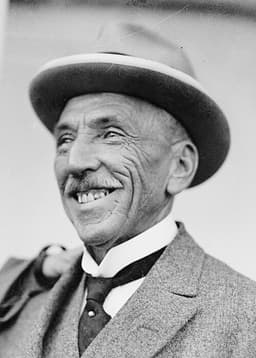
Billy Hughes
Politician · Modern
56.9Total
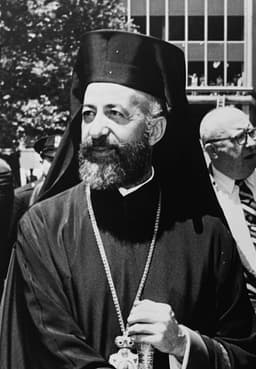
Bishop Makarios III
Politician · Modern
55.7Total
Basic Information
Born
1862
1913
Died
1952
1977
Era
Modern
Modern
Nationality
Australia
Cyprus
Occupation
Politician
Politician
Civilization
Western
Western
Score Comparison
Military (10%)
49.4
48.2
Political (20%)
72.0
53.8
Influence (20%)
59.0
55.0
Legacy (20%)
49.2
56.0
Leadership (15%)
66.0
72.0
Strategy (15%)
41.8
42.9
TOTAL
56.9
55.7
Billy Hughes — Complete Timeline
1915 AD
Became Prime Minister of AustraliaPolitical Action◆ Major
Billy Hughes became Prime Minister of Australia on October 27, 1915, succeeding Andrew Fisher. He led the country through the remainder of World War I, becoming a dominant figure in Australian politics.
Prime MinisterWorld War ILeadership
Impact: national
1916 AD
Conscription Referendums (1916 and 1917)Political Action◆ Major
Hughes held two national referendums on conscription for overseas military service during WWI, in 1916 and 1917. Both were narrowly defeated, causing a split in the Labor Party. Hughes and his supporters left to form the Nationalist Party.
ConscriptionReferendumLabor Split
Impact: nationaldestructive
Expelled from Labor PartyPolitical Action◆ Major
Following the defeat of the first conscription referendum, Hughes was expelled from the Australian Labor Party in November 1916. He then formed the National Labor Party, which later merged with the Liberal Party to become the Nationalist Party.
ExpulsionLabor PartyParty Split
Impact: nationaldestructive
1919 AD
Attended Paris Peace ConferencePolitical Action◆ Major
Hughes represented Australia at the Paris Peace Conference in 1919. He argued strongly for Australian interests, including control over former German colonies in the Pacific and reparations from Germany. He also secured Australia's separate membership in the League of Nations.
Paris Peace ConferenceLeague of NationsWorld War I
Impact: globalconstructive
Bishop Makarios III — Complete Timeline
1950 AD
Elected Archbishop of CyprusPolitical Action◆ Major
Makarios III was elected Archbishop of Cyprus, becoming the ethnarch of the Greek Cypriot community. His religious authority combined with political leadership made him the central figure in the movement for enosis (union with Greece).
Religious LeadershipEnosisCyprus
Impact: nationalconstructive
1956 AD
Exiled by British authoritiesPolitical Action◆ Major
Makarios was exiled by British colonial authorities to the Seychelles for his alleged support of EOKA, a Greek Cypriot guerrilla group fighting for enosis. His exile lasted one year and galvanized international support for Cypriot independence.
ExileColonialismEOKA
Impact: nationaltragic
1959 AD
Signed London-Zurich AgreementsPolitical Action
Makarios signed the London-Zurich Agreements, which established the independence of Cyprus from British rule. The agreements created a power-sharing constitution between Greek and Turkish Cypriots, but tensions remained.
IndependenceTreatyCyprus
Impact: nationalconstructive
1960 AD
Elected first President of CyprusPolitical Action
Makarios was elected as the first President of the Republic of Cyprus, leading the newly independent state. His presidency aimed to maintain unity between Greek and Turkish Cypriots, but intercommunal violence erupted in 1963.
PresidencyIndependenceCyprus
Impact: nationalconstructive
1970 AD
Survived assassination attemptPolitical Action◆ Major
Makarios survived an assassination attempt when his helicopter was fired upon by Greek Cypriot extremists opposed to his policies. The attack highlighted divisions within the Greek Cypriot community over the direction of the republic.
Assassination AttemptPolitical ViolenceCyprus
Impact: nationaltragic
1974 AD
Overthrown by Greek junta-backed coupPolitical Action
Makarios was overthrown in a coup d'
CoupTurkish InvasionPartition
Impact: globaltragic
Returned to Cyprus as PresidentPolitical Action◆ Major
Makarios returned to Cyprus after the Turkish invasion and resumed his presidency, but he governed only the Greek Cypriot south. He spent his remaining years seeking a negotiated settlement to the Cyprus problem, but died in 1977 without achieving reunification.
ReturnPost-InvasionCyprus Problem
Impact: nationaltragic
Expert Analysis
Origins
Billy Hughes was born on September 25, 1862, in London, England, to Welsh parents. He emigrated to Australia in 1884, working as a shearer and union organizer. Largely self-educated, he became involved in the labor movement, joining the Australian Labor Party. His early experiences shaped his combative style and commitment to workers' rights.
Bishop Makarios III was born Michael Christodoulou Mouskos on August 13, 1913, in Pano Panayia, Cyprus. He studied theology at the University of Athens and later at Boston University. He entered the clergy, becoming a monk in 1938 and rising to become Archbishop of Cyprus in 1950. His religious role gave him authority over Greek Cypriots, and he became a symbol of enosis (union with Greece).
Rise to Power
Hughes entered politics in 1894 as a Labor member of the New South Wales parliament. He moved to federal parliament in 1901 and held various ministerial posts. His rise culminated in becoming Prime Minister on October 27, 1915, during World War I. He strongly supported the war effort, which led to his split with the Labor Party over conscription. After the first conscription referendum defeat in 1916, he was expelled from Labor and formed the National Labor Party, later merging with the Liberals to form the Nationalist Party. He remained prime minister until 1923.
Makarios rose to prominence as a religious and political leader in Cyprus under British rule. He was elected Archbishop in 1950, becoming ethnarch of the Greek Cypriot community. He led the campaign for enosis and was exiled by the British in 1956. He returned in 1959 to sign the London-Zurich Agreements, which granted Cyprus independence. In 1960, he was elected the first President of Cyprus, a position he held until his death in 1977, except for a brief overthrow in 1974.
Leadership & Governance
Hughes was a forceful and decisive leader, but his style was divisive. He centralized power and used wartime measures to govern, often bypassing parliament. His key governance challenge was the conscription referendums: he pushed for overseas conscription despite strong opposition, and both referendums failed, splitting the Labor Party. He also implemented economic policies to support the war, such as price controls and compulsory wheat marketing. His political score of 72.0 reflects his ability to navigate crises, but his strategy score of 41.8 shows his rigidity.
Makarios governed as both political leader and ethnarch, blending religious authority with state power. He aimed to maintain Cypriot independence while balancing the interests of Greek and Turkish Cypriots. His leadership score of 72.0 indicates his ability to inspire loyalty. However, his strategy score of 42.9 reveals flaws: the power-sharing constitution from the London-Zurich Agreements proved unstable, leading to intercommunal violence. He pursued a non-aligned foreign policy, but his push for enosis alienated Turkish Cypriots and led to the 1974 coup and Turkish invasion.
Triumph & Tragedy
Hughes's greatest triumph was representing Australia at the Paris Peace Conference in 1919, where he secured Australian control over former German colonies in the Pacific and fought for Australian interests. His greatest failure was the conscription referendums, which deeply divided Australian society and led to his expulsion from the Labor Party. He also failed to maintain party unity, contributing to political instability.
Makarios's triumph was achieving Cypriot independence from British rule in 1960 and becoming its first president. He survived an assassination attempt in 1970, showing resilience. His tragedy was the 1974 coup that overthrew him, orchestrated by the Greek junta, which triggered the Turkish invasion and the division of Cyprus. He returned to the presidency in 1975 but could not reunify the island. His legacy is marred by the ongoing Cyprus problem.
Character & Destiny
Hughes was pugnacious, stubborn, and articulate. His determination to win the war at all costs drove his actions, but his inflexibility on conscription cost him his party. He was a skilled debater but poor at compromise. Historians note his leadership during war was effective, but his polarizing nature limited his long-term political impact.
Makarios was charismatic, patient, and pragmatic, but also secretive and autocratic. He used his religious position to maintain power, but his dual role created conflicts between church and state. His decision to pursue enosis undermined the fragile power-sharing agreement, leading to disaster. He is remembered as a father of Cypriot independence but also as a figure whose actions contributed to the island's division.
Legacy
Hughes's legacy is mixed. He is remembered as the prime minister who led Australia through WWI and asserted its independence at Versailles. However, his conscription referendums left a lasting scar. His political score of 72.0 and influence of 59.0 reflect his impact on Australian politics, but his legacy score of 49.2 shows limited enduring recognition. He is often ranked as a mid-tier prime minister.
Makarios's legacy is profound in Cyprus. He is revered by Greek Cypriots as the father of independence and a symbol of resistance. His influence score of 55.0 and legacy of 56.0 reflect his central role in Cypriot history. However, the division of Cyprus and the failed enosis policy tarnish his record. His leadership score of 72.0 is high, but his overall total of 55.7 is slightly lower than Hughes's 56.9.
Conclusion
Billy Hughes had a greater impact on a global scale due to his role in WWI and the Paris Peace Conference, influencing the post-war order and asserting Australian sovereignty. Makarios III's impact was more localized, shaping Cyprus's independence but also its division. Hughes's political score (72.0) and total score (56.9) edge out Makarios (political 53.8, total 55.7). While Makarios's leadership score matches Hughes's, Hughes's influence in international affairs gives him the edge. Thus, Billy Hughes is the more historically significant figure.
Rankings
🥇
Billy HughesLeader
Mil: 49.4Pol: 72.0Inf: 59.0
56.9
🥈
Bishop Makarios III
Mil: 48.2Pol: 53.8Inf: 55.0
55.7
+1.2 behind
How This Comparison Works
Algorithm
Each figure is scored on 6 dimensions (0—100 scale) based on structured historical data: Military (10%), Political (20%), Influence (20%), Legacy (20%), Leadership (15%), Strategy (15%). The weighted total produces the final ranking.
Data Sources
Scores are computed from structured sub-indicators in the database. Scale factors adjust for era (Ancient ×0.85, Modern ×1.0) and civilization size (Eastern ×1.05, Other ×0.80) to account for differences in population and military scale.
Maximum 3 Figures
Comparisons are limited to 2—3 figures to ensure readability and statistical meaningfulness.
Error Margins
±5 points per dimension — Sub-scores are derived from historical records with inherent uncertainty. Two figures within 5 points on a dimension should be considered roughly equivalent in that area.
Total Score Accuracy
±3 points overall — The weighted combination of 6 dimensions produces a total score with approximately ±3 points of uncertainty. Differences of less than 3 points are not statistically significant— the figures are effectively tied.
Known Limitations
- Historical records are incomplete and uneven across civilizations
- Figures from oral-tradition societies may be underrepresented
- Occupation labels can misclassify multi-role figures
- Scores measure capability and impact, not moral character
- Quantitative scoring is a comparison tool, not absolute truth
Capability Radar
Military (10%) — Battles & Warfare
Battles
30
28
Win Rate
34
34
Expansion
32
37
Political (20%) — Governance & Reform
Reform
60
55
Diplomacy
70
70
Economy
55
50
Influence (20%) — Cultural & Global Reach
Cultural
40
60
Global
55
55
Legacy (20%) — Historical Impact
Historical
55
65
Longevity
40
55
Leadership (15%) — Power & Stability
Tenure
65
65
Stability
50
45
Strategy (15%) — Tactics & Innovation
Strategy
35
36
Tactics
43
44
Reform
42
45
Similar Comparisons
Comments & Discussion
No comments yet. Be the first to share your thoughts!