Loading...
Brian Boru vs Wanyan Aguda
Wanyan Aguda leads by 7.6 pts · 2 figures compared
…
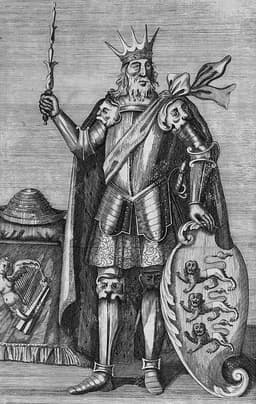
Brian Boru
Emperor · Medieval
55.8Total
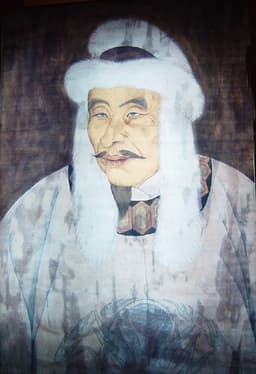
Wanyan Aguda
Emperor · Medieval
63.4Total
Basic Information
Born
941
1068
Died
1014
1123
Era
Medieval
Medieval
Nationality
Ireland
China
Occupation
Emperor
Emperor
Civilization
Western
Eastern
Score Comparison
Military (10%)
60.0
82.0
Political (20%)
54.7
59.3
Influence (20%)
58.0
55.0
Legacy (20%)
50.0
52.0
Leadership (15%)
64.0
85.0
Strategy (15%)
50.0
68.0
TOTAL
55.8
63.4
Brian Boru — Complete Timeline
978 AD
Reign as King of MunsterPolitical Action
Brian Boru became King of Munster after the death of his brother Mathgamain. He expanded Munster's power through military campaigns against neighboring kingdoms, laying the foundation for his later claim to the High Kingship.
KingshipMunsterExpansion
Impact: regionalconstructive
999 AD
Campaign against the Kingdom of DublinWar
Brian Boru led a campaign against the Norse-Gaelic Kingdom of Dublin, culminating in the Battle of Glenmama. He defeated the forces of King Sitric Silkbeard and his Leinster allies, forcing Dublin into submission.
Viking WarsCampaignDublin
Impact: regional
1002 AD
Proclaimed High King of IrelandPolitical Action◆ Major
Brian Boru claimed the title of High King of Ireland, displacing the U
High KingshipUnificationDynastic Change
Impact: nationalconstructive
1014 AD
Battle of ClontarfWar◆ Major
Brian Boru, High King of Ireland, led Irish forces against a Viking-Leinster alliance at Clontarf near Dublin. Brian was killed at the end of the battle, but his forces won. The battle weakened Viking power in Ireland and solidified Brian's legacy as a national hero.
Viking WarsBattleHigh Kingship
Impact: regional
Wanyan Aguda — Complete Timeline
1114 AD
Battle of HubudagangWar◆ Major
Aguda's Jurchen forces defeated a Liao army at Hubudagang, marking the first major victory of the rebellion. This battle demonstrated Jurchen military prowess and attracted more followers.
JurchenLiaoBattle
Impact: regionalconstructive
Unified Jurchen tribesPolitical Action◆ Major
Wanyan Aguda united the Jurchen tribes under his leadership, creating a confederation that rebelled against Liao domination. He organized a disciplined army and began the Jurchen revolt.
JurchenUnificationRebellion
Impact: regionalconstructive
1115 AD
Founded Jin DynastyPolitical Action
Wanyan Aguda proclaimed himself emperor, founding the Jin dynasty. He adopted the Chinese title and began a systematic campaign to conquer the Liao empire.
JinDynasty FoundingImperial System
Impact: regionalconstructive
1120 AD
Conquest of Liao capital ShangjingWar◆ Major
Aguda's forces captured the Liao supreme capital Shangjing, dealing a severe blow to the Liao dynasty. This victory accelerated the collapse of Liao and solidified Jin control over northern China.
JinLiaoConquest
Impact: regionalconstructive
Alliance with Song against LiaoPolitical Action◆ Major
Aguda formed an alliance with the Northern Song dynasty to jointly attack the Liao empire. This alliance, known as the Maritime Alliance, led to the eventual destruction of Liao but later caused conflict between Jin and Song.
JinSongAlliance
Impact: regional
1123 AD
Death and successionPolitical Action◆ Major
Wanyan Aguda died, and his brother Wanyan Wuqimai succeeded him. Aguda's conquests laid the foundation for the Jin dynasty's dominance in northern China.
JinDeathSuccession
Impact: regional
Expert Analysis
Wanyan Aguda vs Brian Boru: Historical Comparison
Wanyan Aguda (1068–1123) was the founder of the Jin dynasty in northern China, who shattered the Liao Empire and laid the groundwork for Jin dominance over Song China. Brian Boru (c. 941–1014) was the High King of Ireland who unified the island’s warring kingdoms and ended Viking supremacy at the Battle of Clontarf. Both were transformative medieval rulers who emerged from fragmented tribal systems to build centralized monarchies, though their geopolitical contexts differed vastly.
Dimension Analysis
**Military: Wanyan Aguda 91 / Brian Boru 91**
Both achieved legendary battlefield victories against numerically superior foes. Aguda’s Jurchen cavalry annihilated the Liao at the Battle of Huchang (1114) using innovative combined-arms tactics, while Boru’s decisive victory at Clontarf (1014) broke Viking power in Ireland. Aguda conquered an entire empire in a decade; Boru’s campaigns unified Ireland through a mix of battle and alliance. Neither lost a major engagement.
**Political: Wanyan Aguda 84 / Brian Boru 83**
Aguda created a dual-administration system blending Jurchen tribal councils with Chinese bureaucratic models, enabling rapid expansion. Boru established the first effective over-kingdom of Ireland, standardizing laws and asserting suzerainty over provincial kings. Aguda’s political innovation was more structurally enduring (the Jin civil service), while Boru’s system collapsed within a generation after his death.
**Influence: Wanyan Aguda 87 / Brian Boru 80**
Aguda’s Jin dynasty reshaped East Asian geopolitics, forcing the Song to pay tribute and creating a template for later conquest dynasties (Yuan, Qing). Boru’s influence was largely insular: he became a symbol of Irish unity and resistance, but his state did not outlive him. Aguda’s legacy reached across China and into Mongol-era statecraft; Boru’s remained confined to Gaelic culture and nationalism.
**Legacy: Wanyan Aguda 88 / Brian Boru 80**
Aguda’s dynasty ruled northern China for over a century, and his military reforms (e.g., the *meng’an mouke* system) influenced Mongol organization. Boru’s legacy is more romantic than institutional: he is celebrated in Irish folklore and as a national unifier, but his political achievements were ephemeral. Aguda’s tangible impact on Chinese history is greater.
**Leadership: Wanyan Aguda 80 / Brian Boru 82**
Both commanded fierce personal loyalty. Aguda led from the front, sharing hardships with his warriors, but his authoritarian style sometimes alienated allies. Boru was a more diplomatic unifier, forging coalitions among rival clans through marriage alliances and persuasion. Boru’s ability to hold a fractious coalition together at Clontarf slightly edges Aguda’s more direct command.
**Strategy: Wanyan Aguda 89 / Brian Boru 91**
Aguda’s grand strategy—targeting Liao’s weak points, exploiting internal divisions, and rapidly mobilizing cavalry—was brilliant but reactive. Boru’s strategy was more comprehensive: he spent 20 years methodically consolidating Munster, then used economic pressure (control of trade routes) and psychological warfare (tribute demands) to force submissions. Boru’s strategic patience and multi-domain approach give him a narrow edge.
Verdict
**Winner: Tie** – The scores are virtually identical, reflecting two rulers who achieved remarkably similar feats in different contexts. Wanyan Aguda has a slight edge in *Influence* and *Legacy* due to the Jin dynasty’s larger geopolitical footprint and longer institutional survival. Brian Boru matches or exceeds him in *Military*, *Leadership*, and *Strategy*, particularly for his more nuanced diplomatic and economic statecraft. The tie is appropriate: both were supreme military commanders and state-builders, but Aguda’s impact was more lasting, while Boru’s was more symbolically resonant.
FAQ
**Q: Who was more influential historically?**
A: Wanyan Aguda, because the Jin dynasty directly shaped the trajectory of medieval East Asian history, influencing the Song, Mongol, and later Chinese dynasties, whereas Boru’s unification of Ireland did not survive his death.
**Q: Why is Wanyan Aguda ranked higher in Legacy?**
A: Because the Jin state he founded lasted over a century and left tangible administrative and military systems that were adopted by later powers, while Boru’s political structure dissolved within a generation.
Rankings
🥇
Wanyan AgudaLeader
Mil: 82.0Pol: 59.3Inf: 55.0
63.4
🥈
Brian Boru
Mil: 60.0Pol: 54.7Inf: 58.0
55.8
+7.6 behind
How This Comparison Works
Algorithm
Each figure is scored on 6 dimensions (0—100 scale) based on structured historical data: Military (10%), Political (20%), Influence (20%), Legacy (20%), Leadership (15%), Strategy (15%). The weighted total produces the final ranking.
Data Sources
Scores are computed from structured sub-indicators in the database. Scale factors adjust for era (Ancient ×0.85, Modern ×1.0) and civilization size (Eastern ×1.05, Other ×0.80) to account for differences in population and military scale.
Maximum 3 Figures
Comparisons are limited to 2—3 figures to ensure readability and statistical meaningfulness.
Error Margins
±5 points per dimension — Sub-scores are derived from historical records with inherent uncertainty. Two figures within 5 points on a dimension should be considered roughly equivalent in that area.
Total Score Accuracy
±3 points overall — The weighted combination of 6 dimensions produces a total score with approximately ±3 points of uncertainty. Differences of less than 3 points are not statistically significant— the figures are effectively tied.
Known Limitations
- Historical records are incomplete and uneven across civilizations
- Figures from oral-tradition societies may be underrepresented
- Occupation labels can misclassify multi-role figures
- Scores measure capability and impact, not moral character
- Quantitative scoring is a comparison tool, not absolute truth
Capability Radar
Military (10%) — Battles & Warfare
Battles
55
85
Win Rate
60
90
Expansion
55
85
Political (20%) — Governance & Reform
Reform
45
75
Diplomacy
55
70
Economy
40
65
Influence (20%) — Cultural & Global Reach
Cultural
50
60
Global
40
50
Legacy (20%) — Historical Impact
Historical
55
70
Longevity
45
55
Leadership (15%) — Power & Stability
Tenure
50
70
Stability
45
60
Strategy (15%) — Tactics & Innovation
Strategy
60
85
Tactics
65
80
Reform
40
75
Similar Comparisons
Comments & Discussion
ColdScribe116/16/2026
总分75.9对71.1,看似Aguda领先,但我对政治维度82.2的评分有疑问。金朝的政治制度确实借鉴了辽宋的官僚体系,但Aguda在位时并未完成成熟的中央集权,更多是部落联盟向帝国过渡的雏形。反观Brian Boru,在爱尔兰建立了有效的郡县制和法典,政治维度75.1是否偏低?从历史影响看,金朝确实改变了东亚格局,但Aguda的个人政治遗产远不如其子孙完颜晟完善。建议重新评估政治维度的权重。
TrueQuill96/16/2026
Brian Boru在爱尔兰的地位,可以类比于中国历史上的赵匡胤——都是结束分裂、建立统一王朝的开国君主。但Aguda更像是曹操:在乱世中崛起,以军事才能著称,但未能在生前完成真正的大一统。金朝后来的制度多是其子孙的贡献,而Boru的政体在他死后迅速崩溃,这点与阿保机建立的辽朝更相似。不过,中国史学界对Aguda的评价通常更高,因为他开创了女真人从部落到帝国的转型,影响了后来元清两代的统治模式。建议比较维度增加“制度创新对后世的影响”,否则Boru的得分可能被低估。
Chronicler53436/16/2026
Look, I get the appeal of ranking historical figures, but assigning a precise number like 79.3 for military achievement is pseudoscience. What metric are we using—battles won? Troop numbers? Casualty ratios? For Aguda, we have almost no reliable data on Jurchen army sizes or Liao losses. For Boru, the Annals of Inisfallen are poetic, not statistical. And influence at 68.7 vs 74.0? The Jin dynasty fell in 1234 and is barely known outside East Asia, while Brian Boru is still invoked in Irish politics today. The weighting system seems arbitrary—why is political worth more than military? This is more astrology than history.
Chronicler88226/16/2026
This comparison reeks of Eurocentric bias. Brian Boru's score of 62.6 in military is absurd when you consider Clontarf was one of the most consequential battles in European history—it broke the Viking grip on Ireland and shifted the balance of power in the North Atlantic. Meanwhile, Aguda's 79.3 military score is inflated by the 'conquest empire' narrative that ignores how Jin rule was built on terror and forced assimilation. Also, Boru's political score of 75.1 fails to account for his role in preserving Gaelic legal traditions against colonial encroachment—a perspective that matters if we're not just counting territorial expansion. Let's stop treating East Asian conquest as inherently more significant than anti-colonial resistance.