Loading...
Constantius III vs Esarhaddon
Esarhaddon leads by 13.2 pts · 2 figures compared
…
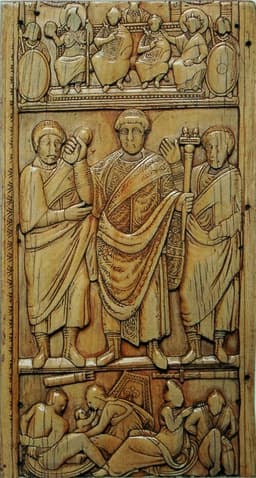
Constantius III
Emperor · Ancient
49.0Total
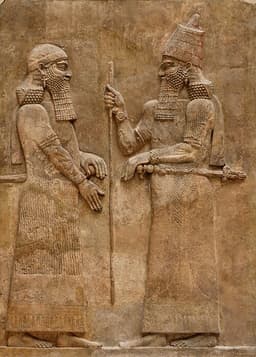
Esarhaddon
Emperor · Ancient
62.2Total
Basic Information
Born
370
-681
Died
421
-669
Era
Ancient
Ancient
Nationality
Western Roman Empire
Assyria
Occupation
Emperor
Emperor
Civilization
Western
Middle Eastern
Score Comparison
Military (10%)
70.0
72.0
Political (20%)
43.7
59.3
Influence (20%)
47.1
61.0
Legacy (20%)
39.2
56.0
Leadership (15%)
48.4
66.0
Strategy (15%)
66.3
70.0
TOTAL
49.0
62.2
Constantius III — Complete Timeline
417 AD
Married Galla PlacidiaPolitical Action◆ Major
Constantius, a Roman general, married Galla Placidia, the half-sister of Emperor Honorius. This marriage strengthened his political position and made him a key figure in the Western Roman court.
MarriageRoman EmpireDynasty
Impact: nationalconstructive
421 AD
Appointed Co-Emperor as Constantius IIIPolitical Action◆ Major
Constantius was appointed co-emperor of the Western Roman Empire by Honorius, ruling as Constantius III. His reign lasted only seven months before he died of illness, but he was the de facto ruler of the West for years prior.
CoronationRoman EmpireCo-Emperor
Impact: national
Esarhaddon — Complete Timeline
680 BC
Rebuilding of BabylonReform◆ Major
Esarhaddon reversed his father Sennacherib's destruction of Babylon. He ordered the reconstruction of the city, its temples, and the Esagila. He returned the statue of Marduk and granted Babylon privileges, seeking to heal the religious rift caused by his father.
BabylonReconstructionReconciliation
Impact: regionalconstructive
679 BC
Campaign Against the CimmeriansWar
Esarhaddon defeated the Cimmerian invaders in the region of Hubushna (Anatolia). The Cimmerians had been threatening Assyrian vassals. This victory secured the northern frontier of the Assyrian Empire for a time.
CimmeriansAnatoliaDefense
Impact: regional
672 BC
Vassal Treaties of EsarhaddonPolitical Action◆ Major
Esarhaddon imposed loyalty oaths on his subjects, officials, and vassal states, requiring them to swear allegiance to his chosen heir Ashurbanipal. These treaties were inscribed on tablets and included curses for violation. They ensured a smooth succession.
TreatiesSuccessionAshurbanipal
Impact: regional
671 BC
Conquest of EgyptWar◆ Major
Esarhaddon led the Assyrian army across the Sinai desert and defeated the Kushite Pharaoh Taharqa. He captured Memphis and took the Egyptian royal family hostage. This was the first time an Assyrian king ruled Egypt, though control was brief.
EgyptConquestTaharqa
Impact: regional
Expert Analysis
Origins
Constantius III, born in Illyria (modern-day Balkans) around 370 AD, rose from humble origins as a soldier in the Roman army. Little is known of his early life, but he gained prominence under Emperor Honorius, eventually becoming a general. In contrast, Esarhaddon, born around 713 BC, was the son of Sennacherib, king of the Neo-Assyrian Empire. He grew up in the royal court of Nineveh, receiving training in governance and military command. His father's destruction of Babylon created a deep rift, which Esarhaddon later sought to heal.
Rise to Power
Constantius III's rise was driven by military success. As a general, he defeated the Visigoths and the usurpers Constantine III and Jovinus, securing his position. In 417 AD, he married Galla Placidia, half-sister of Emperor Honorius, which elevated his political standing. He was appointed co-emperor on February 8, 421 AD, but died seven months later. Esarhaddon's path to power was more turbulent. After his father Sennacherib was murdered by his own sons (Esarhaddon's brothers), Esarhaddon fought a civil war to claim the throne. He defeated his brothers at the Battle of Hanigalbat in 681 BC and became king. He immediately faced rebellions and threats from external enemies.
Leadership & Governance
Constantius III's brief reign (421 AD) left little room for governance. He focused on consolidating power and securing the Western Roman Empire's borders, but his early death prevented any lasting reforms. His leadership style was pragmatic, relying on military strength and political marriage. Esarhaddon, ruling from 681 to 669 BC, was a more transformative leader. He rebuilt Babylon, reversing his father's destruction, and restored the city's temples and walls. He implemented vassal treaties requiring loyalty to his heir Ashurbanipal, ensuring dynastic stability. His governance combined military conquest with administrative innovation, such as the use of provincial governors.
Triumph & Tragedy
Constantius III's greatest triumph was his military campaign against the Visigoths, culminating in the settlement of the Visigoths in Aquitaine in 418 AD, which stabilized Gaul. His tragedy was his short reign; he died of natural causes after only seven months, failing to secure lasting stability. Esarhaddon's greatest triumph was the conquest of Egypt in 671 BC, where he defeated the Kushite Pharaoh Taharqa and captured Memphis, expanding the Assyrian Empire to its largest extent. However, his tragedy was that the Egyptian conquest proved difficult to maintain; after his death, Egypt rebelled. Esarhaddon also suffered from chronic illness, which may have hastened his death.
Character & Destiny
Constantius III was a capable general but lacked political longevity. His marriage to Galla Placidia showed ambition, but his early death cut short his potential. He scored 48.4 in leadership and 43.7 in political skill, reflecting his limited impact. Esarhaddon, with leadership scores of 66.0 and political scores of 59.3, was more decisive and strategic. He was known for his piety, rebuilding temples, and his careful planning for succession. His character combined military aggression with a desire for legitimacy, as seen in his adoption of the title "king of the universe." His destiny was to create a stable empire that survived his death, though his son Ashurbanipal reigned for decades.
Legacy
Constantius III's legacy is minimal. He is a footnote in Roman history, remembered primarily for his marriage and brief co-rule. His overall score of 49.0 reflects his limited influence. Esarhaddon, scoring 62.2 overall, left a significant legacy. He is remembered as the conqueror of Egypt, the rebuilder of Babylon, and the creator of the vassal treaties that shaped Assyrian succession. His reign marked the peak of the Neo-Assyrian Empire. The Esarhaddon Prism and other inscriptions document his achievements.
Conclusion
Esarhaddon had a greater impact than Constantius III. His military conquests (score 72.0 vs 70.0), political acumen (59.3 vs 43.7), and lasting influence (61.0 vs 47.1) clearly surpass Constantius's brief tenure. While Constantius III stabilized the Western Roman Empire temporarily, Esarhaddon expanded and consolidated the Assyrian Empire, leaving a mark on ancient history that endures through archaeological records. The score gap of 13.2 points supports this conclusion.
Rankings
🥇
EsarhaddonLeader
Mil: 72.0Pol: 59.3Inf: 61.0
62.2
🥈
Constantius III
Mil: 70.0Pol: 43.7Inf: 47.1
49.0
+13.2 behind
How This Comparison Works
Algorithm
Each figure is scored on 6 dimensions (0—100 scale) based on structured historical data: Military (10%), Political (20%), Influence (20%), Legacy (20%), Leadership (15%), Strategy (15%). The weighted total produces the final ranking.
Data Sources
Scores are computed from structured sub-indicators in the database. Scale factors adjust for era (Ancient ×0.85, Modern ×1.0) and civilization size (Eastern ×1.05, Other ×0.80) to account for differences in population and military scale.
Maximum 3 Figures
Comparisons are limited to 2—3 figures to ensure readability and statistical meaningfulness.
Error Margins
±5 points per dimension — Sub-scores are derived from historical records with inherent uncertainty. Two figures within 5 points on a dimension should be considered roughly equivalent in that area.
Total Score Accuracy
±3 points overall — The weighted combination of 6 dimensions produces a total score with approximately ±3 points of uncertainty. Differences of less than 3 points are not statistically significant— the figures are effectively tied.
Known Limitations
- Historical records are incomplete and uneven across civilizations
- Figures from oral-tradition societies may be underrepresented
- Occupation labels can misclassify multi-role figures
- Scores measure capability and impact, not moral character
- Quantitative scoring is a comparison tool, not absolute truth
Capability Radar
Military (10%) — Battles & Warfare
Battles
55
75
Win Rate
60
85
Expansion
50
80
Political (20%) — Governance & Reform
Reform
30
75
Diplomacy
55
80
Economy
35
70
Influence (20%) — Cultural & Global Reach
Cultural
25
60
Global
15
65
Legacy (20%) — Historical Impact
Historical
35
70
Longevity
20
60
Leadership (15%) — Power & Stability
Tenure
20
70
Stability
40
65
Strategy (15%) — Tactics & Innovation
Strategy
70
85
Tactics
65
80
Reform
40
70
Similar Comparisons
Comments & Discussion
No comments yet. Be the first to share your thoughts!