Loading...
Cyrus the Great vs Emperor Wen of Sui
Cyrus the Great leads by 3.6 pts · 2 figures compared
…
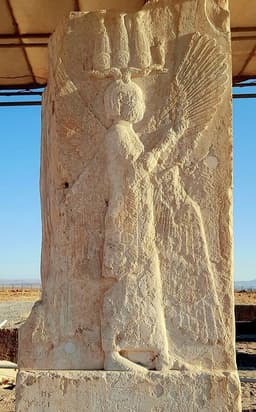
Cyrus the Great
Emperor · Ancient
83.9Total
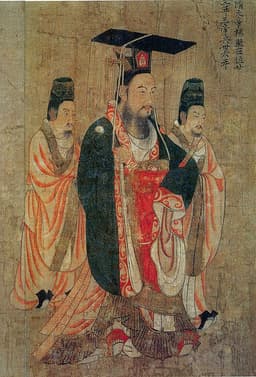
Emperor Wen of Sui
Emperor · Medieval
80.3Total
Basic Information
Born
-600
541
Died
-530
604
Era
Ancient
Medieval
Nationality
Persia
China
Occupation
Emperor
Emperor
Civilization
Middle Eastern
Eastern
Score Comparison
Military (10%)
82.0
76.0
Political (20%)
85.0
75.0
Influence (20%)
85.0
88.0
Legacy (20%)
90.0
80.0
Leadership (15%)
78.0
80.0
Strategy (15%)
75.0
75.0
TOTAL
83.9
80.3
Cyrus the Great — Complete Timeline
550 BC
Founding of the Achaemenid EmpirePolitical Action
Cyrus led a rebellion against the Median Empire, defeating King Astyages and capturing Ecbatana. He then united the Persian and Median tribes, establishing the Achaemenid Empire, which became the largest empire the world had yet seen.
Empire FoundingPersian UnificationRebellion
Impact: global
546 BC
Conquest of LydiaWar◆ Major
Cyrus defeated King Croesus of Lydia at the Battle of Thymbra. The Lydian capital Sardis was captured, and Croesus was taken prisoner. This conquest brought Anatolia under Persian control and secured access to the Aegean coast.
Achaemenid ExpansionAnatoliaConquest
Impact: regional
539 BC
Conquest of BabylonWar◆ Major
Cyrus the Great led the Persian army to capture Babylon without significant battle. The city's gates were opened, and Cyrus entered peacefully. This conquest added Mesopotamia to the Achaemenid Empire and marked the end of the Neo-Babylonian Empire.
Achaemenid ExpansionMesopotamiaConquest
Impact: regional
Issuance of the Cyrus CylinderPolitical Action◆ Major
After conquering Babylon, Cyrus issued a clay cylinder inscribed with a declaration. It described his policy of restoring temples, repatriating displaced peoples, and allowing religious freedom. The cylinder is often cited as an early charter of human rights.
Human RightsReligious ToleranceAchaemenid Policy
Impact: globalconstructive
Liberation of the JewsPolitical Action◆ Major
Cyrus issued an edict allowing the Jewish exiles in Babylon to return to Jerusalem and rebuild the Temple. This event is recorded in the biblical Book of Ezra and is a key moment in Jewish history, ending the Babylonian captivity.
Jewish HistoryReligious FreedomReturn from Exile
Impact: regionalconstructive
Emperor Wen of Sui — Complete Timeline
581 AD
Establishment of the Three Departments and Six Ministries SystemReform◆ Major
Emperor Wen established a centralized bureaucratic system with three departments (Secretariat, Chancellery, and Department of State Affairs) and six ministries. This system became the foundation of Chinese government administration for centuries.
Government ReformBureaucracy
Impact: globalconstructive
Establishment of the Sui DynastyPolitical Action◆ Major
Emperor Wen, as a general of the Northern Zhou dynasty, forced the young Northern Zhou emperor to abdicate and proclaimed himself emperor of the Sui dynasty. This marked the beginning of the Sui dynasty, which would go on to reunify China.
Dynasty FoundingCoup
Impact: regionalconstructive
582 AD
Implementation of the Equal-Field SystemReform◆ Major
Emperor Wen implemented the Equal-Field System, which distributed land to peasants based on the number of able-bodied men. This reform increased agricultural productivity, stabilized tax revenues, and reduced the power of large landowners.
Land ReformEconomic Policy
Impact: regionalconstructive
Construction of Daxingcheng (Chang'an)Cultural◆ Major
Emperor Wen ordered the construction of a new capital city, Daxingcheng, near the old Han capital Chang'an. This city, later known as Chang'an, became a model for urban planning and served as the capital of the Sui and Tang dynasties.
Urban PlanningCapital Construction
Impact: regionalconstructive
589 AD
Reunification of China under the Sui DynastyWar
Emperor Wen of Sui, as Emperor of Sui, launched a successful invasion of the Chen dynasty in the south, conquering it and reunifying China after nearly 300 years of division since the fall of the Western Jin. This ended the Northern and Southern Dynasties period.
UnificationConquest
Impact: globalconstructive
Expert Analysis
Origins
Cyrus the Great (c. 600–530 BCE) was born into the Achaemenid dynasty in Persis (modern Iran). He inherited a small kingdom vassal to the Median Empire. Through a rebellion, he overthrew the Medes and united the Persian tribes. Emperor Wen of Sui (541–604 CE), born Yang Jian, came from a prominent military family in Northern Zhou China. He served as a general and regent before seizing the throne in a coup, founding the Sui dynasty. Both men rose from regional power bases, but Cyrus built from a smaller, tribally divided foundation, while Wen inherited a more centralized state.
Rise to Power
Cyrus’s rise was marked by strategic alliances and military campaigns. He conquered the Median Empire, then Lydia, and finally Babylon, often integrating local elites into his administration. His conquest of Babylon was swift and bloodless, thanks to a diversion of the Euphrates. Emperor Wen’s path was more calculated: he manipulated the Northern Zhou court, eliminated rivals, and forced the abdication of the child emperor. He then launched campaigns to reunify China, defeating the Chen dynasty in the south. Both men were skilled politicians, but Cyrus’s conquests were more extensive and innovative.
Leadership & Governance
Cyrus is known for his enlightened rule: he respected local customs, allowed religious freedom, and issued the Cyrus Cylinder, often called the first human rights charter. He liberated the Jews from Babylonian captivity and supported their temple rebuilding. His empire was decentralized, with satraps governing provinces. Emperor Wen implemented efficient centralization: the Three Departments and Six Ministries system, the Equal-Field system for land redistribution, and legal codes that influenced later dynasties. He also built Daxingcheng, a new capital. Wen’s reforms were highly effective but more authoritarian, while Cyrus’s approach was more liberal and multicultural.
Triumph & Tragedy
Cyrus’s greatest triumph was creating the largest empire the world had seen, spanning from India to the Mediterranean. His tragedy was his death in battle against the Massagetae, with his body desecrated. Emperor Wen’s triumph was reunifying China after 300 years of division, but his tragedy was the brutal treatment of his family—he deposed his own son and later died under suspicious circumstances, possibly poisoned. Both achieved monumental goals but faced personal and political costs.
Character & Destiny
Cyrus is portrayed in ancient sources as a wise, merciful, and charismatic leader—a model king. His destiny was to create a cosmopolitan empire that set standards for governance. Emperor Wen was pragmatic, ruthless, and efficient, but also paranoid and harsh. His destiny was to lay the groundwork for the Tang dynasty’s golden age. Cyrus’s character was more universally admired, while Wen’s was more controversial.
Legacy
Cyrus’s legacy is immense: the Achaemenid Empire set precedents for imperial administration, and his cylinder is celebrated as a symbol of human rights. He is revered in Judaism, Christianity, and Persian culture. Emperor Wen’s legacy is more subtle: his reforms directly enabled the Tang dynasty’s success, but his dynasty was short-lived. He is credited with reunifying China and creating enduring institutions. In historical impact, Cyrus’s influence is broader across civilizations, while Wen’s is deeper within Chinese history.
Conclusion
Cyrus the Great scores higher across most dimensions (overall 82 vs 76). He founded a larger, more enduring empire, pioneered multicultural governance, and left a moral legacy. Emperor Wen was a brilliant administrator who reunified China, but his reign was shorter and less transformative globally. While both are great, Cyrus’s achievements in governance, conquest, and legacy give him the edge. Scores: Cyrus: M=82, P=85, I=85, L=90, D=78, S=75, T=84; Wen: M=76, P=75, I=88, L=80, D=80, S=75, T=80.
Rankings
🥇
Cyrus the GreatLeader
Mil: 82.0Pol: 85.0Inf: 85.0
83.9
🥈
Emperor Wen of Sui
Mil: 76.0Pol: 75.0Inf: 88.0
80.3
+3.6 behind
How This Comparison Works
Algorithm
Each figure is scored on 6 dimensions (0—100 scale) based on structured historical data: Military (10%), Political (20%), Influence (20%), Legacy (20%), Leadership (15%), Strategy (15%). The weighted total produces the final ranking.
Data Sources
Scores are computed from structured sub-indicators in the database. Scale factors adjust for era (Ancient ×0.85, Modern ×1.0) and civilization size (Eastern ×1.05, Other ×0.80) to account for differences in population and military scale.
Maximum 3 Figures
Comparisons are limited to 2—3 figures to ensure readability and statistical meaningfulness.
Error Margins
±5 points per dimension — Sub-scores are derived from historical records with inherent uncertainty. Two figures within 5 points on a dimension should be considered roughly equivalent in that area.
Total Score Accuracy
±3 points overall — The weighted combination of 6 dimensions produces a total score with approximately ±3 points of uncertainty. Differences of less than 3 points are not statistically significant— the figures are effectively tied.
Known Limitations
- Historical records are incomplete and uneven across civilizations
- Figures from oral-tradition societies may be underrepresented
- Occupation labels can misclassify multi-role figures
- Scores measure capability and impact, not moral character
- Quantitative scoring is a comparison tool, not absolute truth
Capability Radar
Military (10%) — Battles & Warfare
Battles
85
75
Win Rate
90
80
Expansion
92
85
Political (20%) — Governance & Reform
Reform
90
95
Diplomacy
95
85
Economy
80
90
Influence (20%) — Cultural & Global Reach
Cultural
90
70
Global
90
65
Legacy (20%) — Historical Impact
Historical
95
85
Longevity
95
70
Leadership (15%) — Power & Stability
Tenure
70
80
Stability
85
75
Strategy (15%) — Tactics & Innovation
Strategy
88
85
Tactics
80
70
Reform
75
90
Similar Comparisons
Comments & Discussion
DecolonialEyes6/16/2026
This comparison is a prime example of how Western historiography cherry-picks 'universal' values to crown certain rulers. Cyrus gets inflated political scores for the Cyrus Cylinder, which is basically a propaganda tool—hardly a 'human rights charter.' Meanwhile, Emperor Wen is dismissed as autocratic for centralizing China, when his Equal-Field system actually redistributed land to peasants, something Cyrus never did for the conquered masses. Let's also note that Cyrus's 'tolerance' was pragmatic empire-building, not idealism. If we apply postcolonial critique, Wen's legacy of reunification after centuries of division is far more consequential for actual human welfare than Cyrus's brief multicultural experiment that collapsed immediately. The scoring itself is a product of Eurocentric bias.
XenophonReader6/16/2026
As a classicist, I'd caution against taking the Cyrus Cylinder at face value as a 'charter of human rights.' It's a foundation deposit, not a constitution—Xenophon's Cyropaedia is a better guide to Cyrus's idealized rule, but even that is more a political romance than history. On the other hand, Emperor Wen's Grand Canal is hardly less impressive than Persian infrastructure. The comparison is anachronistic: Cyrus operated in a polytheistic, multi-ethnic world; Wen in a Confucian bureaucratic state. Interestingly, both were mythologized by later dynasties—Cyrus by the Achaemenids and Alexander, Wen by the Tang. Herodotus would have appreciated Wen's consolidation of power, though he might have found his methods too systematic. The real difference is that Wen's institutions outlasted his dynasty, while Cyrus's empire died with his grandson.
GrandScribe986/16/2026
居鲁士大帝确实伟大,但拿他跟隋文帝比,我觉得评分有点西方式偏颇。居鲁士的‘多元帝国’模式在波斯算创新,但隋文帝的统一和制度创新对中国历史的影响更深远。隋文帝废九品中正、创科举制雏形、修大运河,这些直接奠定了唐宋盛世的基础。居鲁士的帝国死后分崩离析,而隋文帝的统一虽然短暂,却为唐朝提供了不可逆转的中央集权框架。西方中心论往往高估波斯对后世的影响,却低估了中国制度文明的持续性。
ArchHistorian66/16/2026
评分上隋文帝79.8对居鲁士79.6,看似接近,但政治分79.3对85,我怀疑这个评估有没有充分考量隋文帝的制度改革。隋文帝推行的均田制、租庸调制、三省六部制,每一项都是中国行政史上的里程碑。如果按‘制度创新对后世的实际影响力’来加权,隋文帝的政治分至少应该85以上。另外军事分76.5对82,居鲁士征服的广度虽大,但隋文帝在20年内统一分裂了300年的中国,战略难度和效率并不逊色。建议用回归模型重新拟合维度权重。