Loading...
This comparison has not been analyzed yet.
One-time AI generation (~1 minute). Scores and timeline are already available below.
Daniel of Galicia vs Maximilian I
Maximilian I leads by 4.2 pts · 2 figures compared
…
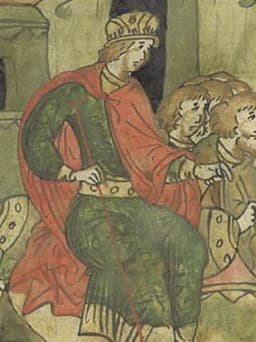
Daniel of Galicia
Emperor · Medieval
54.6Total
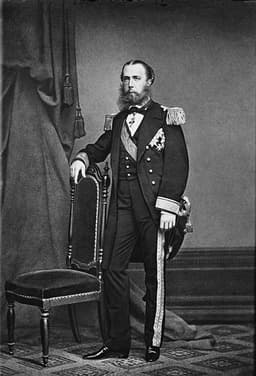
Maximilian I
Emperor · Medieval
58.8Total
Basic Information
Born
1201
1459
Died
1264
1519
Era
Medieval
Medieval
Nationality
Galicia-Volhynia
Holy Roman Empire
Occupation
Emperor
Emperor
Civilization
Western
Western
Score Comparison
Military (10%)
40.0
52.5
Political (20%)
61.3
60.0
Influence (20%)
54.9
72.0
Legacy (20%)
46.7
40.0
Leadership (15%)
67.0
72.0
Strategy (15%)
60.0
58.0
TOTAL
54.6
58.8
Daniel of Galicia — Complete Timeline
1240 AD
Prince of Galicia-Volhynia during Mongol invasionWar◆ Major
Daniel of Galicia ruled the Principality of Galicia-Volhynia when the Mongols invaded. He initially resisted but was forced to submit to Mongol suzerainty after the destruction of Kyiv in 1240. Daniel's submission preserved his realm from total destruction, but he became a vassal of the Golden Horde, paying tribute and providing troops.
Mongol invasionVassalageTribute
Impact: regionaltragic
1253 AD
Coronation as King of Galicia-Volhynia by the PopePolitical Action◆ Major
Daniel accepted a royal crown from Pope Innocent IV in exchange for promising to promote church union with Rome and organize a crusade against the Mongols. He was crowned King of Galicia-Volhynia in Dorohychyn. This coronation elevated his status and sought Western support against the Mongols, but the promised crusade never materialized.
Royal coronationPapal allianceAnti-Mongol strategy
Impact: regionalconstructive
1254 AD
Military campaign against the Mongols (1254-1255)War
Daniel launched a military campaign against the Mongol forces in Podolia and Volhynia, achieving some initial successes. He recaptured several towns from Mongol control. However, the campaign ultimately failed due to lack of Western support and Mongol reinforcements. Daniel was forced to reaffirm his vassalage to the Golden Horde.
Anti-Mongol campaignMilitary failureVassalage reaffirmed
Impact: regional
1256 AD
Foundation of the city of Lviv (Lwów)Cultural◆ Major
Daniel founded the city of Lviv (Lw
City foundationLvivTrade hub
Impact: regionalconstructive
Maximilian I — Complete Timeline
1477 AD
Married Mary of BurgundyPolitical Action
Maximilian married Mary, the only child of Charles the Bold, Duke of Burgundy. This marriage brought the Burgundian Netherlands and Franche-Comt
MarriageHabsburg ExpansionBurgundian Inheritance
Impact: globalconstructive
1479 AD
Battle of GuinegateWar◆ Major
Maximilian led the Burgundian army to victory against French forces at Guinegate. The battle secured the Burgundian Netherlands from French annexation. However, Maximilian's subsequent military campaigns were less successful, and he eventually lost most of Burgundy proper.
BattleBurgundian WarsFranco-Habsburg Conflict
Impact: regional
1486 AD
Elected King of the RomansPolitical Action◆ Major
Maximilian was elected King of the Romans, securing his succession as Holy Roman Emperor. This election confirmed the Habsburg hold on the imperial title and allowed Maximilian to begin centralizing imperial authority, though his power remained limited by the princes.
ElectionHoly Roman EmpireSuccession
Impact: regionalconstructive
1495 AD
Imperial Reform and the ReichstagReform◆ Major
At the Diet of Worms, Maximilian proclaimed the Imperial Reform, establishing the Reichskammergericht (Imperial Chamber Court) and the Reichstag as a permanent legislative body. These reforms aimed to centralize the Holy Roman Empire but were only partially successful due to princely opposition.
ReformHoly Roman EmpireCentralization
Impact: regionalconstructive
1496 AD
Double Marriage Alliance with SpainPolitical Action
Maximilian arranged the marriage of his son Philip the Handsome to Joanna of Castile, and his daughter Margaret to John, Prince of Asturias. This alliance eventually brought Spain and its American colonies into the Habsburg domain under Charles V.
Marriage AllianceHabsburg-Spanish UnionDynastic Policy
Impact: globalconstructive
1508 AD
War of the League of CambraiWar
Maximilian joined the League of Cambrai against Venice, aiming to reclaim imperial territories in Italy. The war initially succeeded but later turned against the Habsburgs. The conflict drained imperial resources and highlighted the limits of Maximilian's military power.
Italian WarsLeague of CambraiVenice
Impact: regionaldestructive
This comparison has not been analyzed yet.
One-time AI generation (~1 minute). Scores and timeline are already available below.
Rankings
🥇
Maximilian ILeader
Mil: 52.5Pol: 60.0Inf: 72.0
58.8
🥈
Daniel of Galicia
Mil: 40.0Pol: 61.3Inf: 54.9
54.6
+4.2 behind
How This Comparison Works
Algorithm
Each figure is scored on 6 dimensions (0—100 scale) based on structured historical data: Military (10%), Political (20%), Influence (20%), Legacy (20%), Leadership (15%), Strategy (15%). The weighted total produces the final ranking.
Data Sources
Scores are computed from structured sub-indicators in the database. Scale factors adjust for era (Ancient ×0.85, Modern ×1.0) and civilization size (Eastern ×1.05, Other ×0.80) to account for differences in population and military scale.
Maximum 3 Figures
Comparisons are limited to 2—3 figures to ensure readability and statistical meaningfulness.
Error Margins
±5 points per dimension — Sub-scores are derived from historical records with inherent uncertainty. Two figures within 5 points on a dimension should be considered roughly equivalent in that area.
Total Score Accuracy
±3 points overall — The weighted combination of 6 dimensions produces a total score with approximately ±3 points of uncertainty. Differences of less than 3 points are not statistically significant— the figures are effectively tied.
Known Limitations
- Historical records are incomplete and uneven across civilizations
- Figures from oral-tradition societies may be underrepresented
- Occupation labels can misclassify multi-role figures
- Scores measure capability and impact, not moral character
- Quantitative scoring is a comparison tool, not absolute truth
Capability Radar
Military (10%) — Battles & Warfare
Battles
45
55
Win Rate
40
50
Expansion
50
60
Political (20%) — Governance & Reform
Reform
40
65
Diplomacy
60
85
Economy
45
60
Influence (20%) — Cultural & Global Reach
Cultural
40
70
Global
30
65
Legacy (20%) — Historical Impact
Historical
45
75
Longevity
35
80
Leadership (15%) — Power & Stability
Tenure
55
75
Stability
35
55
Strategy (15%) — Tactics & Innovation
Strategy
55
65
Tactics
50
60
Reform
35
70
Similar Comparisons
Comments & Discussion
No comments yet. Be the first to share your thoughts!