Loading...
This comparison has not been analyzed yet.
One-time AI generation (~1 minute). Scores and timeline are already available below.
Darius I vs Duke Zhuang of Zheng
Darius I leads by 17.7 pts · 2 figures compared
…

Darius I
Emperor · Ancient
74.8Total
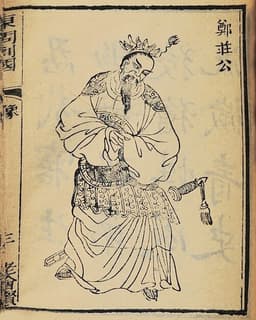
Duke Zhuang of Zheng
Emperor · Ancient
57.1Total
Basic Information
Born
-550
-757
Died
-486
-701
Era
Ancient
Ancient
Nationality
Persia
Zheng
Occupation
Emperor
Emperor
Civilization
Middle Eastern
Eastern
Score Comparison
Military (10%)
76.0
74.7
Political (20%)
75.0
53.8
Influence (20%)
88.0
54.1
Legacy (20%)
65.0
48.3
Leadership (15%)
72.0
66.0
Strategy (15%)
69.1
60.7
TOTAL
74.8
57.1
Darius I — Complete Timeline
522 BC
Suppression of revoltsWar◆ Major
Upon seizing the throne, Darius I suppressed widespread revolts across the empire, including in Babylon, Media, and Egypt. He recorded these victories on the Behistun Inscription, which also legitimized his rule.
RevoltEmpireBehistun Inscription
Impact: regionaldestructive
518 BC
Reorganization of the Persian EmpireReform
Darius I divided the Persian Empire into 20 provinces called satrapies, each governed by a satrap. He standardized coinage, weights, measures, and established a postal system, creating an efficient administrative structure.
AdministrationEmpireReform
Impact: globalconstructive
515 BC
Construction of PersepolisCultural◆ Major
Darius I began construction of Persepolis as the ceremonial capital of the Persian Empire. The city featured grand palaces and reliefs depicting tribute bearers from across the empire, symbolizing Achaemenid power.
ArchitectureCapitalPersia
Impact: regionalconstructive
500 BC
Construction of the Royal RoadOther◆ Major
Darius I built the Royal Road from Susa to Sardis, spanning 2,700 km. The road facilitated rapid communication and trade across the empire, with relay stations allowing messengers to travel in days.
InfrastructureRoadTrade
Impact: regionalconstructive
490 BC
Invasion of GreeceWar◆ Major
Darius I launched a punitive expedition against Greece, resulting in the Battle of Marathon. The Persian army was defeated by the Athenians, marking the first major Greek victory in the Greco-Persian Wars.
Greco-Persian WarsInvasionMarathon
Impact: global
Duke Zhuang of Zheng — Complete Timeline
707 BC
Battle of XugeWar
Duke Zhuang of Zheng defeated the Zhou royal army led by King Huan at Xuge. This battle shattered the prestige of the Zhou king, as a feudal lord openly defeated the Son of Heaven. Duke Zhuang became the first hegemon of the Spring and Autumn period.
Spring and AutumnZhengZhou Defeat
Impact: national
701 BC
Zheng succession crisisPolitical Action◆ Major
After Duke Zhuang's death, his sons fought over the succession, plunging Zheng into civil war. The state's power declined rapidly as internal strife allowed other states like Qi to rise as hegemons.
ZhengSuccession WarDecline
Impact: regionaldestructive
This comparison has not been analyzed yet.
One-time AI generation (~1 minute). Scores and timeline are already available below.
Rankings
🥇
Darius ILeader
Mil: 76.0Pol: 75.0Inf: 88.0
74.8
🥈
Duke Zhuang of Zheng
Mil: 74.7Pol: 53.8Inf: 54.1
57.1
+17.7 behind
How This Comparison Works
Algorithm
Each figure is scored on 6 dimensions (0—100 scale) based on structured historical data: Military (10%), Political (20%), Influence (20%), Legacy (20%), Leadership (15%), Strategy (15%). The weighted total produces the final ranking.
Data Sources
Scores are computed from structured sub-indicators in the database. Scale factors adjust for era (Ancient ×0.85, Modern ×1.0) and civilization size (Eastern ×1.05, Other ×0.80) to account for differences in population and military scale.
Maximum 3 Figures
Comparisons are limited to 2—3 figures to ensure readability and statistical meaningfulness.
Error Margins
±5 points per dimension — Sub-scores are derived from historical records with inherent uncertainty. Two figures within 5 points on a dimension should be considered roughly equivalent in that area.
Total Score Accuracy
±3 points overall — The weighted combination of 6 dimensions produces a total score with approximately ±3 points of uncertainty. Differences of less than 3 points are not statistically significant— the figures are effectively tied.
Known Limitations
- Historical records are incomplete and uneven across civilizations
- Figures from oral-tradition societies may be underrepresented
- Occupation labels can misclassify multi-role figures
- Scores measure capability and impact, not moral character
- Quantitative scoring is a comparison tool, not absolute truth
Capability Radar
Military (10%) — Battles & Warfare
Battles
75
65
Win Rate
70
70
Expansion
85
55
Political (20%) — Governance & Reform
Reform
95
55
Diplomacy
85
75
Economy
90
60
Influence (20%) — Cultural & Global Reach
Cultural
80
45
Global
85
40
Legacy (20%) — Historical Impact
Historical
85
60
Longevity
80
50
Leadership (15%) — Power & Stability
Tenure
90
70
Stability
80
65
Strategy (15%) — Tactics & Innovation
Strategy
80
65
Tactics
65
60
Reform
85
40
Similar Comparisons
Comments & Discussion
No comments yet. Be the first to share your thoughts!