Loading...
El Kulug Shad vs Harold Godwinson
Harold Godwinson leads by 7.7 pts · 2 figures compared
…
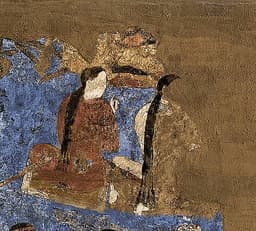
El Kulug Shad
Emperor · Medieval
38.1Total
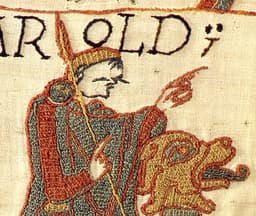
Harold Godwinson
Emperor · Medieval
45.8Total
Basic Information
Born
620
1022
Died
645
1066
Era
Medieval
Medieval
Nationality
Western Turkic Khaganate
England
Occupation
Emperor
Emperor
Civilization
Eastern
Western
Score Comparison
Military (10%)
22.6
47.5
Political (20%)
33.6
35.1
Influence (20%)
45.5
54.1
Legacy (20%)
35.8
49.2
Leadership (15%)
49.9
31.2
Strategy (15%)
30.3
52.5
TOTAL
38.1
45.8
El Kulug Shad — Complete Timeline
640 AD
Rebellion against Tang ChinaWar◆ Major
El Kulug Shad, a Western Turkic prince, led a rebellion against Tang Chinese control over the Western Turkic Khaganate. He allied with the Xueyantuo and other tribes to resist Tang expansion into the Tarim Basin.
RebellionTang DynastyWestern Turkic Khaganate
Impact: regionaldestructive
644 AD
Battle of KarasahrWar◆ Major
El Kulug Shad fought against Tang forces at the Battle of Karasahr in the Tarim Basin. He was defeated by the Tang general Guo Xiaoke, leading to the loss of the city and weakening his position.
BattleTang DynastyTarim Basin
Impact: regionaldestructive
645 AD
Death in battleWar◆ Major
El Kulug Shad was killed in battle against Tang forces. His death ended the major Turkic resistance in the Western Regions, allowing Tang China to consolidate control over the Silk Road and the Tarim Basin.
DeathBattleTang Dynasty
Impact: regionaltragic
Harold Godwinson — Complete Timeline
1066 AD
Battle of Stamford BridgeWar◆ Major
Harold defeated an invading Norwegian army under King Harald Hardrada at Stamford Bridge in Yorkshire. The victory was decisive, but Harold's army was weakened and exhausted.
BattleVictoryViking Invasion
Impact: national
Battle of HastingsWar
Harold's army was defeated by William of Normandy at Hastings on October 14. Harold was killed in the battle, traditionally by an arrow in the eye, ending Anglo-Saxon rule in England.
BattleDefeatNorman Conquest
Impact: globaltragic
Coronation of Harold GodwinsonPolitical Action◆ Major
Harold was crowned king of England on January 6, 1066, the day after Edward the Confessor's death. His claim was contested by William of Normandy and Harald Hardrada of Norway.
CoronationSuccessionContested Claim
Impact: national
Expert Analysis
Origins
El Kulug Shad was a prince of the Western Turkic Khaganate, born in the early 7th century. Little is known of his early life, but he emerged as a leader of Turkic resistance against Tang China's expansion into the Tarim Basin. His family background was rooted in the Ashina clan, the ruling dynasty of the Turkic Khaganates. He likely received military training and education in steppe warfare.
Harold Godwinson was born around 1022 into the powerful Godwin family of Wessex. His father, Godwin, was the Earl of Wessex and chief advisor to King Edward the Confessor. Harold grew up in the Anglo-Saxon court, learning administration and military command. He became Earl of East Anglia in 1045 and later Earl of Wessex after his father's exile and death. His upbringing was steeped in English politics and warfare.
Rise to Power
El Kulug Shad rose to prominence by leading a rebellion against Tang control in the 640s. He allied with the Xueyantuo, a powerful steppe confederation, to challenge Tang hegemony. His key turning point was the Battle of Karasahr in 648, where he faced the Tang general Guo Xiaoke. Despite initial successes, his forces were defeated, and he was killed in battle shortly after. His rebellion, while fierce, failed to dislodge Tang control.
Harold Godwinson's rise was more gradual and political. He became the most powerful earl in England by the 1050s, serving as Edward the Confessor's right hand. His turning point came in 1064 when he was shipwrecked in Normandy and allegedly swore an oath to support William's claim to the English throne. Upon Edward's death in January 1066, Harold was crowned king, but his rule was immediately contested by William and Harald Hardrada.
Leadership & Governance
El Kulug Shad's leadership was that of a steppe warrior prince. He commanded through personal valor and tribal alliances, but his governance was limited to military campaigns. He scored 49.9 in leadership and 30.3 in strategy. His approach was reactive, focusing on resisting Tang incursions rather than building a stable state. He lacked political infrastructure, scoring 33.6 in political skill.
Harold Godwinson, by contrast, was an experienced administrator. As king, he maintained the Anglo-Saxon system of shires and earls. He faced immediate crises: a Norwegian invasion and a Norman threat. His leadership score of 31.2 reflects his difficulty in uniting the English nobility after Hastings. He scored 52.5 in strategy, showing tactical acumen at Stamford Bridge but poor strategic planning for the Norman landing.
Triumph & Tragedy
El Kulug Shad's greatest success was uniting Turkic and Xueyantuo forces against Tang China, a major power. His rebellion delayed Tang consolidation in the west. However, his defeat at Karasahr and death in battle were his tragedies. His failure allowed Tang to dominate the Tarim Basin for decades. His military score of 22.6 reflects his inability to win decisive battles.
Harold Godwinson's triumph was the Battle of Stamford Bridge on September 25, 1066, where he crushed Harald Hardrada's invasion. This was a brilliant tactical victory. His tragedy was the Battle of Hastings on October 14, 1066, where he was killed, and his army defeated. His death led to the Norman Conquest, ending Anglo-Saxon rule. His military score of 47.5 shows competence but not greatness.
Character & Destiny
El Kulug Shad was a determined rebel, but his character was marked by overconfidence. He challenged a superior power without sufficient resources or allies. His death in battle sealed his fate as a footnote in Tang history. Historians view him as a symbol of Turkic resistance but ultimately a failure.
Harold Godwinson was a capable leader who faced impossible odds. He fought two major battles in three weeks, exhausting his army. His decision to march south quickly after Stamford Bridge may have been a strategic error. His character was shaped by loyalty to his oath and kingdom. His destiny was to be the last Anglo-Saxon king, remembered for his courage and the loss at Hastings.
Legacy
El Kulug Shad's legacy is minimal. He is remembered in Chinese records as a rebellious Turkic prince. His rebellion had little lasting impact, as Tang China continued to control the region for decades. His total score of 38.1 reflects his limited influence. He is not widely known outside specialized history.
Harold Godwinson's legacy is immense. He is a central figure in English history, symbolizing the end of Anglo-Saxon England. The Battle of Hastings changed the course of English language, culture, and governance. His score of 49.2 in legacy reflects this. He is remembered in the Bayeux Tapestry and historical accounts. His influence score of 54.1 shows his lasting mark on historical memory.
Conclusion
Harold Godwinson had greater impact than El Kulug Shad. While both faced overwhelming odds, Harold's actions directly shaped the future of England. The Norman Conquest introduced feudalism, castle-building, and French influence. El Kulug Shad's rebellion, while bold, failed to alter the trajectory of Tang expansion. Harold's total score of 45.8 surpasses El Kulug Shad's 38.1. Harold's leadership at Stamford Bridge and his role in the pivotal event of 1066 give him a clear edge in historical significance.
Rankings
🥇
Harold GodwinsonLeader
Mil: 47.5Pol: 35.1Inf: 54.1
45.8
🥈
El Kulug Shad
Mil: 22.6Pol: 33.6Inf: 45.5
38.1
+7.7 behind
How This Comparison Works
Algorithm
Each figure is scored on 6 dimensions (0—100 scale) based on structured historical data: Military (10%), Political (20%), Influence (20%), Legacy (20%), Leadership (15%), Strategy (15%). The weighted total produces the final ranking.
Data Sources
Scores are computed from structured sub-indicators in the database. Scale factors adjust for era (Ancient ×0.85, Modern ×1.0) and civilization size (Eastern ×1.05, Other ×0.80) to account for differences in population and military scale.
Maximum 3 Figures
Comparisons are limited to 2—3 figures to ensure readability and statistical meaningfulness.
Error Margins
±5 points per dimension — Sub-scores are derived from historical records with inherent uncertainty. Two figures within 5 points on a dimension should be considered roughly equivalent in that area.
Total Score Accuracy
±3 points overall — The weighted combination of 6 dimensions produces a total score with approximately ±3 points of uncertainty. Differences of less than 3 points are not statistically significant— the figures are effectively tied.
Known Limitations
- Historical records are incomplete and uneven across civilizations
- Figures from oral-tradition societies may be underrepresented
- Occupation labels can misclassify multi-role figures
- Scores measure capability and impact, not moral character
- Quantitative scoring is a comparison tool, not absolute truth
Capability Radar
Military (10%) — Battles & Warfare
Battles
15
60
Win Rate
10
55
Expansion
10
40
Political (20%) — Governance & Reform
Reform
5
20
Diplomacy
15
40
Economy
5
30
Influence (20%) — Cultural & Global Reach
Cultural
5
35
Global
5
30
Legacy (20%) — Historical Impact
Historical
10
55
Longevity
5
40
Leadership (15%) — Power & Stability
Tenure
10
15
Stability
5
20
Strategy (15%) — Tactics & Innovation
Strategy
15
60
Tactics
20
65
Reform
5
30
Similar Comparisons
Comments & Discussion
No comments yet. Be the first to share your thoughts!