Loading...
Emperor Gaozong of Tang vs Ram Khamhaeng
Emperor Gaozong of Tang leads by 2.1 pts · 2 figures compared
…
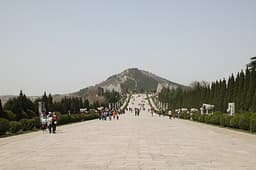
Emperor Gaozong of Tang
Emperor · Medieval
60.4Total
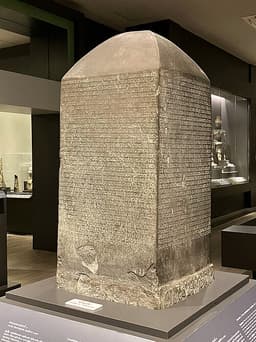
Ram Khamhaeng
Emperor · Medieval
58.3Total
Basic Information
Born
628
1237
Died
683
1298
Era
Medieval
Medieval
Nationality
China
Thailand
Occupation
Emperor
Emperor
Civilization
Eastern
Eastern
Score Comparison
Military (10%)
72.5
40.0
Political (20%)
62.7
68.0
Influence (20%)
61.0
55.0
Legacy (20%)
50.0
72.0
Leadership (15%)
68.0
53.2
Strategy (15%)
57.5
43.3
TOTAL
60.4
58.3
Emperor Gaozong of Tang — Complete Timeline
657 AD
Conquest of the Western TurksWar◆ Major
Emperor Gaozong's general Su Dingfang defeated the Western Turkic Khaganate, bringing Central Asia under Tang control. This established Tang hegemony over the Silk Road and extended the empire's influence to the Caspian Sea.
ConquestExpansion
Impact: globalconstructive
660 AD
Illness and Regency of Wu ZetianPolitical Action
Emperor Gaozong suffered a stroke that left him partially incapacitated. His wife, Empress Wu Zetian, began to take an active role in governance, eventually becoming the de facto ruler. This marked the beginning of Wu Zetian's rise to power.
SuccessionRegency
Impact: regional
663 AD
Battle of BaekgangWar◆ Major
Tang and Silla forces defeated a combined Baekje-Yamato Japanese fleet at the Battle of Baekgang in Korea. This victory secured Tang control over the Korean peninsula and ended Japanese ambitions in Korea for centuries.
Naval BattleConquest
Impact: regionalconstructive
668 AD
Conquest of GoguryeoWar◆ Major
Emperor Gaozong, with the help of the Silla kingdom, conquered the Korean kingdom of Goguryeo. This victory expanded Tang territory into Manchuria and Korea, establishing a Tang protectorate over the region.
ConquestExpansion
Impact: regionalconstructive
Ram Khamhaeng — Complete Timeline
1280 AD
Expansion of the Sukhothai KingdomWar◆ Major
King Ram Khamhaeng expanded Sukhothai's territory through military campaigns, extending its influence from modern-day Laos to the Malay Peninsula. This created the largest Thai kingdom of its time.
Territorial ExpansionSukhothaiThai History
Impact: regional
1283 AD
Invention of the Thai AlphabetInvention
King Ram Khamhaeng created the Thai alphabet, based on Mon and Khmer scripts. This writing system allowed for the recording of Thai language and literature, becoming the foundation of modern Thai script.
AlphabetLanguageThai Culture
Impact: nationalconstructive
1292 AD
Promulgation of the Ram Khamhaeng InscriptionCultural◆ Major
King Ram Khamhaeng commissioned the Ram Khamhaeng Inscription, a stone stele that describes the kingdom's prosperity, governance, and culture. It is considered the earliest known example of Thai writing and a key historical source.
InscriptionHistorical RecordThai Culture
Impact: nationalconstructive
1294 AD
Establishment of Diplomatic Relations with ChinaPolitical Action
King Ram Khamhaeng sent an embassy to the Yuan dynasty court of Kublai Khan, establishing formal diplomatic and trade relations. This opened Sukhothai to Chinese influence and trade.
DiplomacyYuan DynastyTrade
Impact: regional
Expert Analysis
Origins
Emperor Gaozong of Tang (born 628 CE) was the ninth son of Emperor Taizong, the architect of the Tang dynasty's golden age. His mother was Empress Zhangsun, a respected consort. Gaozong received a Confucian education and was designated crown prince in 636 after the original heir, Li Chengqian, was deposed for plotting rebellion. His early life was dominated by the shadow of his formidable father and the intense palace politics of the Tang court.
Ram Khamhaeng (born c. 1239 CE) was the second son of King Si Inthrathit, the founder of the Sukhothai Kingdom in present-day Thailand. His early life is known through the Ram Khamhaeng Inscription, which describes his upbringing in a nascent Thai state emerging from Khmer influence. He likely received military training and learned from Mon and Khmer cultures, which later influenced his creation of the Thai alphabet.
Rise to Power
Gaozong ascended the throne in 649 after Taizong's death. His early reign was guided by Taizong's appointed regents, including the chancellor Zhangsun Wuji. To consolidate power, Gaozong removed these regents in 655, a move orchestrated with his consort Wu Zetian. His turning point came in 660 when he suffered a stroke, leading to Wu Zetian's regency. From 660 onward, she effectively ruled behind the throne, a unique arrangement in Chinese history.
Ram Khamhaeng became king around 1279 after his father's death, though his older brother Ban Mueang likely ruled briefly. His rise was marked by military campaigns that expanded Sukhothai's territory. He established diplomatic relations with the Yuan dynasty in 1282, sending a mission to Kublai Khan, which secured Chinese recognition and opened trade. This diplomatic move strengthened his legitimacy and brought wealth to Sukhothai.
Leadership & Governance
Gaozong's leadership was passive, delegating military campaigns to capable generals like Su Dingfang and Li Shiji, while domestic policy was increasingly handled by Wu Zetian. His governance style was reactive: he approved Wu's purges of officials, such as the removal of the chancellor Chu Suiliang in 655. He maintained the Tang legal code and tax system but lacked the proactive reformist vision of his father. His score of 68.0 in leadership reflects this delegative approach.
Ram Khamhaeng was a more hands-on ruler. The Ram Khamhaeng Inscription describes a paternalistic style: he hung a bell at the palace gate for citizens to ring with grievances. He promoted trade by reducing taxes and encouraged Buddhism as a unifying force. His political score of 68.0 matches Gaozong's leadership, but his governance was more direct and innovative, especially in cultural unification through the alphabet.
Triumph & Tragedy
Gaozong's greatest triumph was the conquest of Goguryeo in 668, which eliminated a long-standing rival and extended Tang control into Manchuria. This victory, achieved with Silla allies, showcased Tang military might. However, the conquest was temporary: by 676, Tang forces were expelled from most of Korea. His other major success was the defeat of the Western Turks in 657, securing the Silk Road. The tragedy of his reign was his incapacitation, which allowed Wu Zetian to seize power, eventually leading to her usurpation of the throne after his death. His score of 62.7 in political reflects his loss of control.
Ram Khamhaeng's greatest triumph was the creation of the Thai alphabet in 1283, which gave the Thai people a written language and fostered cultural identity. The Ram Khamhaeng Inscription records this achievement. His military expansion extended Sukhothai's influence from modern Laos to the Malay Peninsula. However, his reign was followed by decline: after his death, Sukhothai fragmented and was eventually absorbed by Ayutthaya. His legacy score of 72.0 is high, but his military score of 40.0 reflects the limited scope of his conquests compared to Gaozong's.
Character & Destiny
Gaozong was intelligent but physically weak after his stroke. His character was indecisive, relying on Wu Zetian to make decisions. This dependency shaped his destiny: he enabled her rise, which led to the only female emperor in Chinese history. Historians often view him as a transitional figure between Taizong's strength and Wu's ambition.
Ram Khamhaeng was energetic and innovative, as shown by his creation of the alphabet and his diplomatic outreach. The Inscription portrays him as a just and accessible ruler. His destiny was to be remembered as the founder of Thai identity, but his kingdom's fragility meant his achievements were cultural rather than political.
Legacy
Gaozong's legacy is mixed. His military victories expanded Tang territory to its greatest extent, but his political weakness allowed Wu Zetian's rise, which destabilized the Tang dynasty. His score of 50.0 in legacy reflects this. He is remembered as a competent but overshadowed emperor.
Ram Khamhaeng's legacy is more enduring: the Thai alphabet is still used today, and the Ram Khamhaeng Inscription is a cornerstone of Thai history. His legacy score of 72.0 is the highest among the metrics, indicating cultural impact that outlasted his political achievements.
Conclusion
Comparing overall impact, Emperor Gaozong had a greater geopolitical influence through military expansion, scoring 72.5 in military versus Ram Khamhaeng's 40.0. However, Ram Khamhaeng's cultural legacy, scoring 72.0 versus Gaozong's 50.0, has proven more durable. The total scores are close: Gaozong 60.4, Ram Khamhaeng 58.3. But considering the scale of Tang conquests and the dynasty's global influence, Gaozong's impact on world history was larger, even if his personal role was diminished by illness. Ram Khamhaeng's contributions are significant but regionally confined. Thus, Emperor Gaozong of Tang had the greater historical impact.
Rankings
🥇
Emperor Gaozong of TangLeader
Mil: 72.5Pol: 62.7Inf: 61.0
60.4
🥈
Ram Khamhaeng
Mil: 40.0Pol: 68.0Inf: 55.0
58.3
+2.1 behind
How This Comparison Works
Algorithm
Each figure is scored on 6 dimensions (0—100 scale) based on structured historical data: Military (10%), Political (20%), Influence (20%), Legacy (20%), Leadership (15%), Strategy (15%). The weighted total produces the final ranking.
Data Sources
Scores are computed from structured sub-indicators in the database. Scale factors adjust for era (Ancient ×0.85, Modern ×1.0) and civilization size (Eastern ×1.05, Other ×0.80) to account for differences in population and military scale.
Maximum 3 Figures
Comparisons are limited to 2—3 figures to ensure readability and statistical meaningfulness.
Error Margins
±5 points per dimension — Sub-scores are derived from historical records with inherent uncertainty. Two figures within 5 points on a dimension should be considered roughly equivalent in that area.
Total Score Accuracy
±3 points overall — The weighted combination of 6 dimensions produces a total score with approximately ±3 points of uncertainty. Differences of less than 3 points are not statistically significant— the figures are effectively tied.
Known Limitations
- Historical records are incomplete and uneven across civilizations
- Figures from oral-tradition societies may be underrepresented
- Occupation labels can misclassify multi-role figures
- Scores measure capability and impact, not moral character
- Quantitative scoring is a comparison tool, not absolute truth
Capability Radar
Military (10%) — Battles & Warfare
Battles
55
40
Win Rate
60
45
Expansion
65
50
Political (20%) — Governance & Reform
Reform
60
70
Diplomacy
65
55
Economy
60
50
Influence (20%) — Cultural & Global Reach
Cultural
50
75
Global
45
55
Legacy (20%) — Historical Impact
Historical
55
70
Longevity
50
80
Leadership (15%) — Power & Stability
Tenure
70
60
Stability
55
60
Strategy (15%) — Tactics & Innovation
Strategy
55
40
Tactics
50
35
Reform
40
30
Similar Comparisons
Comments & Discussion
No comments yet. Be the first to share your thoughts!