Loading...
Emperor Tenji vs Wanyan Liang
Emperor Tenji leads by 0.6 pts · 2 figures compared
…
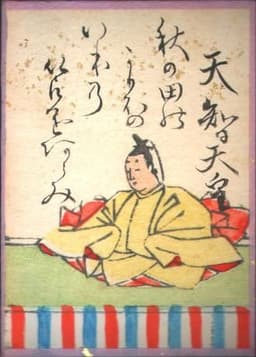
Emperor Tenji
Emperor · Medieval
49.7Total
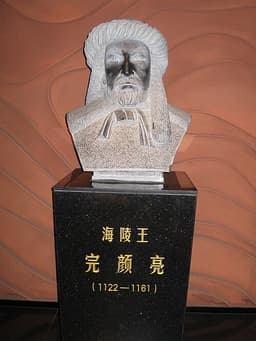
Wanyan Liang
Emperor · Medieval
49.1Total
Basic Information
Born
626
1122
Died
672
1161
Era
Medieval
Medieval
Nationality
Japan
Jin dynasty
Occupation
Emperor
Emperor
Civilization
Eastern
Eastern
Score Comparison
Military (10%)
21.2
67.5
Political (20%)
45.0
40.8
Influence (20%)
58.0
51.8
Legacy (20%)
56.0
44.2
Leadership (15%)
62.0
48.4
Strategy (15%)
30.3
50.0
TOTAL
49.7
49.1
Emperor Tenji — Complete Timeline
645 AD
Taika Reforms ImplementationReform◆ Major
As Prince Naka no Oe, Tenji led a coup that eliminated the Soga clan and initiated the Taika Reforms. These reforms centralized government, established a Chinese-style bureaucracy, and nationalized land. They laid the foundation for the ritsuryo system.
Taika ReformsCentralizationSoga
Impact: nationalprogressive
663 AD
Battle of BaekgangWar◆ Major
Tenji, as prince, sent a Japanese fleet to aid the Korean kingdom of Baekje against the Silla-Tang alliance. The Japanese navy was decisively defeated at the Baekgang River. This ended Japanese ambitions on the Korean peninsula and led to a shift in foreign policy.
BaekjeDefeatKorea
Impact: regionaltragic
668 AD
Compilation of the Omi CodeReform◆ Major
Emperor Tenji ordered the compilation of the Omi Code, Japan's first comprehensive legal code. It established administrative laws and penal codes based on Chinese Tang dynasty models. This code formalized the ritsuryo system and strengthened imperial authority.
Legal CodeRitsuryoOmi
Impact: nationalconstructive
Wanyan Liang — Complete Timeline
1150 AD
Usurped the thronePolitical Action◆ Major
Wanyan Liang assassinated his cousin Emperor Wanyan Dan and declared himself emperor. He purged many members of the imperial clan and their supporters to consolidate his rule, establishing a reign of terror.
UsurpationAssassinationPurge
Impact: nationaldestructive
1153 AD
Moved the capital to ZhongduPolitical Action◆ Major
Wanyan Liang ordered the relocation of the Jin capital from Shangjing (Harbin) to Zhongdu (Beijing). He constructed a new palace complex and moved the imperial court south to better control the conquered Chinese territories.
Capital moveZhongduBeijing
Impact: nationalconstructive
1161 AD
Invasion of the Southern SongWar◆ Major
Wanyan Liang launched a massive invasion of the Southern Song dynasty with a large army and navy. The campaign failed after the Jin fleet was defeated at the Battle of Caishi on the Yangtze River.
InvasionSong-Jin warBattle of Caishi
Impact: regionaldestructive
Killed by his own officersWar◆ Major
After the failure of the Southern Song invasion, Wanyan Liang's own generals mutinied and assassinated him at his camp. His death ended the war and led to a reversal of his policies by his successor Wanyan Yong.
AssassinationMutinyEnd of reign
Impact: nationaltragic
Expert Analysis
Origins
Emperor Tenji, born in 626 as Prince Naka no Oe, was the son of Emperor Jomei and Empress Kogyoku. He grew up in the Yamato court, immersed in the power struggles between the imperial family and the Soga clan. His education included Chinese classics and Buddhist texts, shaping his vision for a centralized state. In contrast, Wanyan Liang, born in 1122, was a prince of the Jin dynasty, a Jurchen-led empire in northern China. His father was Wanyan Zonggan, a powerful minister, and Liang grew up amid the brutal politics of the Jin court. He was known for his literary talent and ambition, but also for his ruthlessness.
Rise to Power
Tenji's rise came through the Taika Coup of 645, where he and his ally Nakatomi no Kamatari assassinated Soga no Iruka, ending Soga dominance. He then installed his mother as Empress Kogyoku (later re-enthroned as Empress Saimei) and later became emperor himself in 661 after his mother's death. His power was consolidated through the Taika Reforms, which redistributed land and centralized authority. Wanyan Liang, on the other hand, usurped the throne in 1150 by assassinating his cousin Emperor Wanyan Dan (Xizong). He then purged over a hundred imperial clan members and their supporters to secure his rule. His rise was marked by treachery and violence, contrasting with Tenji's more calculated coup.
Leadership & Governance
Tenji's leadership focused on legal and administrative reform. He compiled the Omi Code in 668, Japan's first comprehensive law code based on Tang Chinese models, establishing a centralized bureaucracy and penal system. He also promoted Buddhism and infrastructure projects. However, his military leadership was weak, scoring only 21.2 in military prowess. Wanyan Liang, with a military score of 67.5, was a more aggressive leader. He moved the Jin capital from Shangjing to Zhongdu (Beijing) to better control the Chinese heartland, a major strategic shift. He also sinicized the Jurchen court, adopting Chinese rituals. But his governance was harsh and despotic, leading to widespread resentment.
Triumph & Tragedy
Tenji's greatest triumph was the implementation of the Taika Reforms, which laid the foundation for Japan's imperial state. His Omi Code influenced subsequent legal systems. His tragedy was the Battle of Baekgang in 663, where he sent a fleet to aid the Korean kingdom of Baekje against Silla-Tang forces. The Japanese navy was decisively defeated, ending Japanese ambitions on the Korean peninsula. This failure stained his legacy. Wanyan Liang's triumph was the successful relocation of the capital and the consolidation of Jin power over northern China. However, his disastrous invasion of the Southern Song in 1161 led to a catastrophic defeat at the Battle of Caishi, where his fleet was destroyed. His own generals mutinied and assassinated him, ending his reign in ignominy.
Character & Destiny
Tenji was a reformer and planner, but also cautious and indecisive. His character led him to rely on allies like Kamatari, and his military failure stemmed from overreach. Historians note his political score of 45.0 reflects his moderate success. Wanyan Liang was ambitious, cultured, but cruel and paranoid. His character drove him to usurp power and launch risky campaigns, ultimately leading to his downfall. His leadership score of 48.4 indicates poor management of subordinates.
Legacy
Tenji's legacy is enduring: the Taika Reforms and Omi Code were foundational for Japan's imperial system. He scored 56.0 in legacy. His reign marked Japan's transition to a centralized state. Wanyan Liang's legacy is mixed: he moved the capital to Beijing, which became a lasting political center, but his brutality and failed invasion weakened the Jin dynasty. His legacy score of 44.2 reflects his negative reputation. Tenji is remembered as a wise reformer, while Wanyan Liang is often vilified as a usurper and tyrant.
Conclusion
Emperor Tenji had a greater long-term impact than Wanyan Liang. Despite a narrow total score gap of 0.6 points (49.7 vs 49.1), Tenji's reforms shaped Japan for centuries, while Wanyan Liang's achievements were overshadowed by his failures. Tenji's political and legacy scores are higher, and his governance laid a stable foundation. Wanyan Liang's military aggression and poor leadership led to his assassination and dynasty decline. Thus, Tenji's constructive reforms outweigh Liang's destructive ambition.
Rankings
🥇
Emperor TenjiLeader
Mil: 21.2Pol: 45.0Inf: 58.0
49.7
🥈
Wanyan Liang
Mil: 67.5Pol: 40.8Inf: 51.8
49.1
+0.6 behind
How This Comparison Works
Algorithm
Each figure is scored on 6 dimensions (0—100 scale) based on structured historical data: Military (10%), Political (20%), Influence (20%), Legacy (20%), Leadership (15%), Strategy (15%). The weighted total produces the final ranking.
Data Sources
Scores are computed from structured sub-indicators in the database. Scale factors adjust for era (Ancient ×0.85, Modern ×1.0) and civilization size (Eastern ×1.05, Other ×0.80) to account for differences in population and military scale.
Maximum 3 Figures
Comparisons are limited to 2—3 figures to ensure readability and statistical meaningfulness.
Error Margins
±5 points per dimension — Sub-scores are derived from historical records with inherent uncertainty. Two figures within 5 points on a dimension should be considered roughly equivalent in that area.
Total Score Accuracy
±3 points overall — The weighted combination of 6 dimensions produces a total score with approximately ±3 points of uncertainty. Differences of less than 3 points are not statistically significant— the figures are effectively tied.
Known Limitations
- Historical records are incomplete and uneven across civilizations
- Figures from oral-tradition societies may be underrepresented
- Occupation labels can misclassify multi-role figures
- Scores measure capability and impact, not moral character
- Quantitative scoring is a comparison tool, not absolute truth
Capability Radar
Military (10%) — Battles & Warfare
Battles
10
65
Win Rate
10
55
Expansion
10
70
Political (20%) — Governance & Reform
Reform
70
45
Diplomacy
50
30
Economy
60
35
Influence (20%) — Cultural & Global Reach
Cultural
50
30
Global
30
20
Legacy (20%) — Historical Impact
Historical
60
40
Longevity
60
25
Leadership (15%) — Power & Stability
Tenure
60
40
Stability
50
20
Strategy (15%) — Tactics & Innovation
Strategy
10
55
Tactics
10
60
Reform
20
50
Similar Comparisons
Comments & Discussion
No comments yet. Be the first to share your thoughts!